
The Osborne Naval Shipyard in South Australia stands at the heart of Australia’s strategic ambitions for continuous naval shipbuilding, blending sovereign capability, modern infrastructure and long-term workforce development.
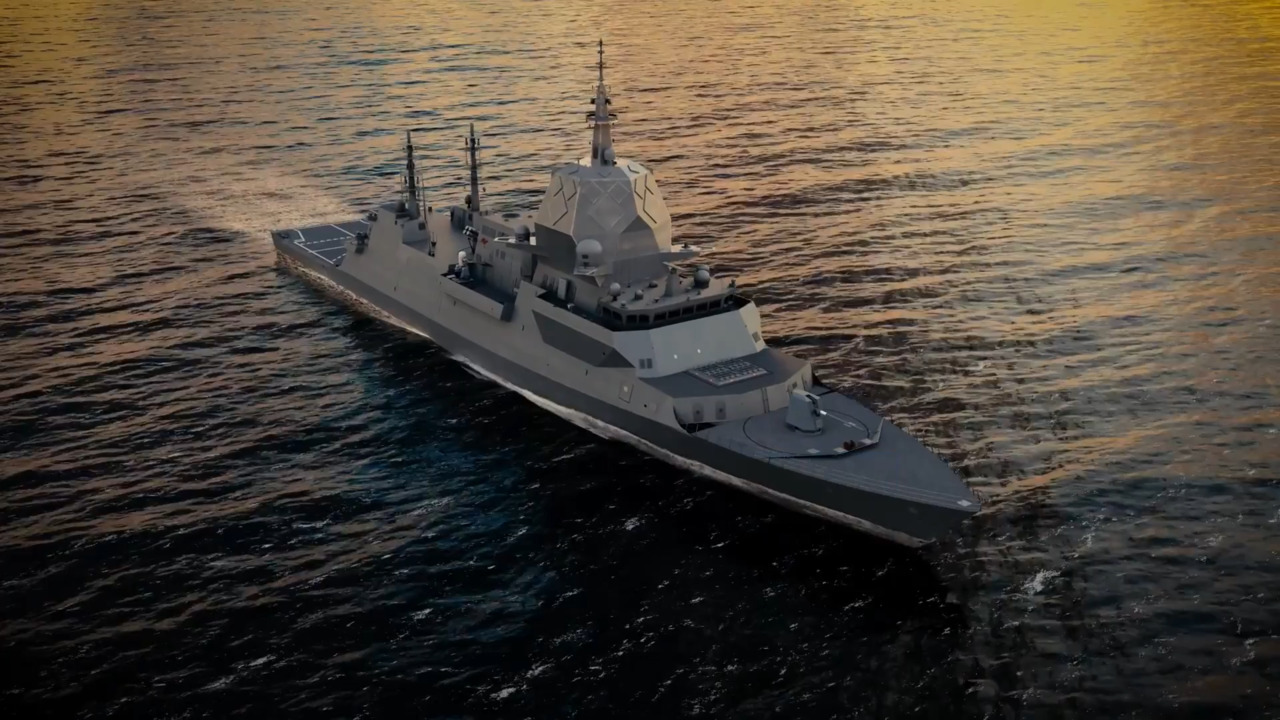
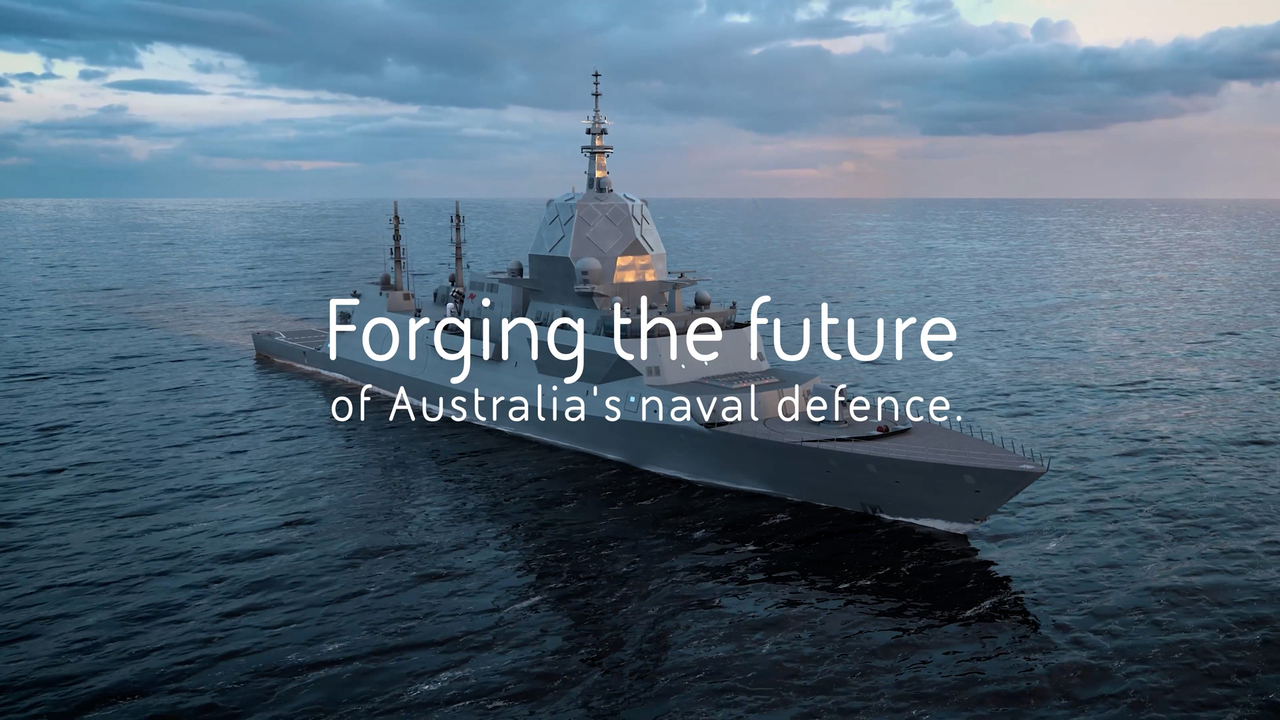
The shipyard plays a vital role in delivering the nation’s future maritime power including the Hunter class frigates and SSN-AUKUS submarines.
Carved from more than 100 hectares on the Lefevre Peninsula, Osborne is more than a shipyard — it is the industrial anchor for the Royal Australian Navy’s present and next-generation fleets. This enables Australia to reduce dependency on external shipbuilders, secure ship-to-fleet timelines, cultivate high-skill jobs and strengthen domestic industry along the entire supply chain.
Shipyard history
The Osborne Naval Shipyard was established in 1987 and currently consists of two sites – South and North. The south shipyard is home to Australia’s continuous naval shipbuilding activities, and the north shipyard facilitates submarine maintenance.
The expansion and redevelopment of the south shipyard by Commonwealth-owned Australian Naval Infrastructure (ANI) expanded this site from 200,000 to 360,000 square metres. In late 2020, ANI formally handed over the lease and management of the yard to our shipbuilding business, BAE Systems Maritime Australia.
Naval vessels built at Osborne include:
- Six Collins class submarines by ASC Pty Ltd.
- Three Hobart class destroyers by the AWD Alliance which included BAE Systems Australia.
- Two Arafura class offshore patrol vessels by Luerssen Australia.
- Hunter class frigates by BAE Systems Maritime Australia, in construction with first ship delivery scheduled for 2032.
- SSN-AUKUS submarines by BAE Systems and ASC Pty Ltd, expected to start in the 2030s for delivery from the 2040s.
In addition, combat management system upgrades are in progress for the Hobart class destroyers through a collaboration between the Department of Defence, BAE Systems Australia, Saab Australia and Lockheed Martin Australia.
Osborne Naval Shipyard tour
Join us on a tour of one of the world’s most advanced naval shipyards in Adelaide, Australia.
This digital shipyard has been designed and built to enable a ‘steel in, ships out’ capability. This means the steel comes in, it’s cut and bent into shape by state-of-the-art, automated machinery and panel lines, before being formed into ‘units.’
These units are then consolidated into blocks. These blocks are blasted and painted before being assembled into a ship and outfitted for our customer, the Royal Australian Navy.
A Hunter class frigate is made up of 22 blocks comprising of 72 units. Our visit will replicate the route the steel travels, from plate to ship.
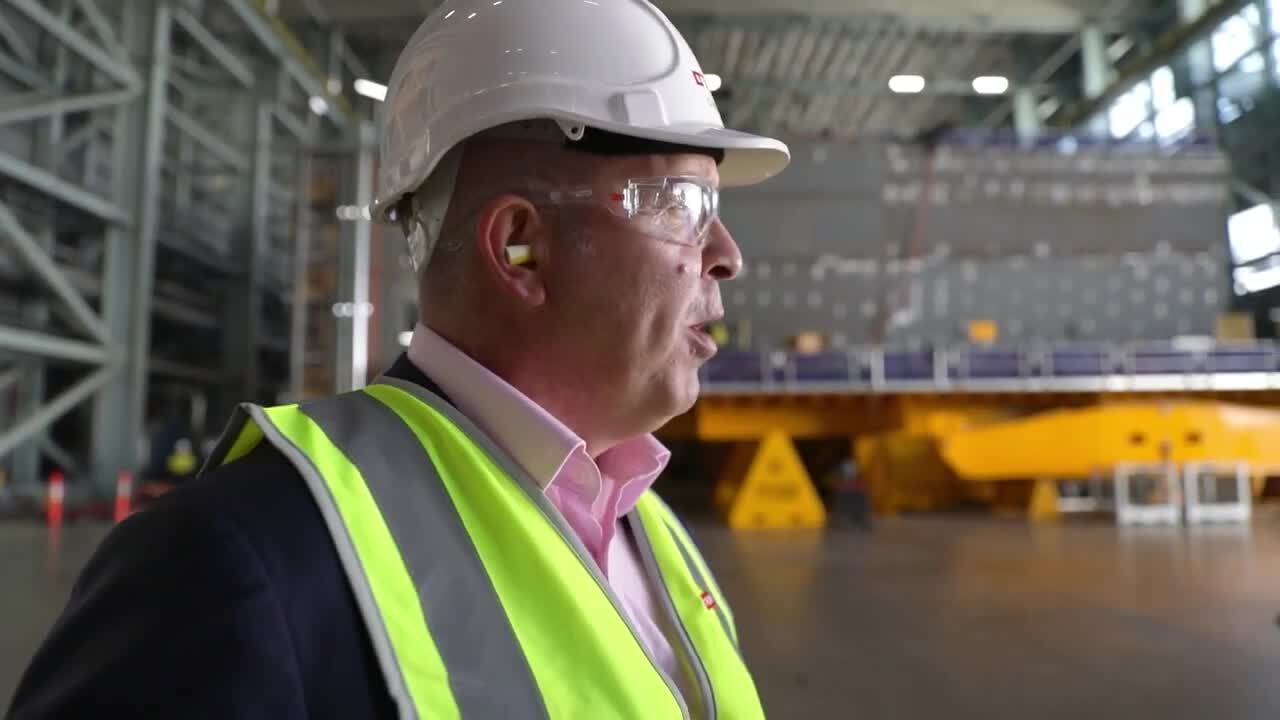
Meet your guides Commodore Scott Lockey and Andy Coxall for a behind-the-scenes look at the shipbuilding operations.
CDRE Lockey is the Director General Hunter Class Frigates from the Naval Shipbuilding and Sustainment Group.
Andy is the Delivery Director – Acquisition for BAE Systems Maritime Australia.
Step-by-step video tour
Visit the Osborne Naval Shipyard step-by-step and learn more about each individual space in the shipbuilding process.
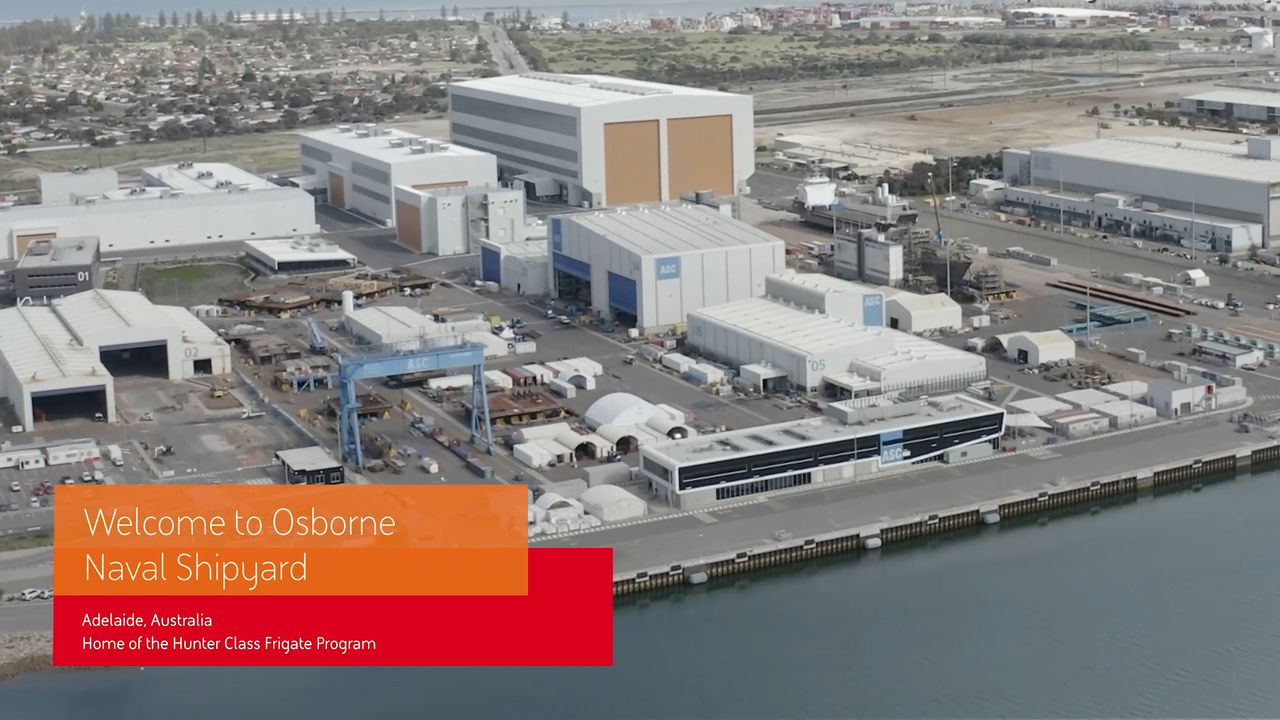
Welcome
Home of the Hunter Class Frigate Program, start your video tour with a birds-eye view of the Osborne Naval Shipyard and meet your hosts.
Safety in the shipyard
A critical element of any visit to the shipyard is ensuring the safety of all personnel. People will be operating cranes and material handling equipment. There will be steel and other trip hazards on the ground as we move about.
Full personal protective equipment (PPE) is always required. This consists of long pants, long sleeves, high vis vest, hard hat, safety boots, and safety glasses. Hearing protection is required in all production buildings.
Steel arrival
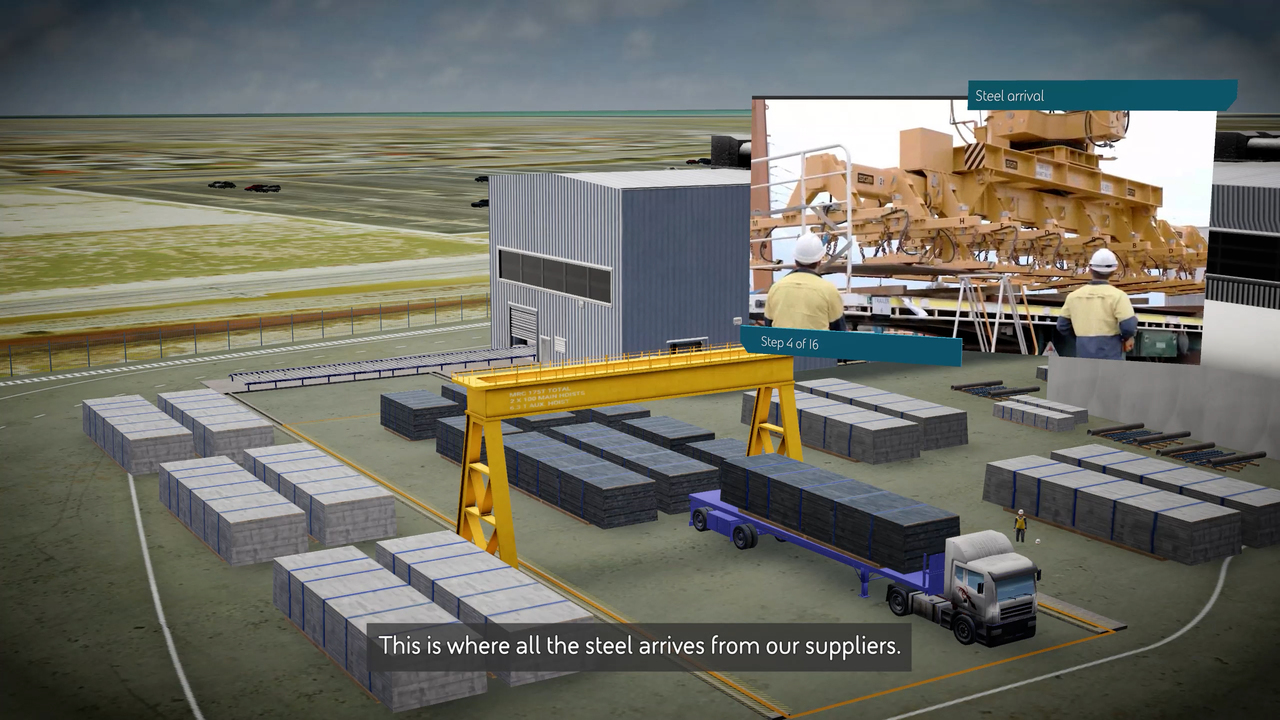
Shipbuilding begins with steel arriving at our stockyard, the majority of which is sourced from Australia. Each frigate requires 55 different steel widths to bring its structure to life.
Surface treatment line
The surface treatment line is the first stage of the construction process.
When the steel arrives, it is raw or ‘black’ and has mill scale on it. The material is blasted, then painted with a pre-construction primer that preserves the steel throughout the production process.
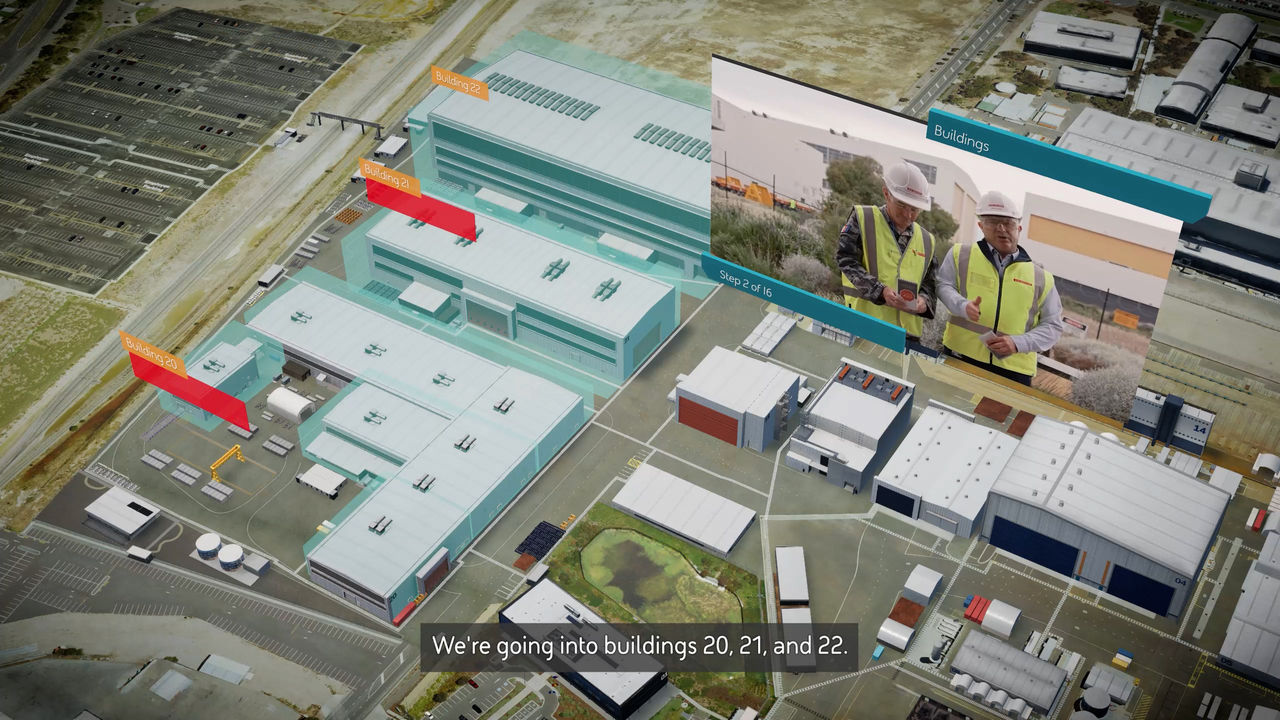
This step occurs in Building 20, our Fabrication and Assembly Hall. This building is more than 14,500 square metres in size.
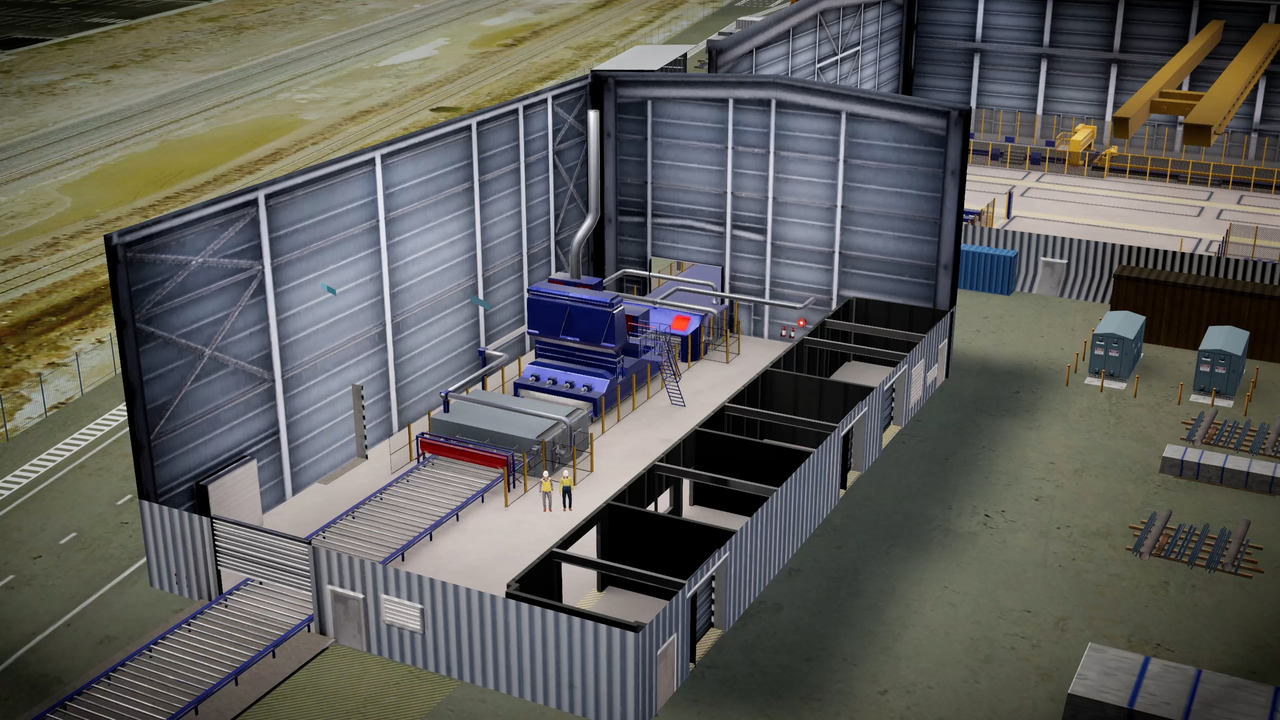
Plate cutting line
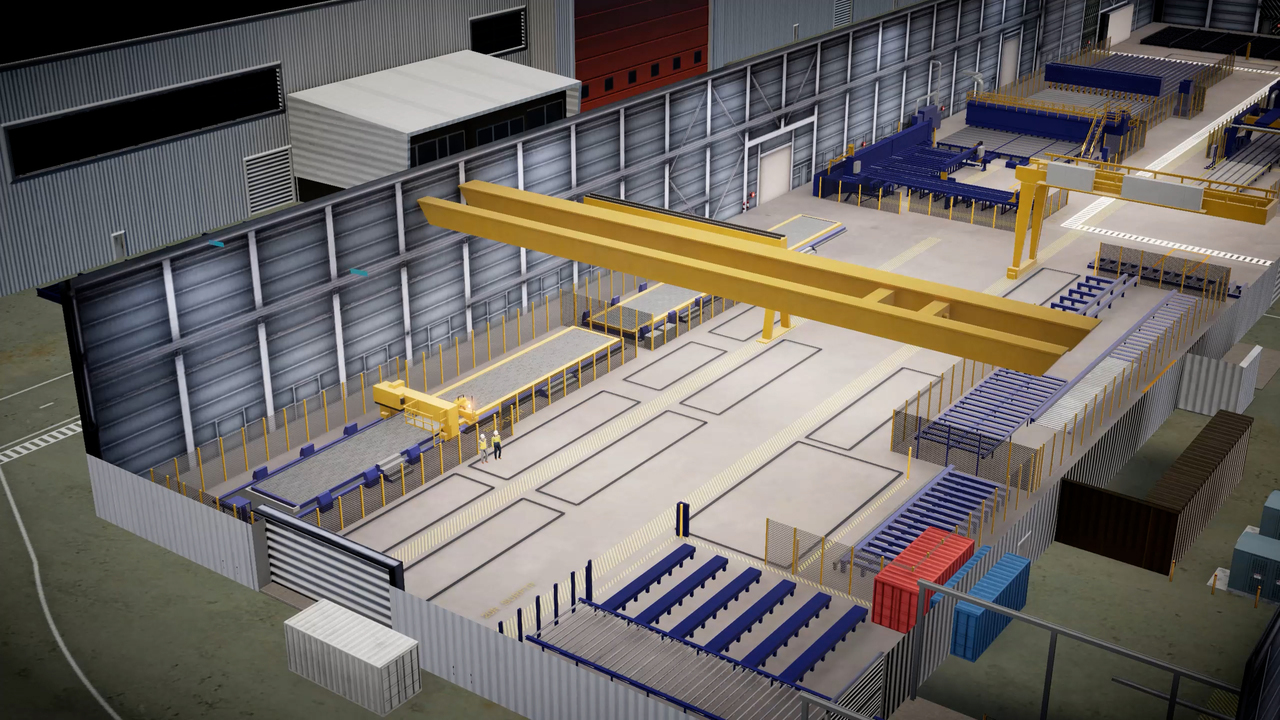
Next up in Building 20, the steel is blasted again and marked with an inkjet printer to mark cutting lines. These lines show the parts that we need to cut out. Each piece is also marked with identification numbers, which indicate that show where the each piece of steel will fitfits in the overall ship.
Steel up to 25mm thick is then cut using a plasma cutter. Thicker components up to 300mm are cut using an oxy fuel cutter. Leftover material from these cuts may be used on future ship units to reduce wastage.
Edge bevelling station
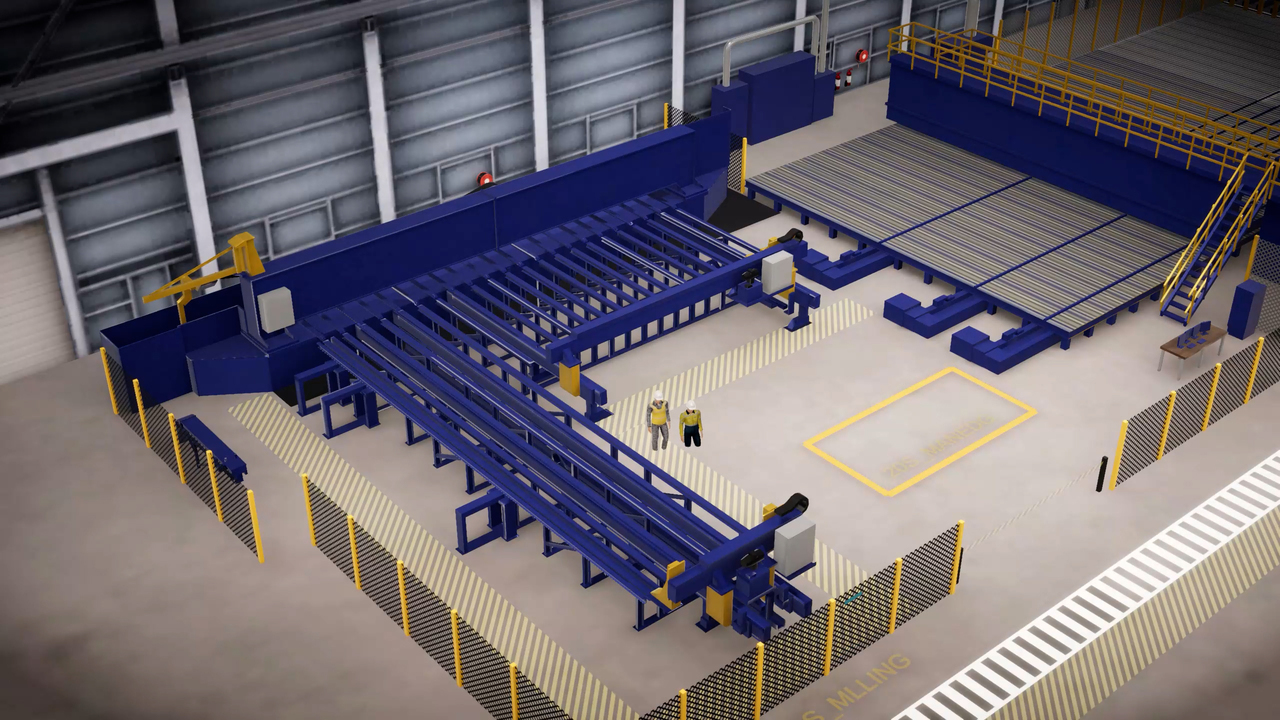
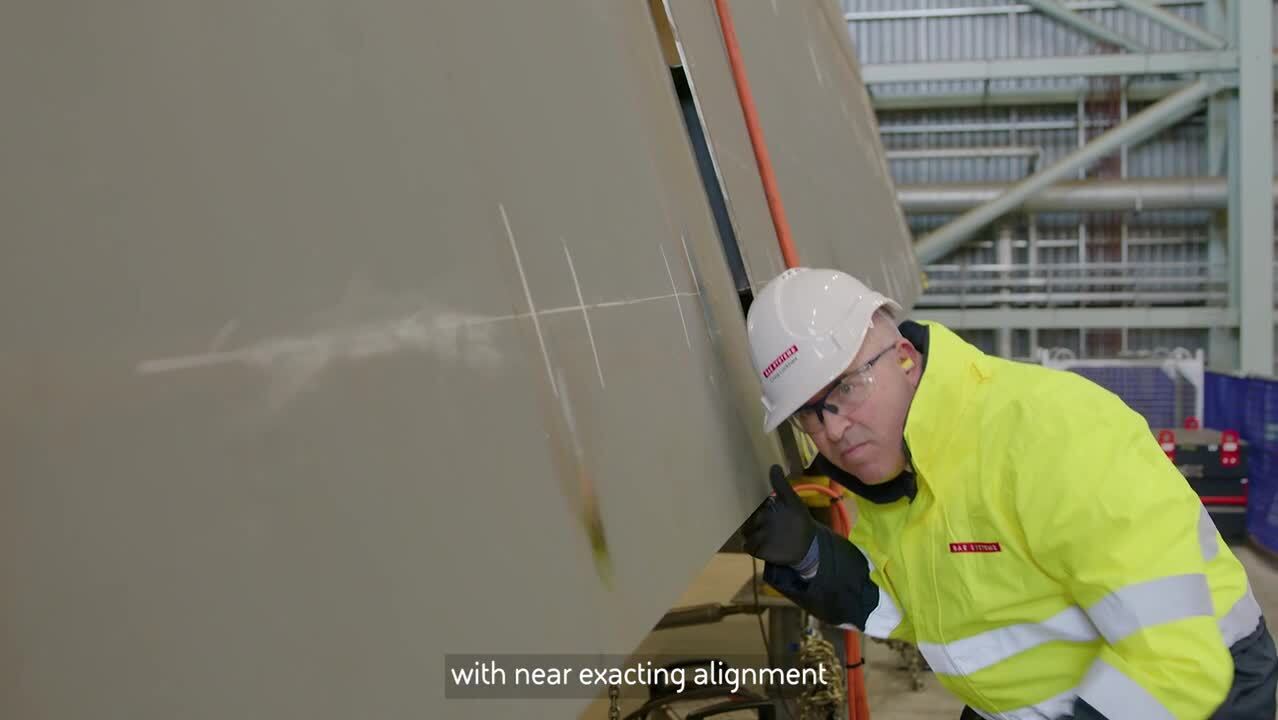
Edge bevelling angles the edges of metal to create a V-groove for a stronger, deeper weld, which is important when joining the 50–60 different steel thicknesses used in the Hunter class frigate.
Only steel profiles—T-bars, flat bars, bulb bars and angle bars—come through this area. A plasma torch on a six-axis robot arm cuts simple or complex shapes and applies weld bevels up to 45 degrees.
Stiffener mounting welding portal
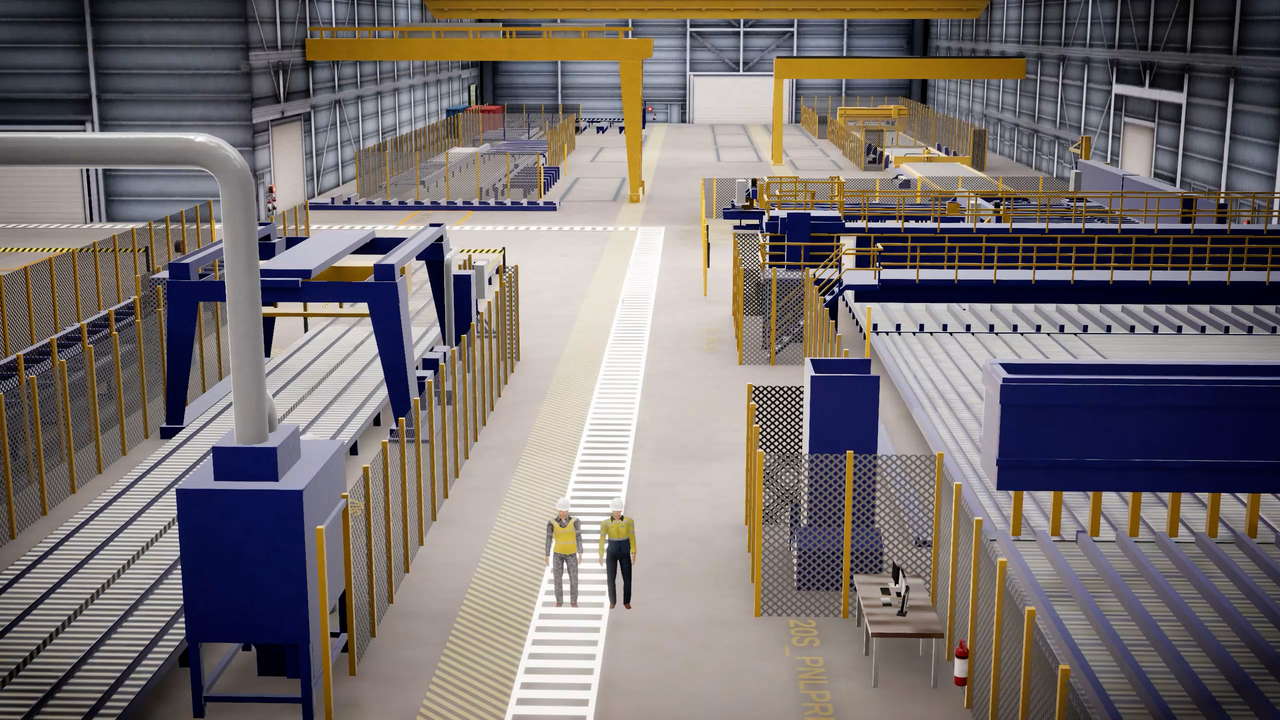
Stiffeners are welded onto panels and bulkheads to add rigidity and prevent deformation.
Each frigate needs more than 1,000 steel profiles. The welding portal installs and welds up to 30 profiles of up to 13 metres in length a day.
The micro panel line is where fabricators manually tack together the unit’s ‘walls’ or bulkheads. These then move to the robot welding cell, where a dual-head robot completes the welds via an operator-set program.
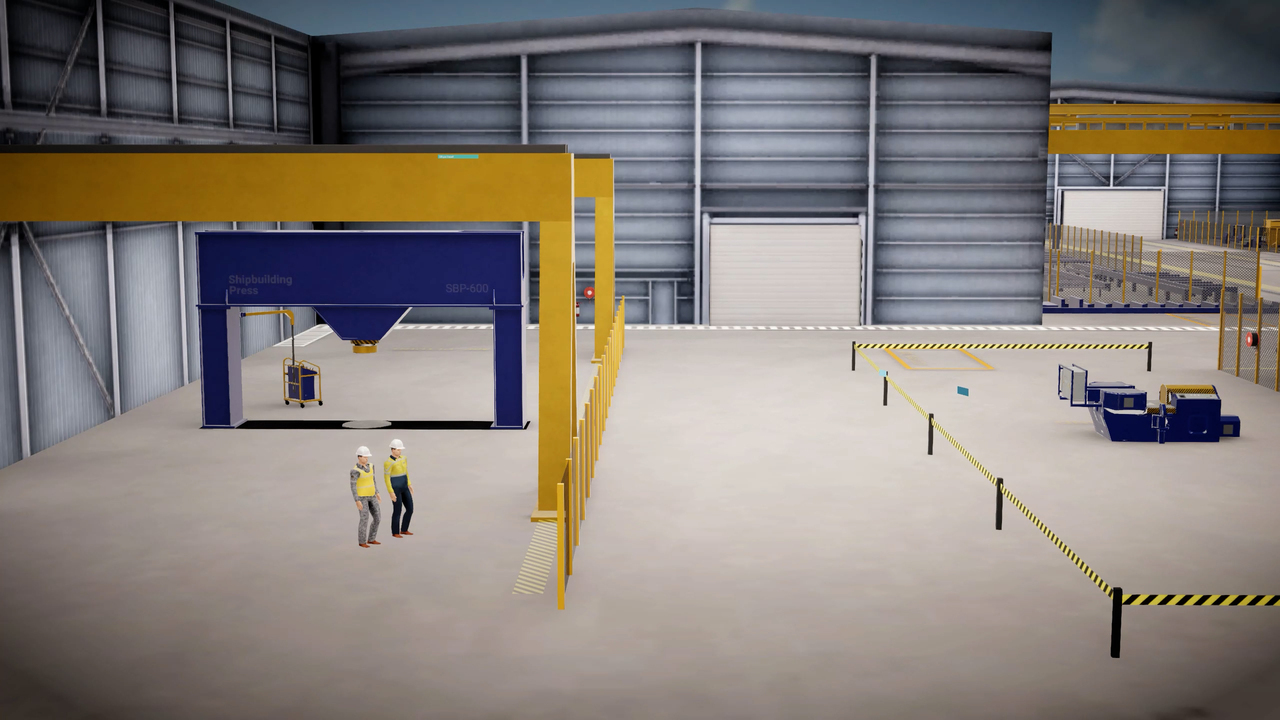
Nieland Press
The Nieland Press is a complex piece of technology. It can apply up to 600 tonnes of pressure to bend and shape steel. This is known as ‘cold forming’ which means ‘without heat’.
While some machinery simply requires the push of a button to do the work, the Nieland Press is reliant on the skill and eye of the operator.
Unit line
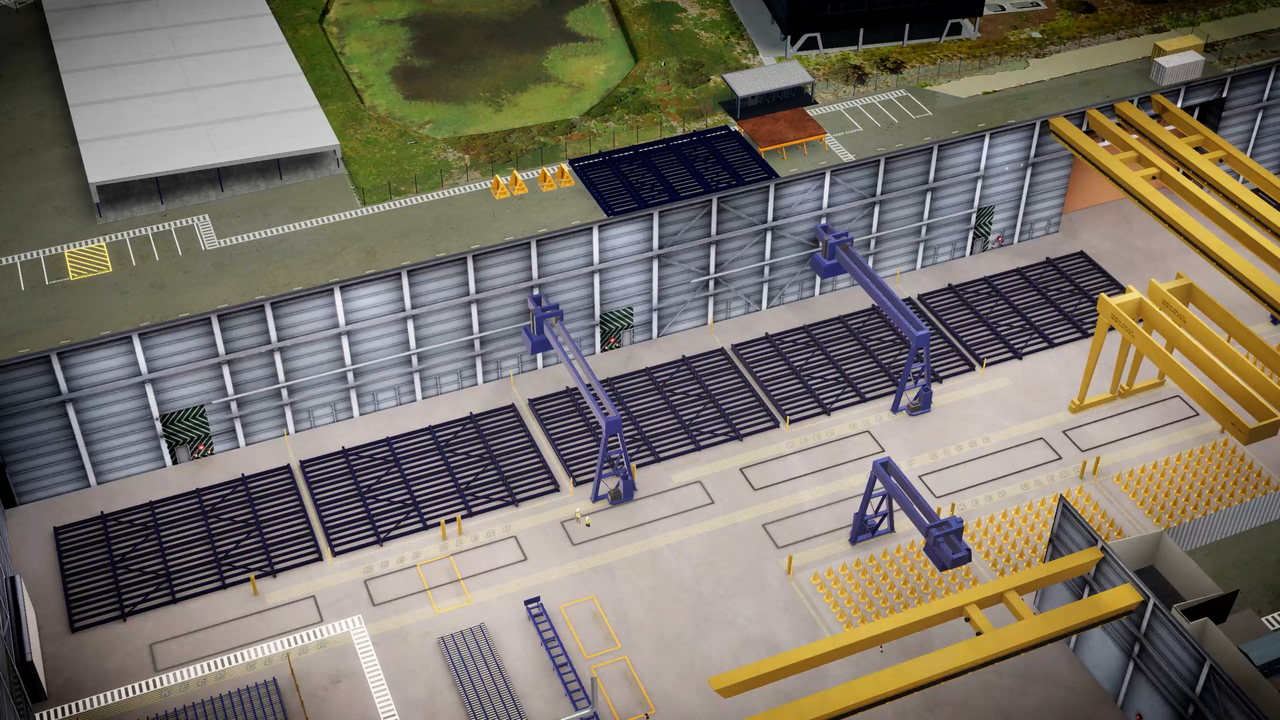
The unit line has five stations, operating like a large-scale car production line, with jig wagons moving each unit to the next station every 10 days.
- Station 1: Deck panels arrive from the panel line remaining transverse, and longitudinal structures are installed and tacked.
- Station 2: The robot welding gantry welds everything installed in Station 1.
- Station 3: Bulkheads and ancillary items are installed, positioned, and tacked.
- Station 4: The robot welding gantry fully welds the bulkheads and associated items.
- Station 5: Finishing work, plus final quality and dimensional checks before the unit moves to Building 21.
Robot welders
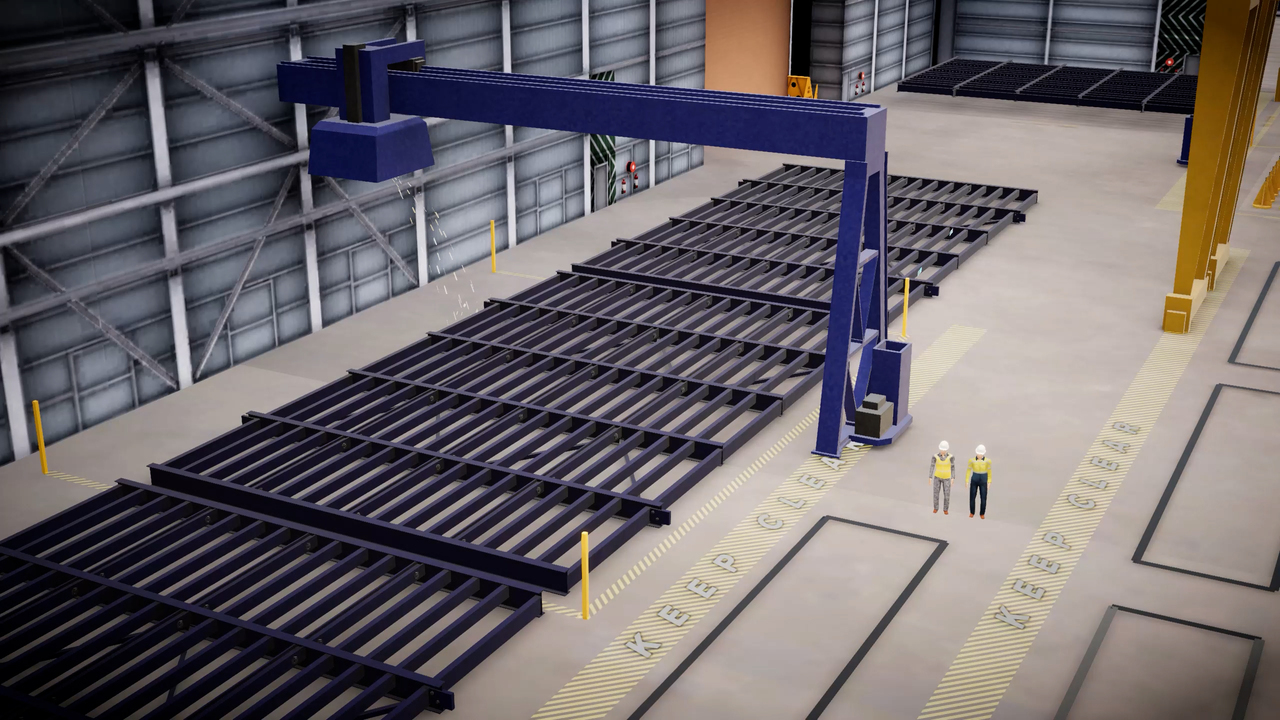
Robotic welders are used on the unit line where possible to take the pressure off the welding workforce. This has reduced the amount of time that our production team spends down on their hands and knees.
Self-propelled modular transport
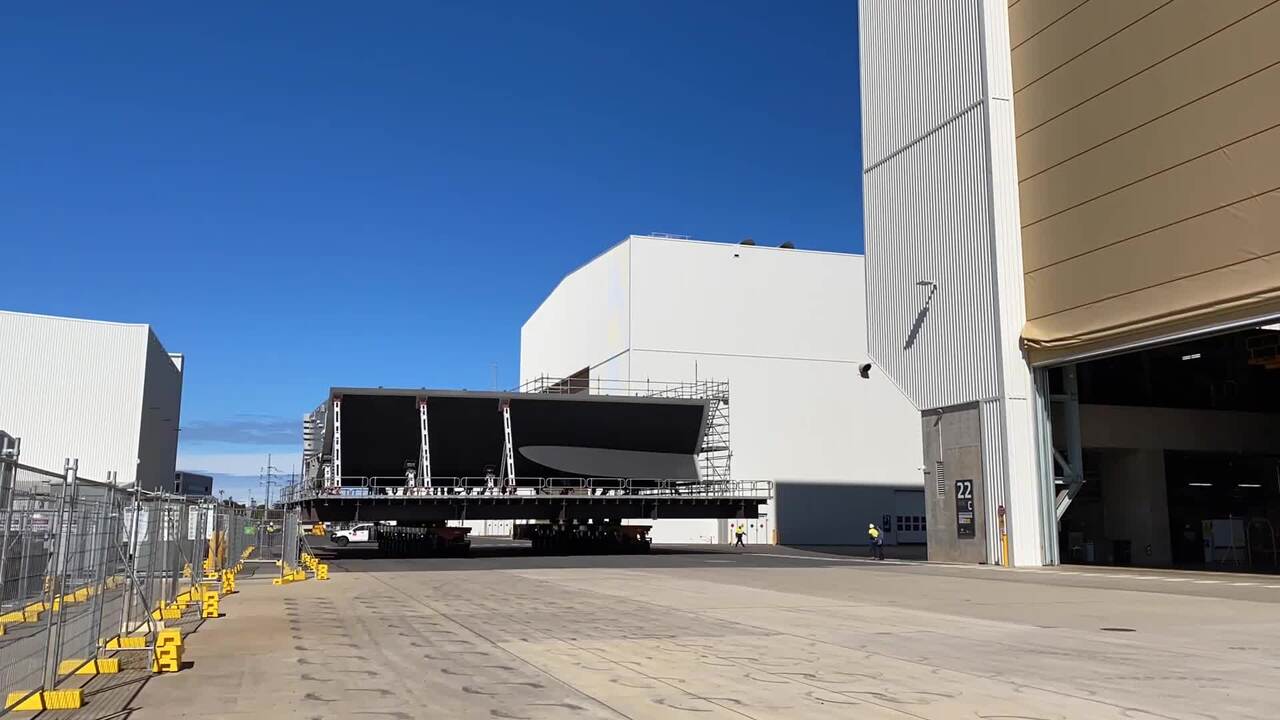
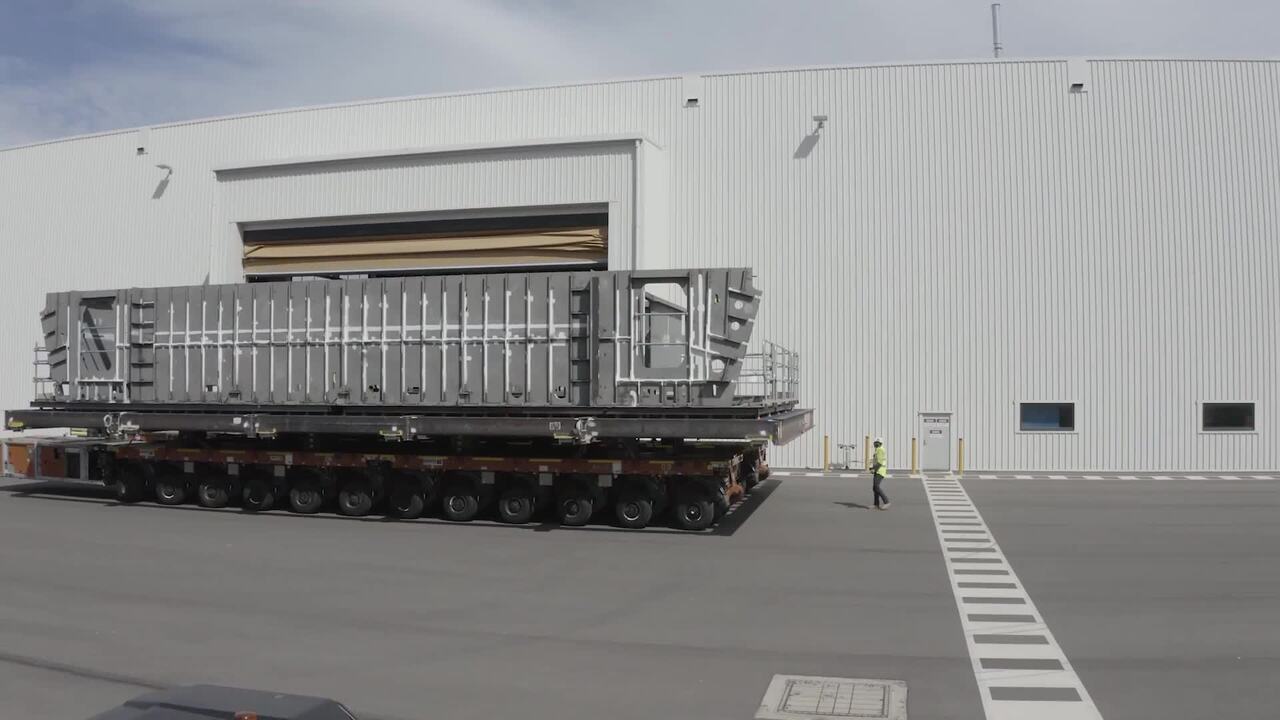
A self-propelled modular transporter (SPMT) is like a remote-control car that moves extremely heavy objects. At this stage of construction, we use an SPMT to move units from the unit line to Building 21.
SPMTs are adaptable in length, and we will use an array of them to move the entire frigate later in the shipbuilding process.
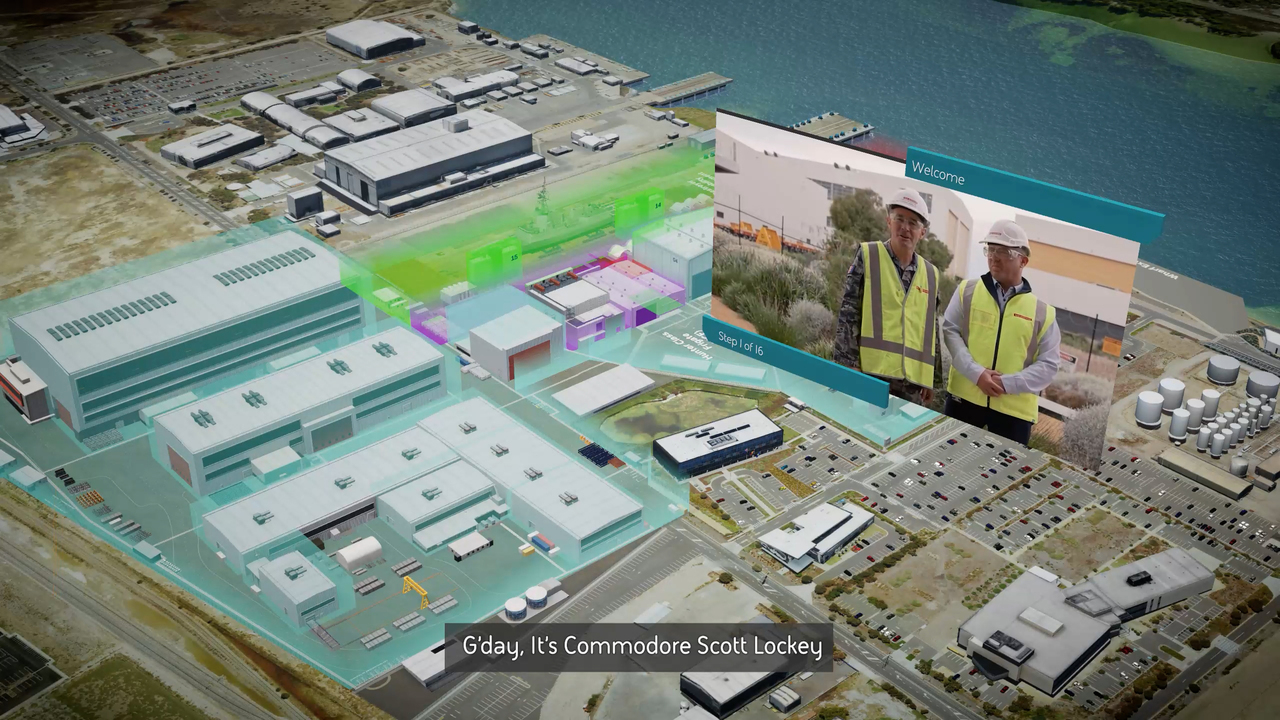
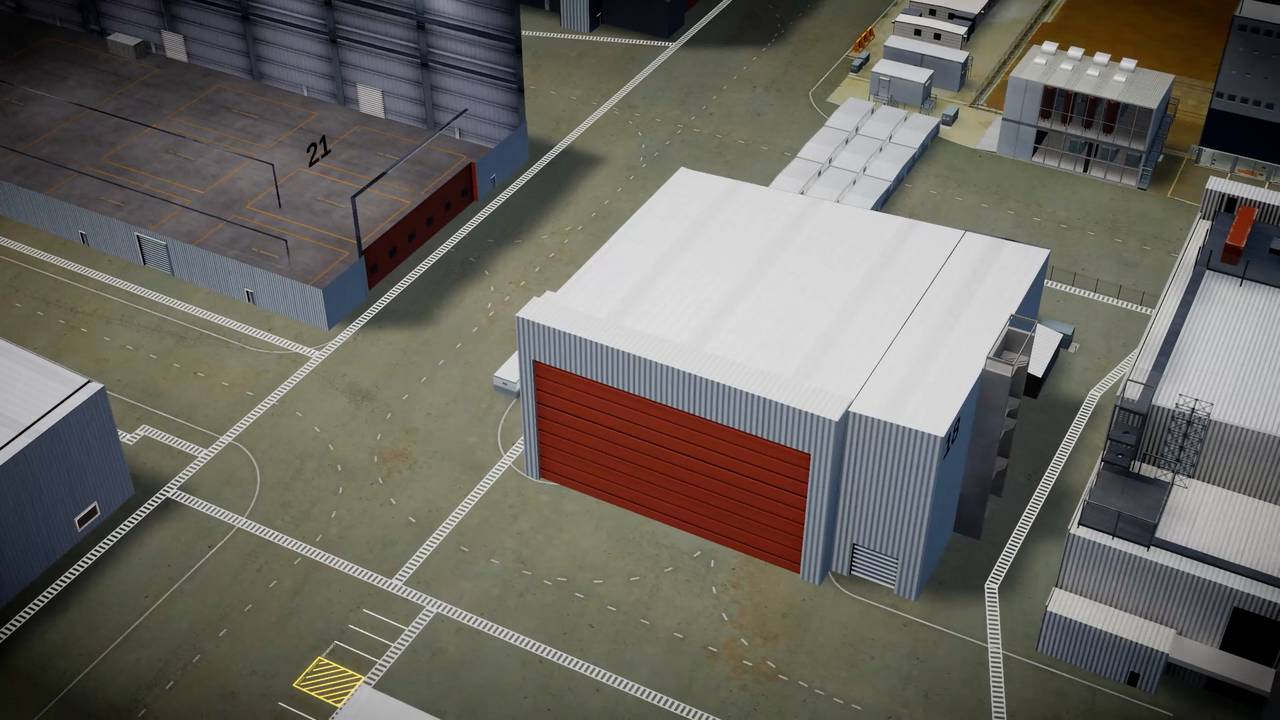
Building 21 and Building 18
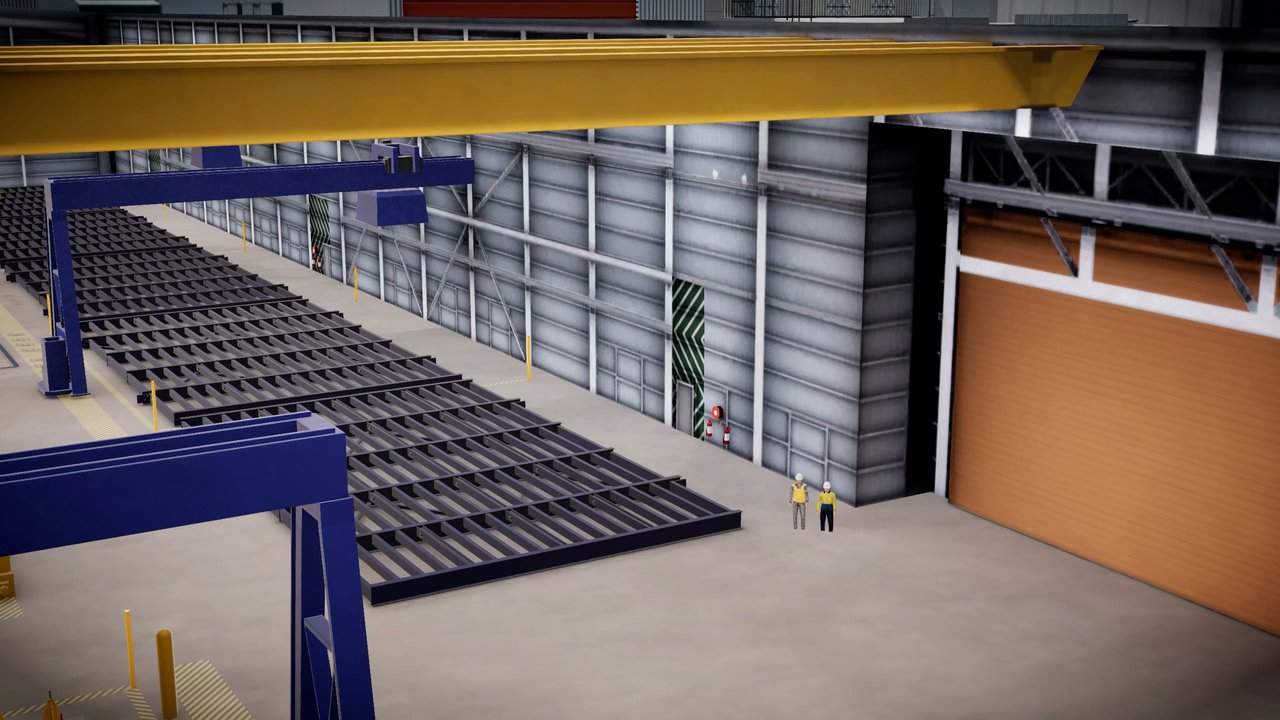
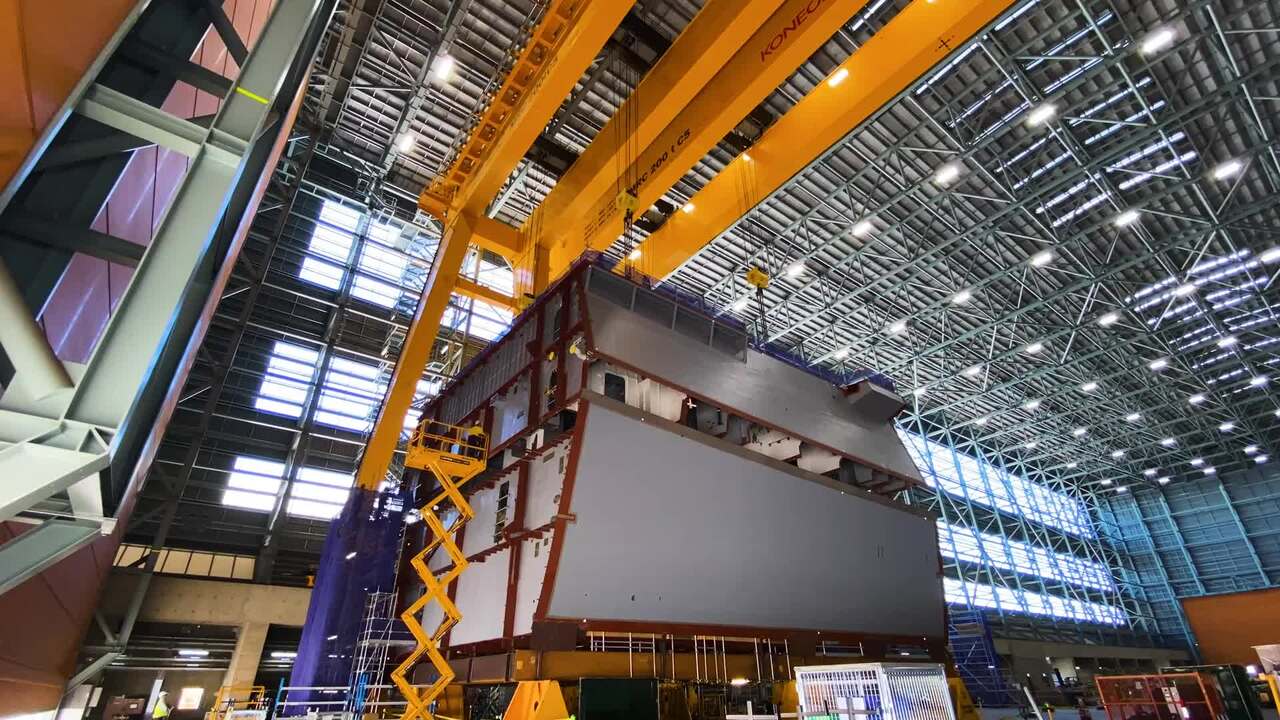
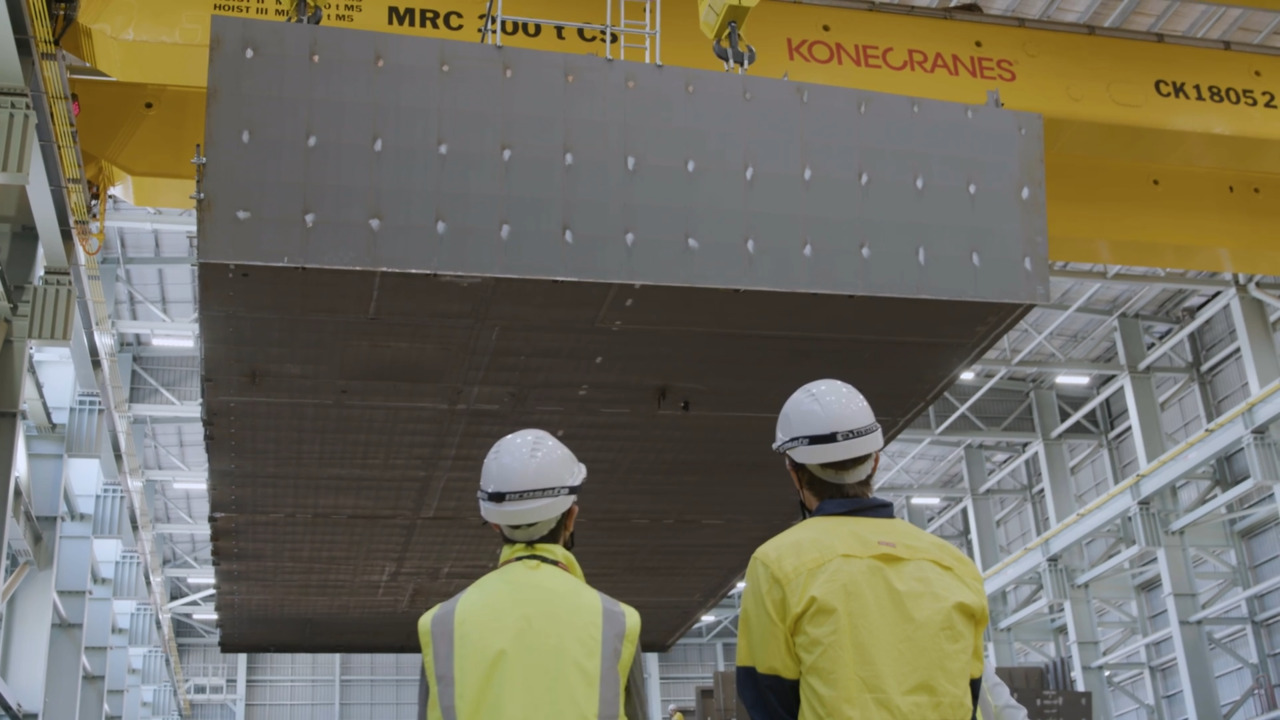
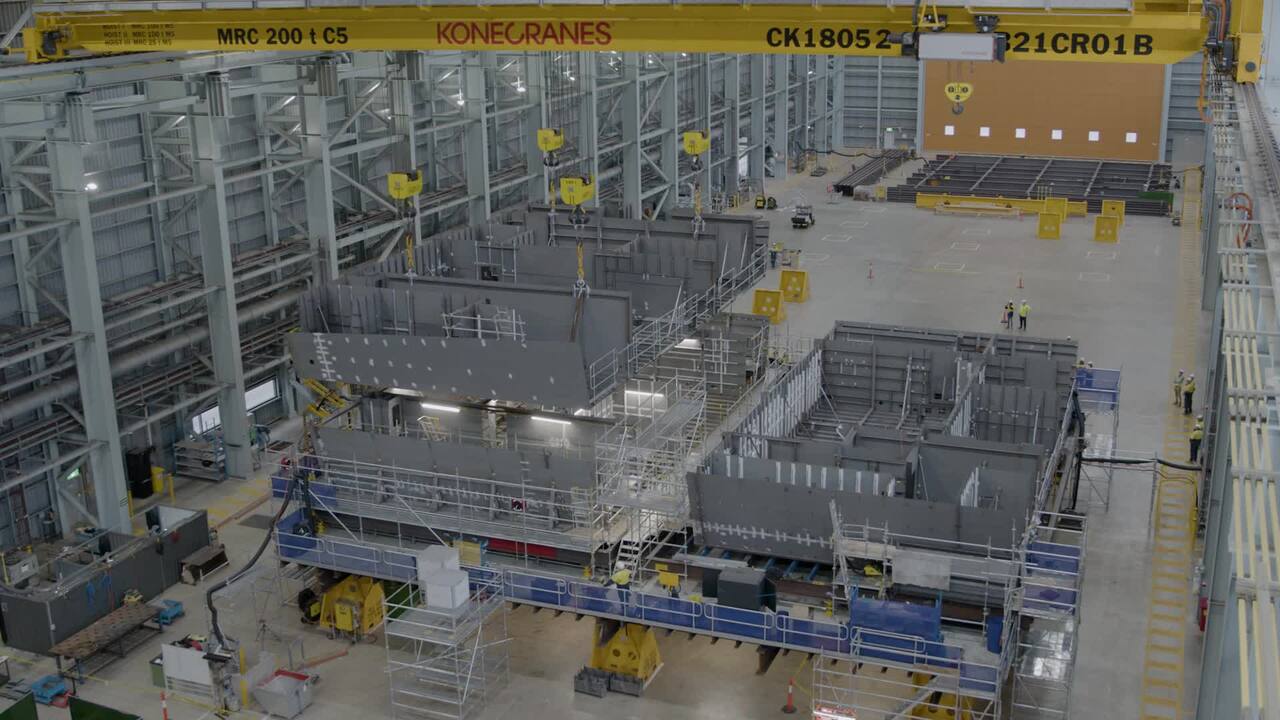
Building 21 is our Block Consolidation Hall, comprising of more than 7,800 square metres in size at 160 metres long, 48 metres wide, and 28.5 metres high.
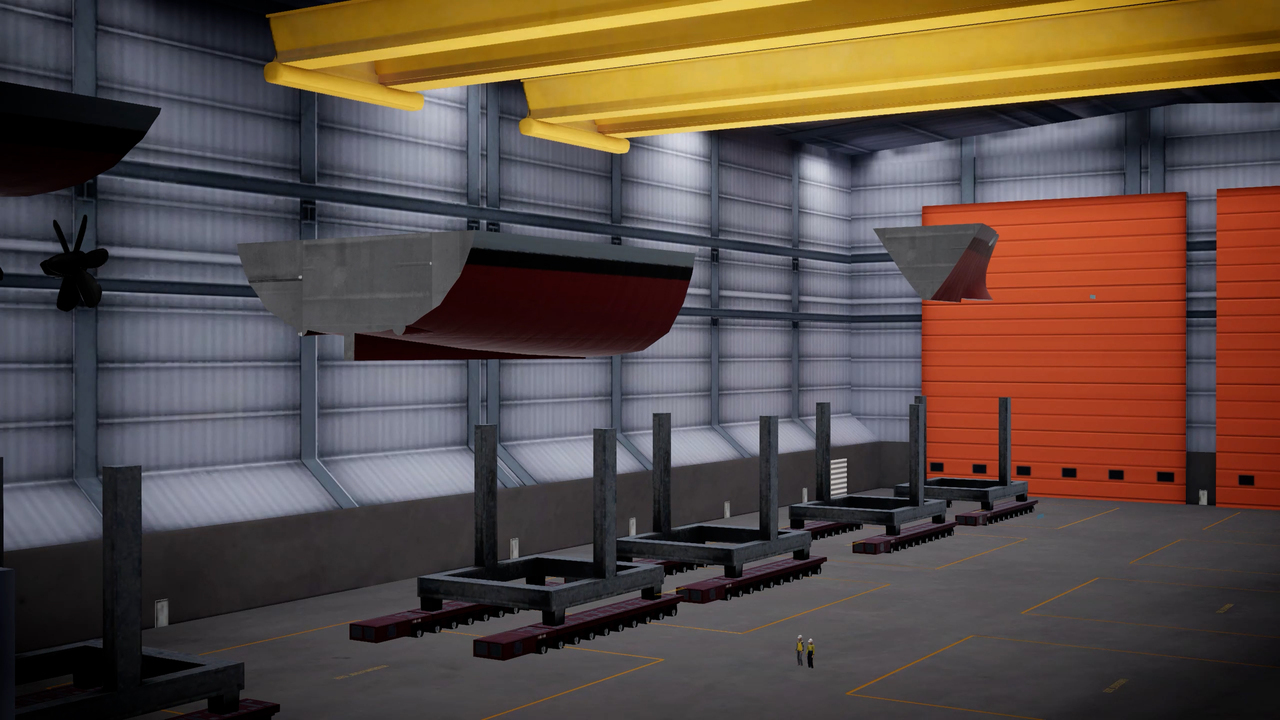
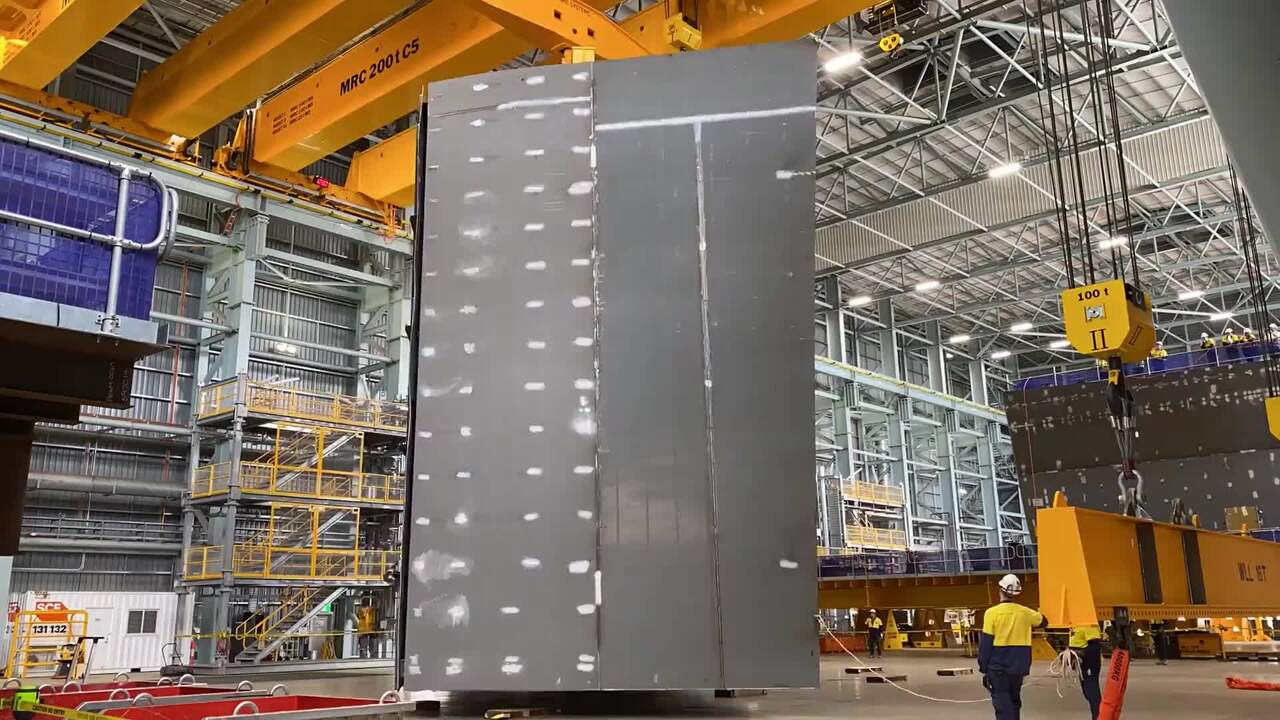
Here the units are consolidated into blocks. In this building we can work on up to five blocks at the same time.
Most blocks consist of four units each but vary between one and seven units. Therefore, each block will vary in size but can be as large as 33m x 20m.
The units arrive at Building 21 upside-down. As most of the welding and attaching of fittings is completed in this space, it is more efficient and safer to conduct the ‘hot work’ in the inverted position. It also makes it easier for our people to undertake the pre-outfit work bending over rather than working overhead.
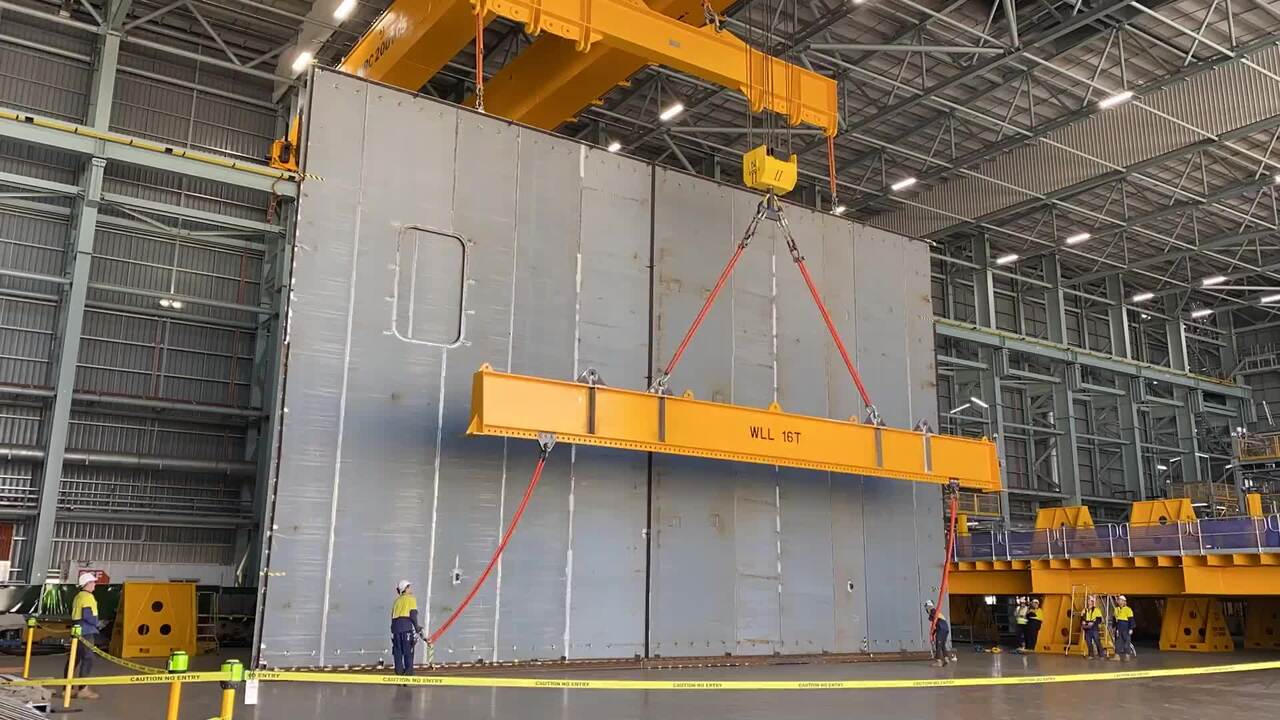
When this pre-outfit phase work is completed, it takes 48 minutes to rotate the block using a 200-tonne crane. For previous shipbuilding programs, this process would have taken two weeks.
Blocks are then moved to Building 18 for blasting and painting. The total volume of paint applied to one frigate in this chamber alone is about 100,000 litres. That amount of paint would cover the inside of around 1,300 Australian homes.
Building 22
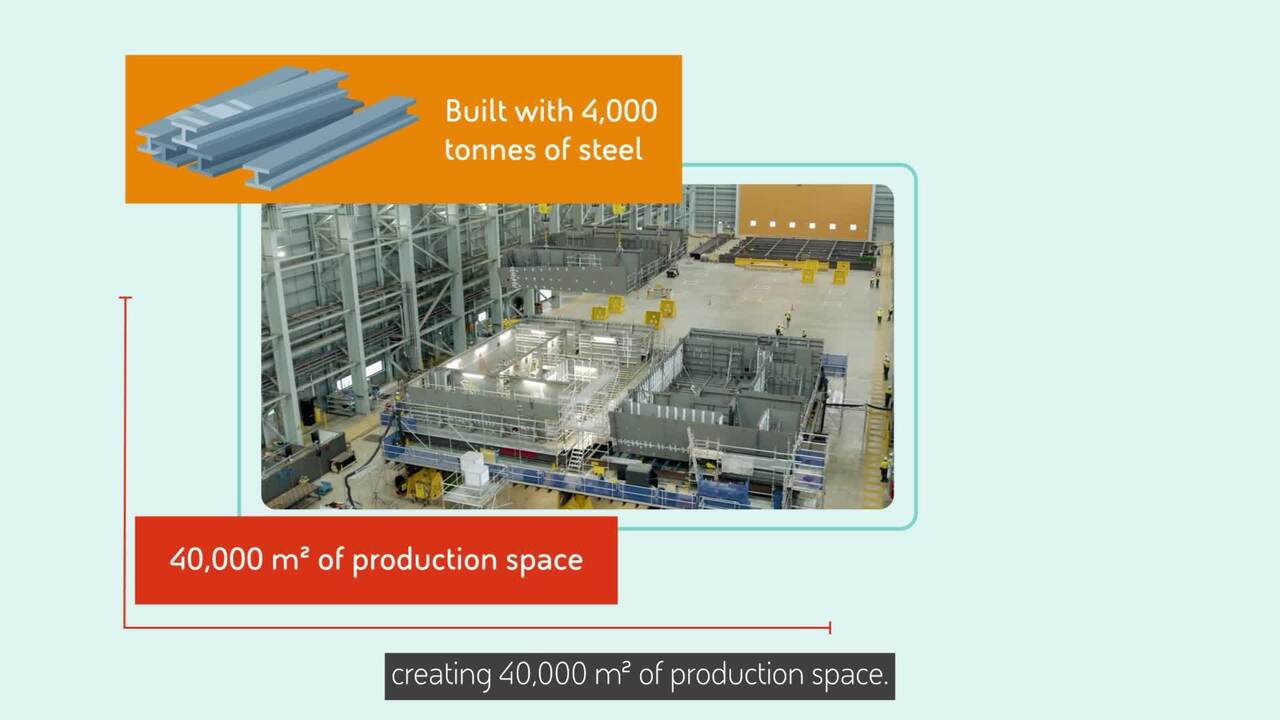
Building 22 is the largest structure at Osborne Naval Shipyard – South. It’s as long as a cricket oval, and as tall as a 15-storey building. The hall alone is 15,000 square metres in size and is made up of 4,000 tonnes of steel.
This ‘Block Outfitting and Erection Hall’ is where we will assemble most of the Hunter class frigates. It is large enough that we could assemble two frigates side by side.
Hardstand
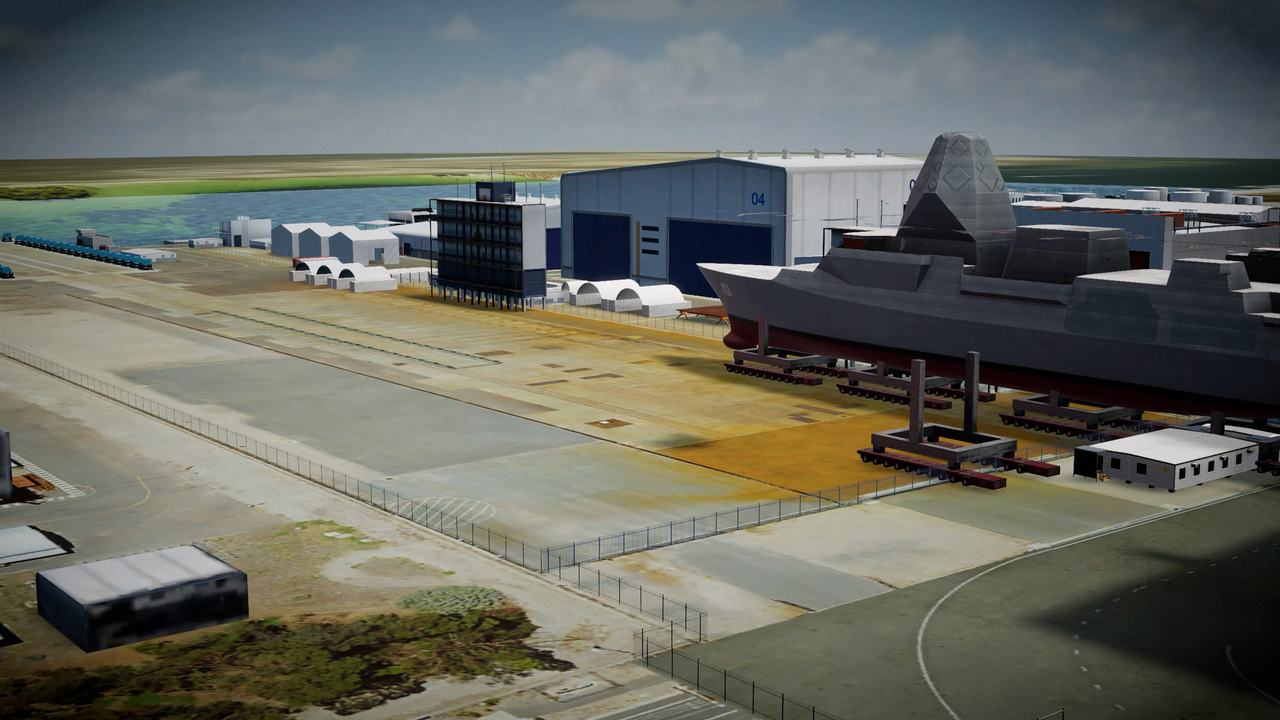
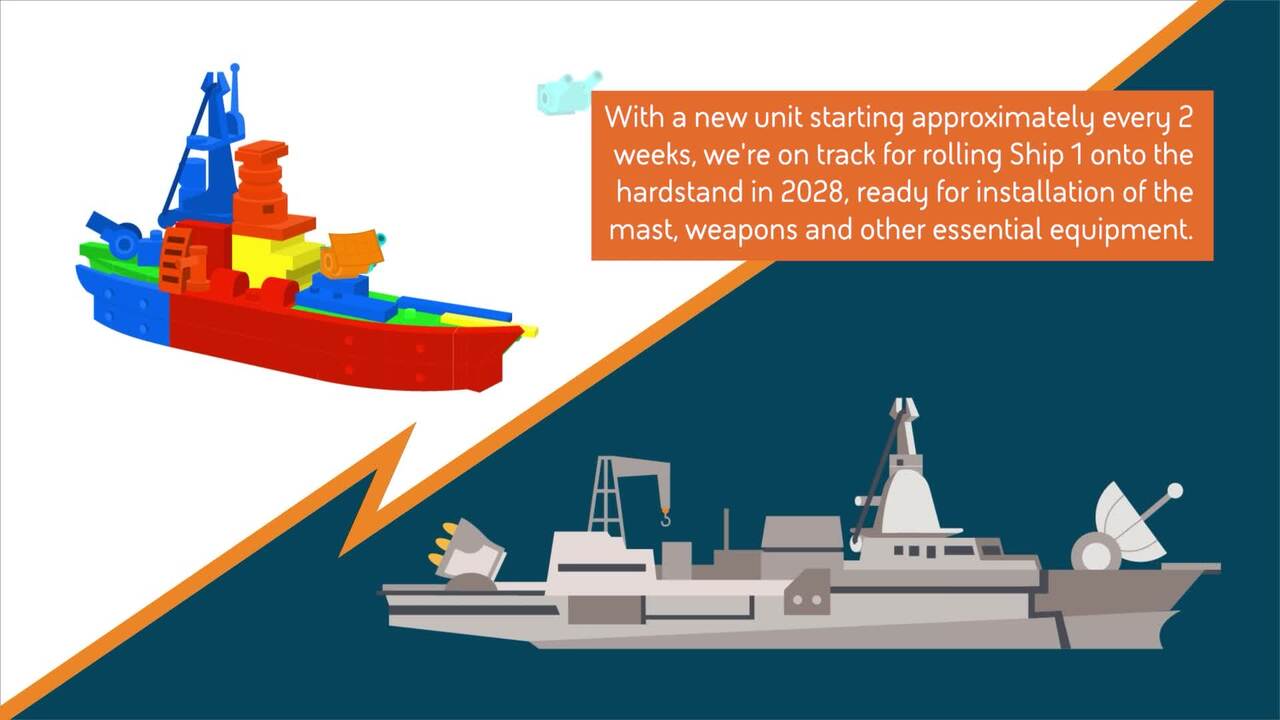
Once the 21 blocks are consolidated and weather-proof, the ship will move from Building 22 to the hardstand. Here we will install the mast, the ship’s 22nd block.
Here the major combat systems equipment is also installed. This includes the vertical launch system (VLS), main calibre gun, towed array handling systems, and topside antennas.
When complete, we move the frigate from the hardstand to the waterline for float off.
Careers
Join the shipbuilding revolution at the Osborne Naval Shipyard. We’re currently mobilising our trades workforce and will require around 1,200 qualified tradespeople over the life of the Hunter Class Frigate Program alone.
Our shipbuilding activities will also provide long-term career opportunities for engineers, project managers, and operational support professionals across areas such as finance, commercial, supply chain, IT, and human resources.
Do interesting work that matters.