
Our contribution to Australia’s defence began in 1953 when we supported the Commonwealth to develop the nation’s missile capability.
Since then, we have built a proud history of delivering products, systems and services for our customers.
We work with government, industry and education partners to grow sovereign defence capability and support the Australian Defence Force.
Today, we are the nation’s largest defence company. We employ more than 7,000 people across more than 40 sites.
Our people continue to build on our legacy by delivering the technology, skills and platforms needed to help protect Australia and its allies.
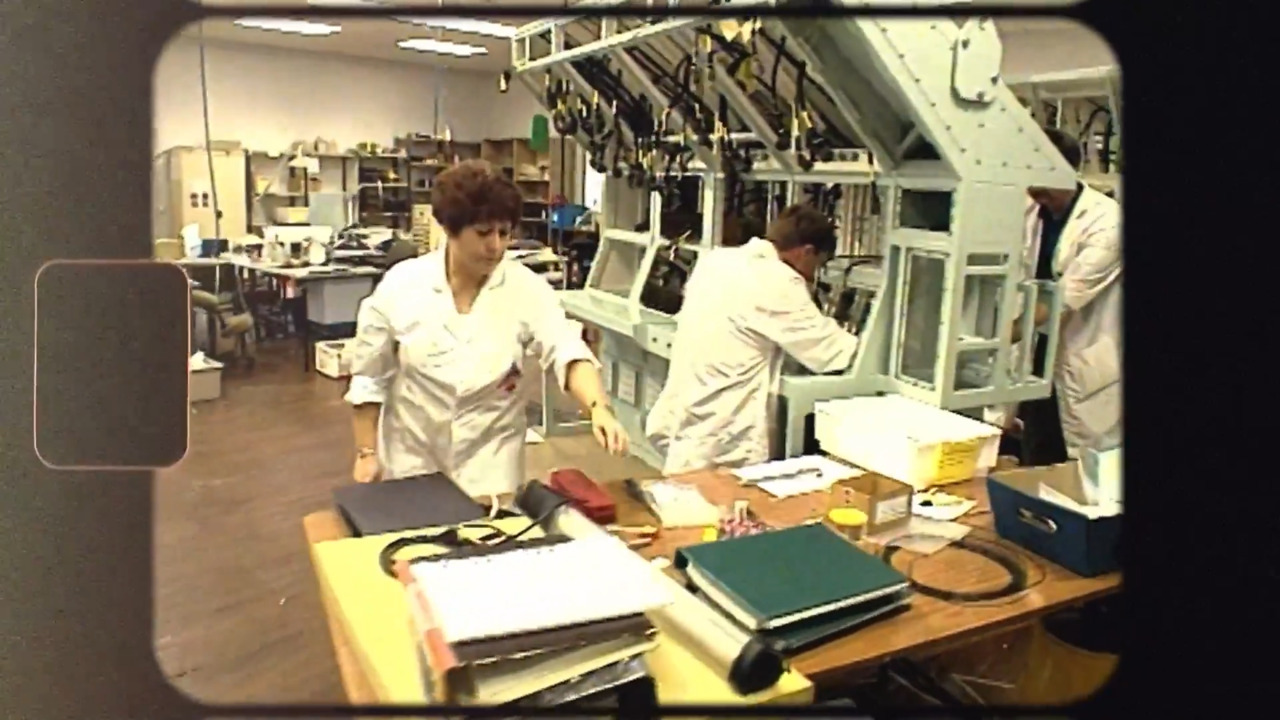
Missile history
We introduced our first missile capability to Australia in 1953.
Our engineers assembled, tested and refined the Bloodhound and Thunderbird missiles that had been designed by BAE Systems predecessors in the United Kingdom.
In the 1960s, we fine-tuned a third missile known as Rapier as part of an agreement between the British and Australian governments. This established a foundation for our partnership with the Australian Defence Force (ADF).
All three missiles were in service with UK and allied defence forces for long periods. The ADF operated the Bloodhound and Rapier missiles.
In the 1980s, we developed the unique hovering missile decoy Nulka. Nulka has been deployed on more than 150 Australian, US and Canadian warships.
We continue to be a key partner in world-leading missile programs such as the Evolved SeaSparrow Missile (ESSM). ESSM is a medium-range, surface-to-air interceptor equipped on ships around the world.
We are currently investing in Australia’s future guided weapons and explosive ordnance (GWEO) enterprise. This program aims to create the next generation of missile capability and high-speed weapons, made here in Australia.
Aircraft and aerospace history
Our aircraft and aerospace work in Australia began in the late 1950s, when we opened an aircraft maintenance facility at Bankstown Airfield near Sydney.
Since then, we have supported the Royal Australian Air Force (RAAF) across several major aircraft programs.
We maintained and refurbished the RAAF’s fleet of F/A-18 Classic Hornets for nearly 20 years. These aircraft were retired in 2021.
The first BAE Systems-built Hawk Lead-In Fighter aircraft landed in Australia in 2000. Since then, this aircraft has trained more than 200 RAAF fighter pilots.
We continue to maintain and upgrade the Hawk aircraft at RAAF Williamtown, NSW, and RAAF Base Pearce in Western Australia.
We also sustain and upgrade the RAAF’s fleet of F-35 Lightning II aircraft at our defence aerospace precinct at Newcastle Airport and RAAF Base Williamtown.
We also manufacture precision titanium components for the F-35A vertical tail at our advanced manufacturing facility at Edinburgh Parks in South Australia.
Maritime history
For decades, our people and shipyards have helped support the Royal Australian Navy’s past, current and future fleets.
Our maritime work began with a contract to manufacture and sustain periscope systems for the Collins Class submarine. We continue to support that program today.
Our former Williamstown shipyard in Melbourne played a significant role in Australian shipbuilding. It was the main construction site for ten Anzac class frigates, including eight for the Royal Australian Navy (RAN) and two for the Royal New Zealand Navy.
The RAN’s Anzac class continue to undergo maintenance at Henderson shipyard in Western Australia.
The Navy’s Hobart class destroyers were built at the Osborne Naval Shipyard in Adelaide by our maritime business, formerly ASC Shipbuilding.
We now sustain these ships from Garden Island in Sydney.
The Hobart class ships returned to Adelaide from 2025 for upgrades as part of the Destroyer Capability Enhancement program.
Today we are also leading construction of the Hunter class frigates at Osborne. The Hunter Class Frigate Program is a cornerstone of continuous naval shipbuilding and will help Australia design, build, upgrade and sustain complex warships for decades to come.
Between 2008 and 2023, we also supported the Navy’s fleet of hydrographic ships based in Cairns, Queensland.
Radar history
We have supported the Jindalee Operational Radar Network, known as JORN, since the 1980s.
JORN is an over-the-horizon radar network that helps monitor Australia’s northern and western approaches for unidentified air and sea activity.
JORN grew from research by Australian scientists in the 1950s into a small concept demonstrator in the early 1970s.
The project expanded in the 1980s. The Commonwealth engaged Amalgamated Wireless Australasia (AWA) to assist with the upgrade. We merged with AWA Defence Industries in 1996.
In the 1990s, JORN expanded into a national network with radar sites at Longreach in Queensland, Laverton in Western Australia and Alice Springs in the Northern Territory.
In 2018, we started work on the JORN Phase 6 program. This program is helping keep the network advanced, reliable and ready to support Australia’s defence needs for decades to come. We also manage and sustain each JORN site across Australia.
Autonomy history
Our work in autonomy builds on decades of experience developing advanced defence technologies in Australia.
In the 1980s, we collaborated with the Commonwealth and defence partners to create the Nulka active missile decoy.
Nulka established our expertise in autonomous systems. Today, we have evolved its technology to create a Vehicle Management System (VMS) that powers autonomous vehicles, aircraft and systems.
From 2019, we introduced this autonomous capability into 20 of the Australian Army’s M113 Armoured Personnel Carriers. These vehicles are now used as testbeds for delivering future autonomous capabilities for the Army.
We are a project partner to Boeing Defence Australia for the MQ-28 Ghost Bat Collaborative Combat Aircraft. We provide some of Ghost Bat's autonomous software and internal flight hardware.
Ghost Bat first flew in 2021, and it achieved its first live-fire test with an AIM-120 Advanced Medium-Range Air-to-Air Missile at Woomera in South Australia in 2025.
We introduced the Autonomous Tactical Light Armour System (ATLAS) Collaborative Combat Variant (CCV) in 2024. This uncrewed ground vehicle uses our autonomous technology to support future battlefield operations.
We continue to advance autonomous defence capabilities through collaborations with the Australian Defence Force, industry partners and allies.
Endless opportunities to grow. Groundbreaking projects to explore.
Join our team of engineers and specialists that push the boundaries of air, land, sea and cyber technologies to create cutting-edge solutions for our Navy, Army and Air Force. Experience infinite career possibilities when you join BAE Systems Australia.