
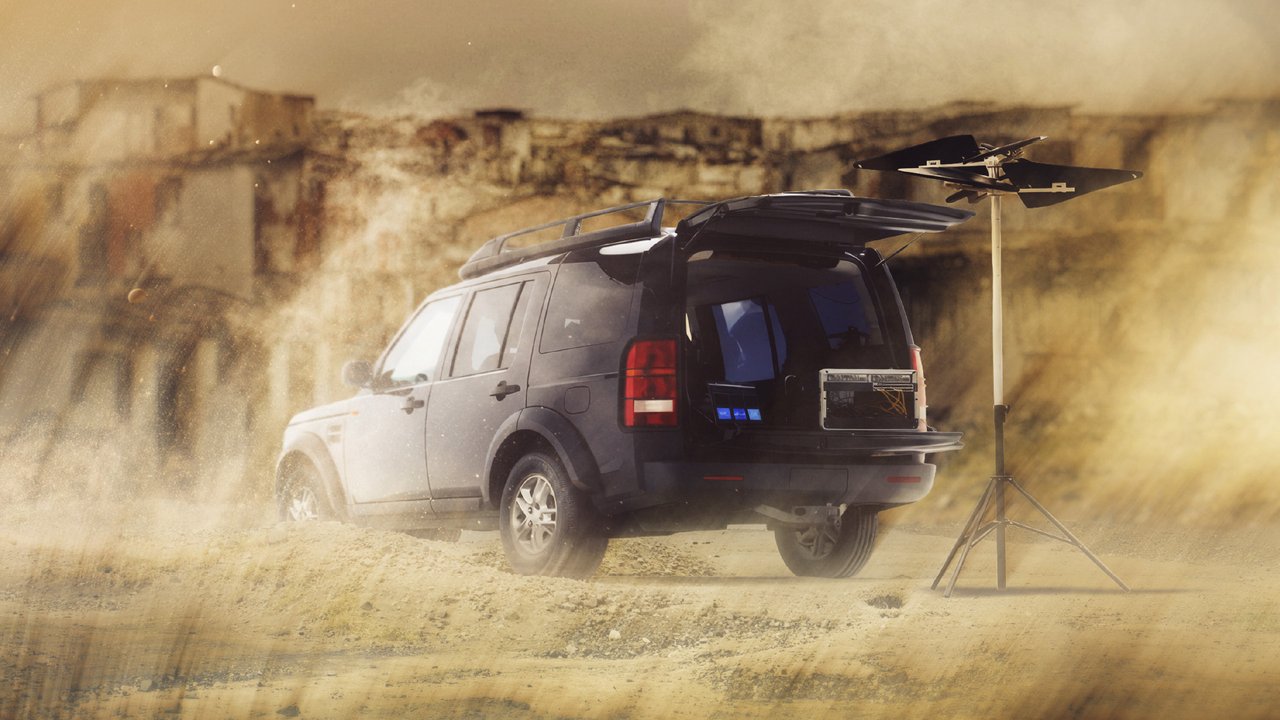
In the modern battlespace, being detected often means becoming a target. Conventional radar systems emit signals that can reveal their position, making them vulnerable to attack or suppression.
Our passive radar capability provides a covert, cost-effective alternative, enabling military operators and critical infrastructure providers to detect and track airborne threats without broadcasting a detectable signature.
By exploiting existing radio frequency transmissions, the capability delivers persistent situational awareness without emitting a detectable signature, helping operators monitor airspace, detect threats earlier and strengthen layered defence.
Passive Radar is currently in development and will undergo a series of live trials throughout 2027, demonstrating and further maturing the capability in operationally relevant environments. We welcome conversations with customers and partners interested in learning more about the system and its applications. Please contact us for further information.
Key Advantages of passive radar
- Undetectable by Design: Passive radar operates without transmitting signals, providing a covert sensing capability that adversaries cannot easily locate or target.
- Cost-Effective Deployment: Built using commercial off-the-shelf technology, the system delivers advanced surveillance capability at a fraction of the cost of comparable active radar systems.
- Three-Dimensional Target Tracking: Provides range, azimuth, speed and elevation data to create a comprehensive picture of airborne threats and support effective responses.
- Rapid Layered Defence Integration: Data can be combined with wider command and control systems and intelligence sources to provide a clear and unambiguous operating picture.
- Flexible and Scalable: The modular architecture enables deployment across defence, homeland security and critical infrastructure environments.
A new approach to covert air surveillance
BAE Systems Passive Radar is a software-defined sensing capability that detects and tracks airborne objects without transmitting its own signal.
Existing television, radio and cellular transmissions are used as sources of illumination. Reflections from aircraft and drones are captured and analysed to detect, locate and track activity in real time.
The system generates a 3D air picture, including range, altitude, speed and heading, providing operators with enhanced situational awareness. Track data can then be fused with command and control systems and other intelligence sources, helping operators identify potential threats and make informed decisions while maintaining a covert posture.
BAE Systems Passive Radar in action
- Counter-Drone Operations: Detect, track and monitor small uncrewed air systems (UAS) before they can threaten personnel, infrastructure or operations.
- Critical National Infrastructure Protection: Provide persistent surveillance around airports, energy facilities, transport networks and other nationally important sites.
- Military Force Protection: Enable covert monitoring of airspace around deployed forces and critical military assets.
- Border and Maritime Security: Support wide-area surveillance and early warning against airborne incursions.
- Layered Air Defence: Integrate with electronic attack and counter-drone capabilities to detect, identify and defeat threats using the most appropriate effectors.
The core innovation is building a highly capable system using commercial off-the-shelf equipment. This makes it affordable, modular and easy to deploy. Traditional active radars are located by their transmissions, but because the passive radar is silent when operating, an adversary has no indication that it is sensing them. Looking ahead, we're exploring advanced target recognition techniques that could not only detect a drone, but help identify it, providing commanders with the additional mission-critical information they need to help determine the most effective response.Chris Shepard, Product Manager
Learn more about BAE Systems Passive Radar
Want to learn more about the BAE Systems Passive Radar capability or speak to one of our experts?