
The battlespace of the future will see crewed and uncrewed aircraft flying as part of a digitally-connected force. We are using our expertise to accelerate and prove possibilities for future combined fleets.
The future of air power is no longer defined by a single aircraft, but by combined effect - seamlessly operating as part of a collaborative team to deliver decisive military advantage. Pairing the flexibility, speed and firepower of combat aircraft like Typhoon brings human judgement to the mass, persistence and reach of uncrewed assets.
Collaborative Combat Aircraft (CCAs), of which Brontanax is an example are designed to operate as part of a wider combat force, able to take on high-risk missions, fly further and increase overall combat mass. They allow advanced crewed aircraft to focus on command, control and mission critical decision making, working alongside them rather than replacing them.
By delivering greater combat mass at a lower cost, CCAs are transforming the scale and effectiveness of future air operations.
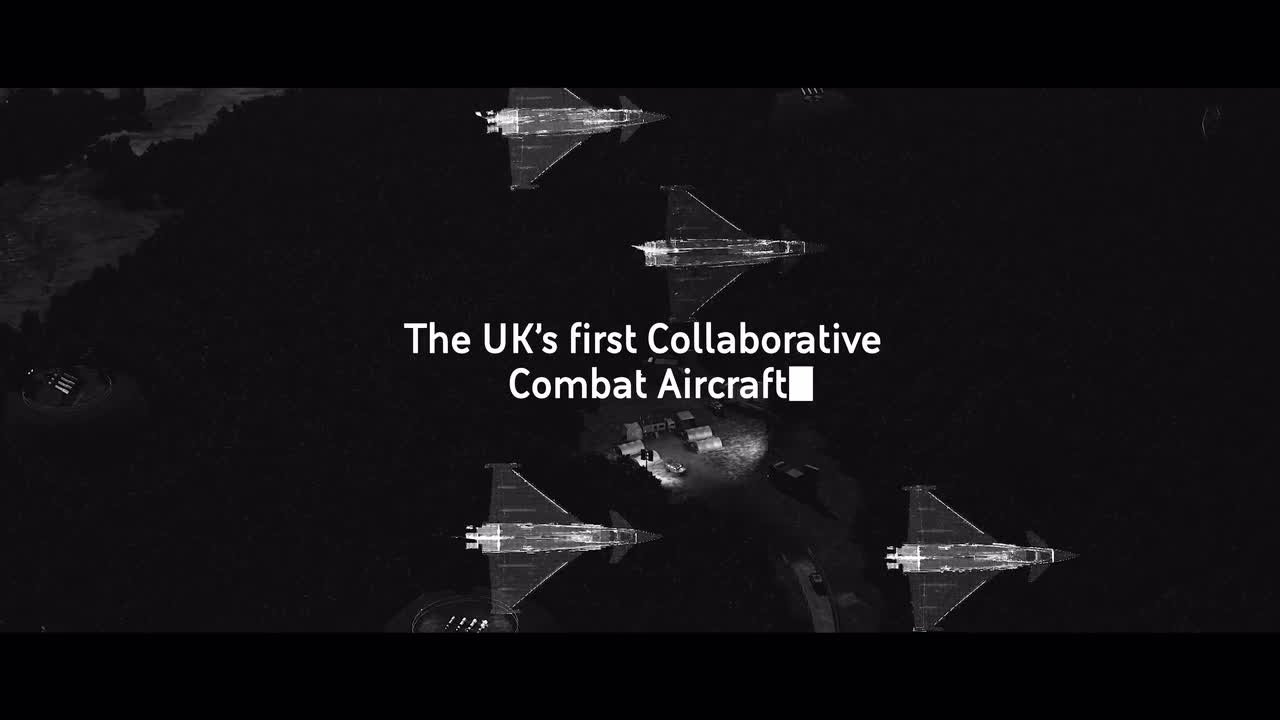
Working alongside QinetiQ, we have shown how crewed and uncrewed aircraft can operate together to provide more cost-effective and flexible air power.
A synthetic trial saw us fly a Typhoon, a swarm of QinetiQ Banshee drones alongside a Malloy Aeronautics' T-150 small heavy lift Uncrewed Air System using current operational military data links including Link 16. This exercise allowed us to validate connectivity, interoperability, human-machine interface and goal-based autonomy.
When I can direct uncrewed aircraft in real time I can execute and evolve a gameplan to take advantage of a greater range of tactical positioning options, more weapons and sensors.Andrew Mallery-Blythe, Typhoon Operational Requirements Manager, BAE Systems Air
We continue to invest in evolving Typhoon's capability to ensure it is ready to secure the skies across Europe and the Middle East for decades to come.
At the heart this evolution is faster datalinks and smarter mission computers which will allow Typhoon pilots to enhance interoperability with uncrewed assets, but our work does not stop there. In our simulation facilities, we are proving how Typhoons will fly on joint operations alongside CCAs, enhancing cockpit displays to give pilots unrivalled situational awareness to manage a complex future battlespace, and integrating AI-driven apps.
Our simulation and synthetic capabilities are helping us prove how crewed and uncrewed aircraft will operate together in practice, before those concepts are taken into live environments. By using high-fidelity digital environments to test mission scenarios, connectivity, human-machine interaction and pilot workload, we can refine how Typhoon and uncrewed systems work as an integrated team.
This allows us to reduce risk, accelerate development and give customers greater confidence in how future combat air capability will perform.
Senior Communications Advisor
BAE Systems