
Filling the weapons gap and increasing platform firepower
The U.S. Government’s only program of record for 2.75”/70mm guided rockets, our APKWS guidance kit transforms unguided 2.75-inch (70 millimeter) rockets like the Hydra 70 Mk 66 and others into precision-guided munitions (PGMs). Qualified on numerous U.S. Department of War (DoW) platforms, APKWS laser guidance kits provide affordable surgical-strike capability to multiple rotary-wing and fixed-wing platforms, as well as unmanned aerial vehicles, static and mounted ground platforms, and maritime vessels.
The APKWS system bridges the gap between unguided rockets and larger anti-armor munitions with commonality across the U.S. military services – Navy, Marine Corps, Army, and Air Force. The APKWS system consistently delivers pinpoint accuracy for the highest lethality available against soft and lightly-armored targets at a lower cost than other systems.
Greater strike range with unmatched precision lethality
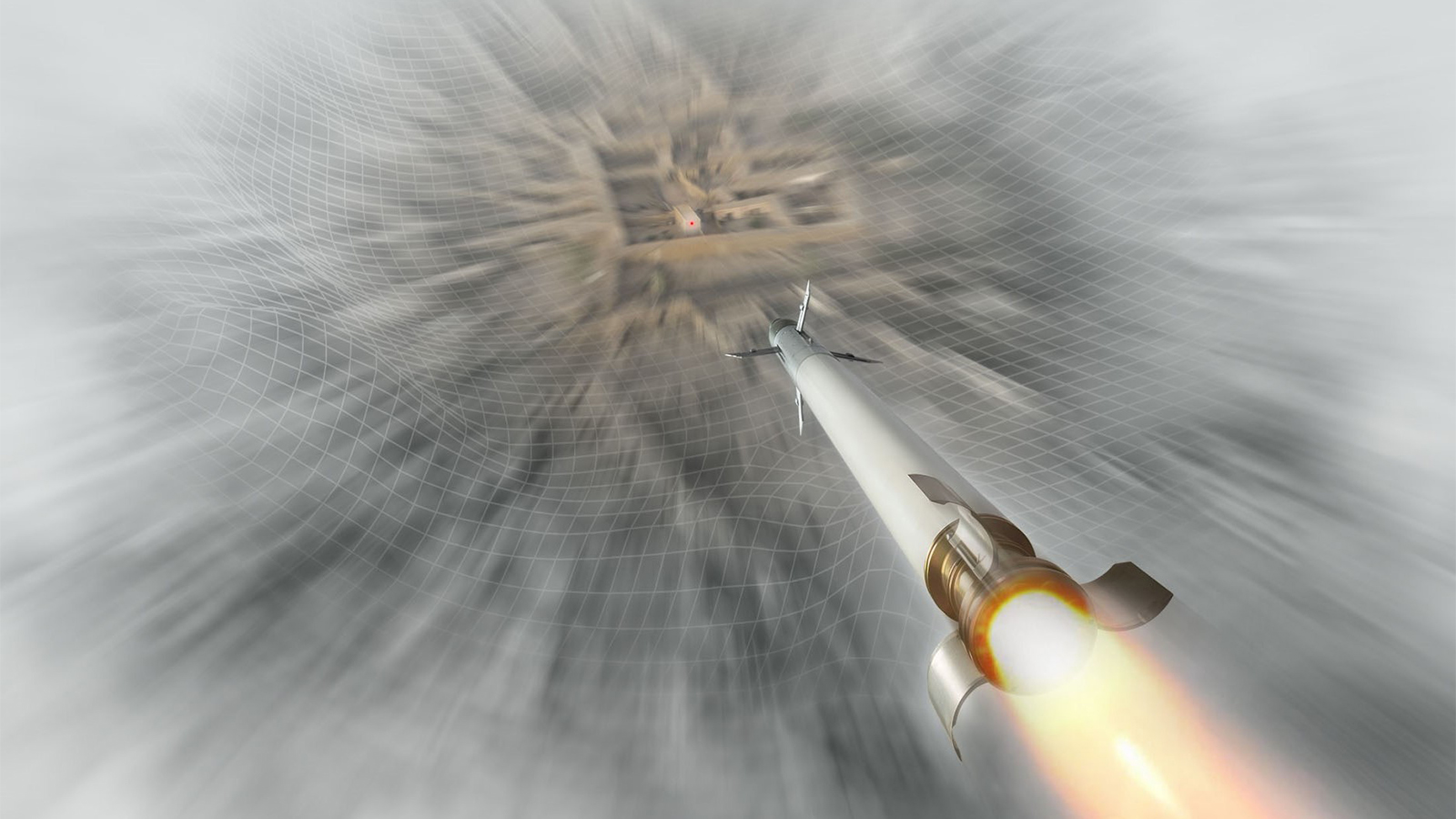
With the category’s highest combat-proven hit rate, APKWS guidance kit equipped rocket consistently hit their intended target with pinpoint accuracy while limiting collateral damage. The guidance section is designed to lock onto targets from over 6 kilometers away, supporting survivability and mission success by keeping your launch platform at a safe standoff distance from threats. The guidance kit’s Single Variant Block Upgrade optimized flight trajectory so the rocket can hit targets at a steeper angle of attack for enhanced lethality.
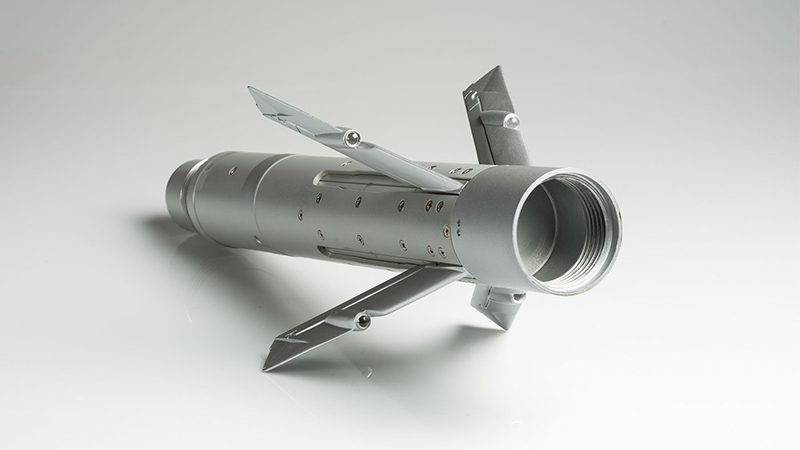
Innovative by design, the APKWS kit includes advanced Distributed Aperture Semi-Active Laser Seeker (DASALS) optics located on all four guidance wings, which are protected by wing-slot seals prior to firing, avoiding adjacent fire damage that can interfere with a nose mount seeker. Once the rocket is fired, the APKWS kit’s wings deploy and the optics lock on to designated targets, guiding the rocket to the target – delivering accurate strikes and minimizing collateral damage when and where it matters most.
- Wing slot seals protect optics from adjacent firings, sand, and moisture prior to launch to ensure no damage or debris inhibit the seeker from locking onto targets
- Optics lock on to moving or stationary targets in open or confined areas, supporting a wide variety of missions, and reducing any chance of a lost or uncontrolled rocket after launch
- 40-degree instantaneous field of regard enables a broad capture area for the rocket to adjust mid-flight and stay on track to its target
Cost effective, easy to integrate, and more capable than ever
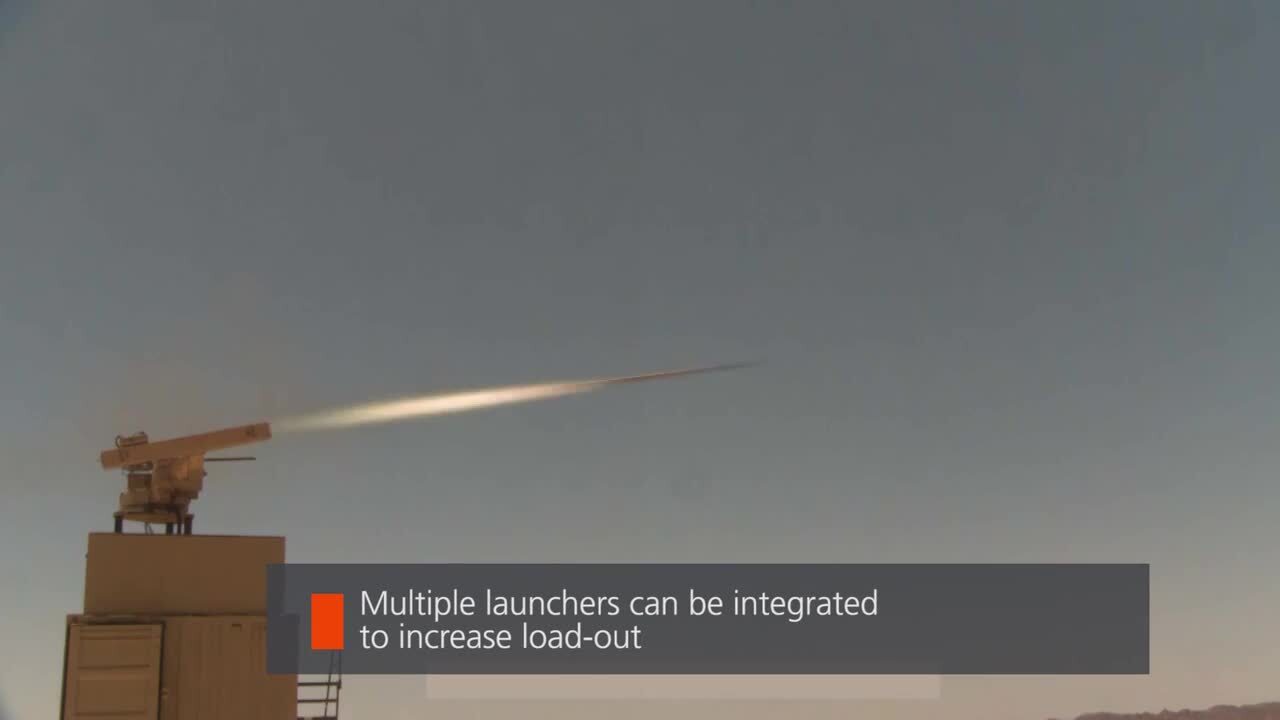
First put into production in 2008, the APKWS laser-guidance kit proved to be one of the most accurate, effective, and easy to implement systems in the world for converting unguided rockets into laser-guided rockets (LGR). Today’s system has also proven itself capable in air-to-air targeting of unmanned aerial vehicles (UAVs) and low-flying cruise missiles – as part of a counter-unmanned aerial system (C-UAS) – as well as in ground-to-ground lethality fired from launchers mounted on vehicles and remote weapon stations.
Mission and platform flexibility, as well as its light weight and low cost of integration, makes our APKWS system one of the most highly capable and useful combat weapons available to every department of the U.S. DoW and to U.S. allies. In fact, since its introduction, over 100,000 APKWS units have been sold for service worldwide.
Production-ready for high demand
APKWS guidance kits are readily available. Demand from the U.S. military and international governments is high, and BAE Systems is well-positioned to support that demand. Our state-of-the-art factories in Hudson, New Hampshire and Austin, Texas continue to produce and deliver with available excess capacity, supported by our robust supply chain, advanced manufacturing capabilities, and recent investments of over $100 million in infrastructure improvements. We offer a manufacturing capacity of at least 25,000 units per year, and are continuing to expand production.
With most of our supply chain in the United States, our centralized approach, and focus on delivering zero defects, we are optimizing overall production and delivery efficiency, which shows in our:
- Over 12 years in full-rate production
- More than 100,000 units delivered to date
- Proven ability to surge capacity, accelerating the delivery of over a thousand units ahead of schedule.



Is the APKWS laser-guidance kit compatible with rocket motors other than Hydra’s Mk 66?
This system was designed to work with any 2.75"/70mm rocket system that the U.S. military has in inventory – primarily the Hydra 70 Mk 66. Over time, upgrades have further optimized performance when coupled with the Hydra 70 and its Mk 66 motor, as well as how its sensors and software interact with the Hydra’s M151 fragmentation warhead, M423 fuse, and the M260/261 launcher. However, the incredible adaptability of the APKWS guidance kit mid-body design still makes it highly adaptable for use with other 2.75”/70mm unguided rockets, regardless of the rocket motor design.
What platforms is the APKWS laser-guidance kit qualified on?
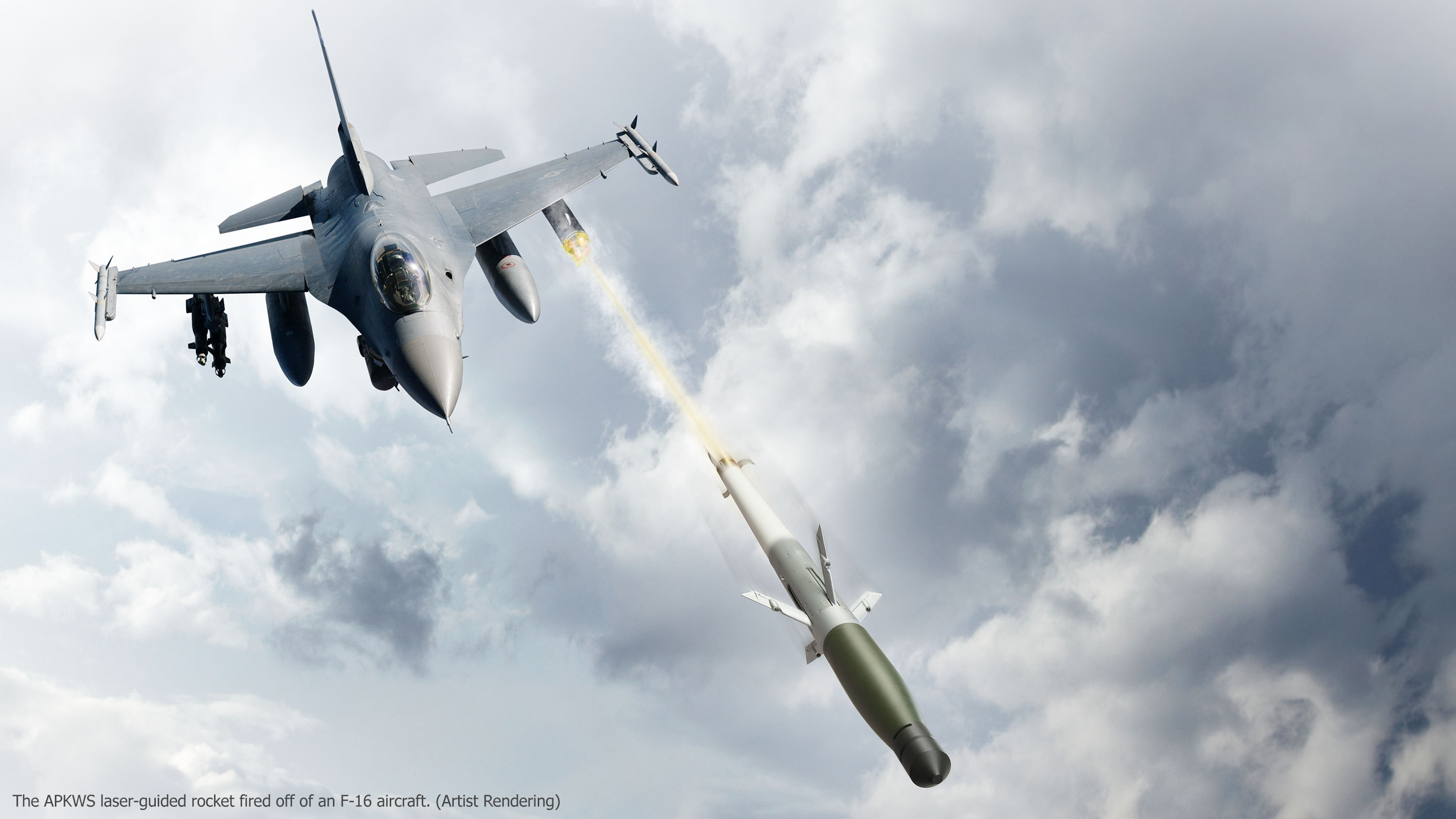
The APKWS laser-guided rocket (LGR) kit is combat-proven and preferred worldwide. To date, over 20 of the world’s most utilized rotary-wing and fixed-wing platforms are qualified to fire rockets with BAE Systems’ APKWS laser guidance system, including but not limited to:
|
|
Can foreign countries buy the APKWS laser-guidance kit?
Our APKWS guidance kits are available to all U.S. military branches – U.S. Navy, U.S. Air Force, U.S. Army, and U.S. Marine Corps – and are deployed in various air-, and ground-based configurations to support a range of defense, attack, training, and threat response roles worldwide. The U.S. State Department has also approved the APKWS guidance kit for international sales to allied nations for ongoing combat operations through the Foreign Military Sales (FMS) program, with access authorized on a case-by-case application basis.
What target sets are APKWS kit equipped rockets designed to defeat?
At one time, warfighters who needed to eliminate soft targets or lightly armored threats from a distance had a tough choice to make – they could either fire an unguided rocket in the target’s general direction or they could use a precision-strike missile, which was designed to destroy armored vehicles, like tanks. The unguided rocket might miss the target entirely and possibly hit non-combatants or friendly forces, whereas the precision-strike missile could cause significant collateral damage. By adding the highly-accurate APKWS laser guidance kit to the body of the unguided rocket, that rocket turned into a precision-guided munition (PGM) capable of hitting the intended soft target threat while minimizing collateral damage.
The APKWS system has the precision that today’s warfighter needs to hit soft and lightly-armored targets –from a distance in Military Operations in Urbanized Terrain (MOUT) and other conditions, with the optimal amount of destructive power. In addition, because an APKWS laser rocket is 1/3 of the weight and cost of traditional laser-guided anti-armor munitions, warfighters can load their rotary-wing or fixed-wing aircraft with more precision-strike firepower on every mission. The system even makes ground-to-ground use both more effective and affordable.
How has the latest version of the guidance kit changed from the original APKWS guidance kit?
Next-generation APKWS guidance kit improvements include:
- 30% increase in strike distance
- 90% reduction in Surface Danger Zone (SDZ): more training range options
- Improved trajectory shaping for enhanced lethality
Learn about our entire Precision-Guided Munitions portfolio
- Precision Guided Munitions
- BONUS artillery-launched double-fused ammunition
- Hypervelocity Projectile (HVP) lethality and performance enhancements
- Integrated GPS Anti-jam System (IGAS) for missile and munitions applications
- Long Range Anti-Ship Missile (LRASM) RF Sensor
- NavFire™ 24-channel, dual-frequency, all-in-view GPS Receiver
- NavStorm™+ integrated 5-channel anti-jam GPS Receiver
- NavStrike™ high accuracy, high reliability GPS Receiver
- Terminal High Altitude Area Defense (THAAD) anti-ballistic missile seeker




Counter-Unmanned Aircraft Systems (C-UAS) • Guidance and Control • Joint Air Power Competence Center (JAPCC) • Laser-Guided Rockets (LGR) • Laser infrared Guided Rocket (LiGR) • Low Cost Precision Kill (LCPK) • Mid-body Guidance • Military Operations in Urbanized Terrain (MOUT) activities • Missile Guidance • Naval Strike Missile (NSM) • PGM Drone • Precision-Guided Munitions (PGMs) • Robotic Combat Vehicle - Medium (RCV-M) • Small Dark Aircraft Detection • Seekers • Unmanned Aerial Vehicles (UAVs)
BAE Systems’ Aerospace & Mission Systems unit is a uniquely fulfilling place to work for those who want a challenging, but highly rewarding career doing some of the most important guidance, autonomy, and precision munitions work done in the world today. Whether you are an experienced professional or a talented college senior or grad student with incredible skills and a passion for the work, click here for our current job listings.
Download the APKWS key program milestones infographic or contact an Aerospace & Mission Systems business development representative to arrange a meeting.