Just like a wishbone, the stem brings both sides of the hull together. Formed from a molten steel casting, the stem provides critical structural strength and defines the hydrodynamic shape of the frigate.
The stem casting for NUSHIP Hunter, the first of the Hunter class frigates, was recently installed in a challenging ten-day weld marathon, marking an important milestone for the shipbuilding team at Osborne Naval Shipyard.
With only one stem casting to work with, there was no room for error for the crucial task of precision welding the piece onto the foremost steel unit – one of 78 units that form the final ship. Teams across supply chain, engineering, weld fabrication and safety spent months preparing for the installation, ensuring every detail was planned, rehearsed and risk-managed before work began.
The stem casting was manufactured in the UK at Goodwin Steel Castings, using a traditional foundry process where molten steel is poured into sand moulds to form two sections. These halves were then joined together to create the finished 3,920 kg stem, which was then shipped to BAE Systems Australia’s manufacturing facility at the Osborne Naval Shipyard for installation.
Lauren Townsend, BAE Systems Australia Head of Operations Management for the Hunter Class Frigate program, said the result was a significant activity for the team.
“We only have one stem casting per ship, so it was vitally important that the team got it right. We’ve been through months of preparation, pulling on all of the different functions, to get us to this point.”
Once in position, the stem casting had to be preheated and maintained at 200°C for the duration of the weld. This was required to meet the standards set by Lloyd’s Register, the international body that provides globally recognised shipbuilding certification and assurance. To keep the heat constant, weld teams worked in continuous 24-hour shifts, rotating day and night weld teams non-stop until the process was complete. Originally expected to take up two-weeks, the process was completed safely and successfully in just 10 days.
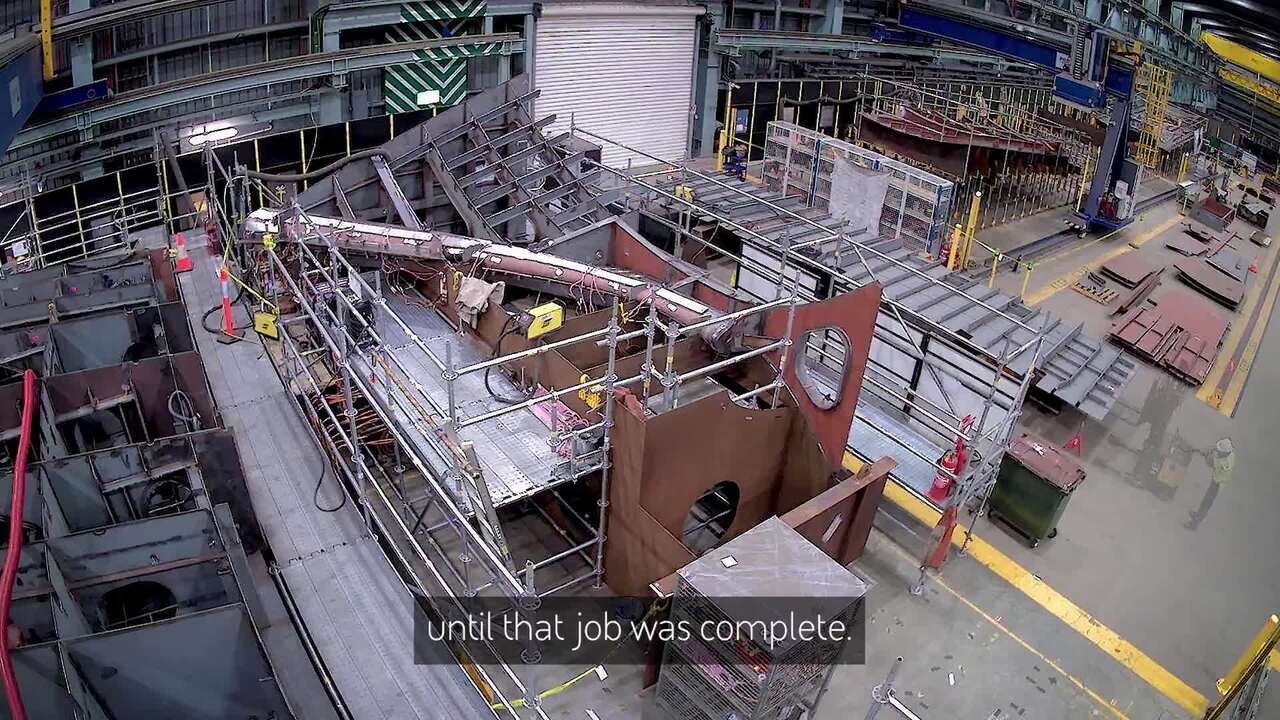
I’ve been in shipbuilding for nearly 20 years and we’ve never had a casting like this — not at this scale and not with this level of pre-heat. I’ve never seen anything like it. To achieve the required weld quality, we couldn’t let the heat off at any point. So, we went 24/7, day and night shifts, until the job was complete.Mick Noy, BAE Systems Australia's Fabrication Manager
Mick said the success of the activity went well beyond production.
“I’m extremely proud of the team — and that’s not just in the production sense. From the pre-mortem planning session, through manufacturing, engineering and the safety team, everyone pulled together in a short timeframe to make sure we could get this done.”
Working continuously in confined, high-temperature conditions required additional safety planning. Fatigue management, enhanced PPE, cooling vests, specialised breathing air and on-site health support were all critical to delivering the work safely. The success of the stem casting installation also relied on team members looking out for one another under the strenuous conditions.
For many involved, the stem casting installation will stand out as a career-defining moment. It has also helped build capability that will carry forward into future ships.
“This milestone puts us in a really strong position for the future vessels,” Lauren said. “We’ve built skills, experience and confidence — and it’s a model we can lift and shift for other key installs as the build progresses.”
More than a just technical success, the stem casting installation demonstrates the Hunter Class Frigate program is growing Australia’s naval shipbuilding capability and developing a highly specialised, skilled workforce capable of providing vital support to the Royal Australian Navy well into the future.