
 Artificial intelligence (AI) is rapidly reshaping national security. At BAE Systems’ FAST Labs™ research and development organization, scientists are turning emerging AI technologies into tangible advantages for those who defend our nation.
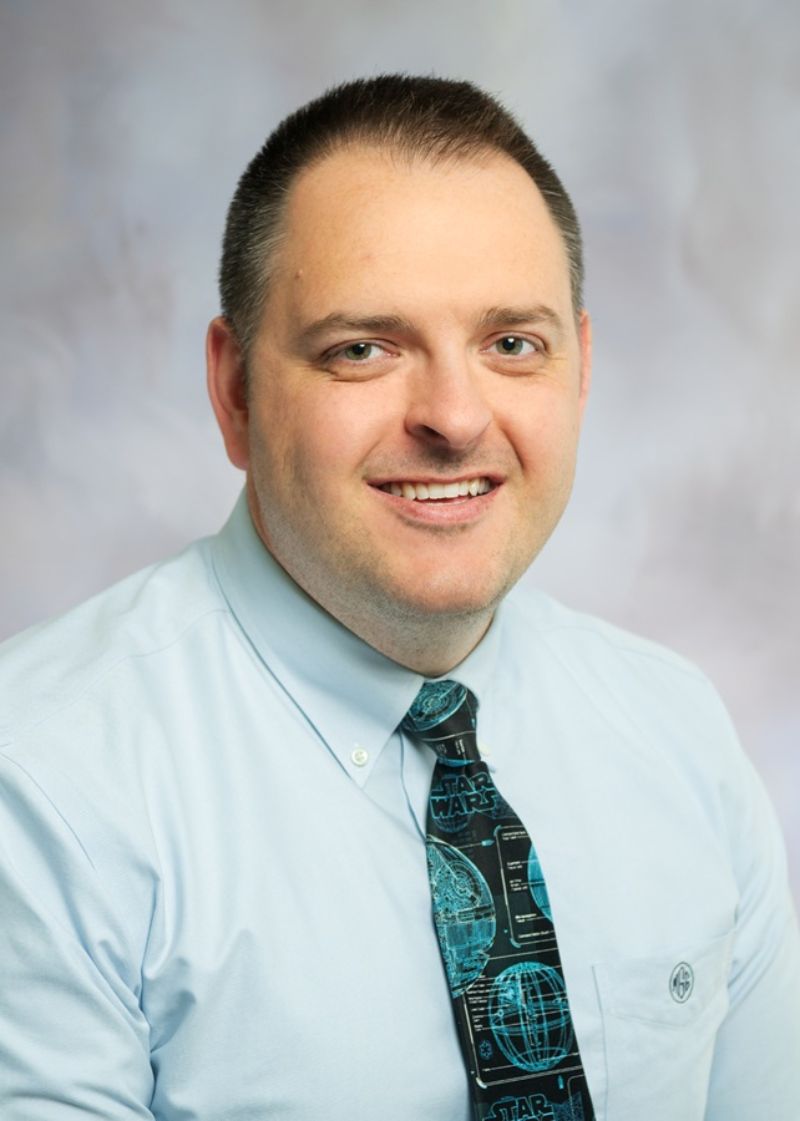
AI Scientist Joseph Carmack offers a unique glimpse into that process, explaining how the company’s researchers are tackling complex challenges and building solutions that will improve warfighter survivability, situational awareness and mission effectiveness.
What does an AI scientist at FAST Labs do?
Joseph: My role blends innovation, mission awareness and technical leadership. I serve as a thought leader, anticipating how emerging artificial intelligence technologies can be shaped to meet the complex needs of military and intelligence operators.
That includes staying current on AI advancements, studying evolving threat environments, tracking the operational challenges faced by our customers, and translating that understanding into new concepts and capabilities.
Much of this work involves developing technical proposals for government science and technology organizations like Defense Advanced Research Projects Agency, Office of Naval Research, and Air Force Research Laboratory. These programs fund research that enables our teams to explore, prototype, and transition cutting‑edge AI technologies into BAE Systems products or partner solutions.
Can you talk more about your specific technology area?
Joseph: My research centers on advanced AI algorithms: how they work, where they excel, and the situations in which they struggle. A significant focus is integrating AI with sensing, signal processing, cyber, and the tactical edge.
Commercial AI systems, like the ones many people interact with every day, rely on large, power‑hungry processors and substantial cooling systems. For military environments like a fighter jet — where space, power and cooling are at a premium — those constraints don’t translate. We rethink how advanced algorithms can operate within small, low‑power, ruggedized systems operating on platforms and sensors deployed around the world.
How does this work impact the warfighter’s mission?
Joseph: The research and development efforts I help shape deliver new capabilities designed to improve survivability, situational awareness and operational advantage. These technologies strengthen the operator’s ability to counter emerging threats, adapt to rapidly changing environments, and maintain superiority over peer adversaries.
The work we do doesn’t just enhance a mission; it fundamentally transforms it. By pushing the boundaries of AI, we help reshape the technological landscape and create opportunities for asymmetric advantage.
What’s ahead for FAST Labs and AI research?
Joseph: Over the past decade, AI research has largely focused on perception and the ability to detect, classify and track electromagnetic signals or targets. These advancements have been crucial, but they still leave operators to interpret partial information and determine next steps.
The next five to 10 years will mark a shift toward AI‑enabled reasoning. Future systems will help operators think through complex scenarios in real time, providing decision support or autonomously solving lower‑level problems. By automating routine decision‑making, AI will allow human operators to focus on higher levels of analysis, strategy and command.
Adversaries are advancing rapidly, and new threats are emerging at the same pace as new capabilities. FAST Labs will play a critical role in ensuring our warfighters remain ahead, not just keeping pace with the threat landscape but shaping it.
For those curious about what is it like to work at FAST Labs, Joseph Carmack provides additional insight:
What inspired you to pursue a career in science and technology (S&T)?
Joseph: I’ve always loved learning and science. A career in S&T allows me to follow my curiosity, explore new ideas and innovate every day.
What is the most exciting part of your job?
Joseph: Working with emerging AI technologies and discovering how they can make our world safer and more resilient is incredibly rewarding.
How do you stay ahead of emerging technologies?
Joseph: I rely heavily on AI‑enabled research tools and spend significant time exploring and experimenting with new concepts.
What advice would you give aspiring scientists and engineers?
Joseph: Having deep technical expertise matters, but so does understanding warfighter missions, operations and threats. Technical innovation only matters if it supports the mission.