
Engineering the Future of Clean Power Vehicle Electrification
BAE Systems is a leading provider of modular, scalable, efficient, and reliable electric and hybrid power and propulsion solutions for clean energy bus, truck, and military vehicle platforms.
The clean vehicle power you need, reimagined
The world is moving toward a more sustainable zero emission future, and BAE Systems is an electrification technology leader. Our next generation modular and scalable electric propulsion technology provides vehicle manufacturers with a flexible and high-performance family of solutions. These are already powering zero-emission and low-emission vehicles across a range of commercial and military applications. With over 25 years of experience creating battery electric, hybrid electric, and fuel cell electric propulsion systems, we offer a comprehensive range of products designed to meet and exceed the evolving needs of transportation today.
Electrification innovation with a proven track record
When you choose BAE Systems for your vehicle electrification programs, you are putting your trust in a provider which has delivered more than 19,000 electric drivetrains. BAE Systems has also put decades of continuous investment into clean power research and development and has cross-sector expertise in leveraging technologies from aerospace, commercial, and defense applications.
We are dedicated to advancing vehicle electrification technologies that meet challenges like climate change, air pollution, energy independence, and evolving transportation demands head-on. The battery electric, hybrid, and fuel cell solutions that BAE Systems delivers can:
- Reduce emissions and improve air quality that enhances quality of life
- Enhance vehicle performance and capabilities to ensure continued and improved operational functionality across fleets
- Lower operating costs through increased efficiency and reduced maintenance demands that support business objectives and environmental responsibility goals
- Adapt to changing regulations and market demands, keeping you at the forefront of clean transportation technology as the category continues to evolve and grow
Advancing vehicle electrification across all platforms
Whether your operational focus is a municipal transit system, a shipping and delivery infrastructure, or the changing demands of military environments, BAE Systems has the global experience, capabilities, and resources to provide significant vehicle electrification advantages for a range of platform types, including:
- Modular architecture that allows for quick, lowest risk integration across a wide range of vehicle specifications and requirements. This design philosophy provides cross-platform commonality, reduced design and integration costs, and simpler vehicle assembly
- Intelligent power management, including next-generation control systems, that optimize power distribution, real-time monitoring of system performance, adaptive energy management for maximum efficiency, predictive maintenance capabilities for continuous improvement
- Quality and reliability that showcase BAE Systems’ enduring commitment to delivering high-quality, reliable solutions, rigorous testing and validation processes, proven technologies with billions of miles in service, comprehensive warranty and support programs, and in-depth compliance with industry standards and regulations
- Integration expertise with system integration capabilities that ensure seamless incorporation with new and existing vehicle platforms, optimized performance across all subsystems, reduced complexity and quicker build time for vehicle manufacturers, and turnkey solutions for rapid integration
BAE Systems is the best choice to provide clean power and propulsion systems for your fleets. Our products and expertise are just the beginning; we are committed to delivering the tailored solutions your fleets require, precisely when they need them.
Vehicle electrification options
The following BAE Systems advanced vehicle electrification solutions provide truck and transit fleets with enhanced performance, reduced fuel consumption, and lower maintenance requirements compared to traditional powertrains. They include:
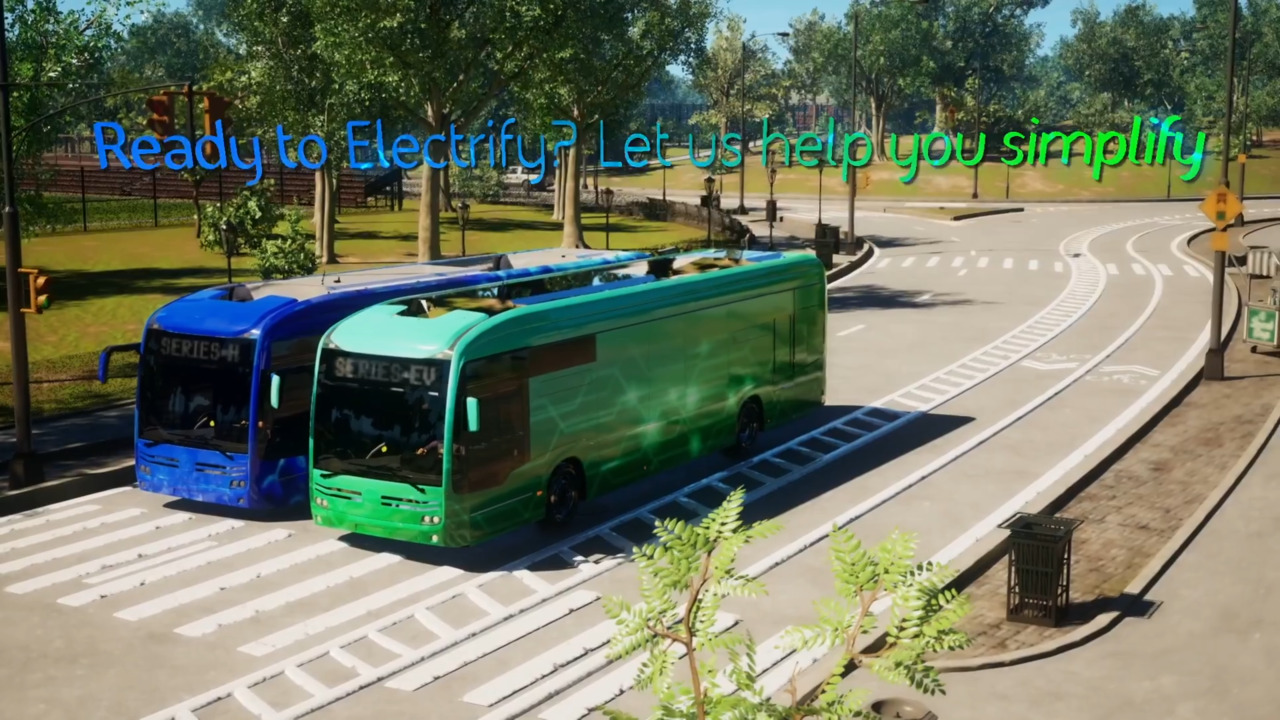
- Battery electric technology provides operators with full electric power and propulsion for buses and other heavy-duty vehicles. The battery electric system is ideal for urban environments, providing quiet operation and zero tailpipe emissions. Its modular architecture allows for easy maintenance, ensuring long-term value. This zero-emission solution delivers:
- Advanced battery technology: High-energy density batteries for extended range
- Powerful electric motors: Efficient propulsion for various vehicles
- Modularity: Scalable components that can be adapted to meet the specific requirements of different platforms and configurations
- Regenerative braking: Energy recovery that maximizes efficiency and productivity
- Full integration: Seamless integration into new vehicle designs
- Hydrogen fuel cell electric technology combines the benefits of battery electric propulsion with hydrogen fuel cell power. This solution is particularly suited for high energy and long-range applications where battery-only systems may be limited by range. Its modular design allows for easy scaling to meet different power requirements. This innovative system offers:
- Extended range: Hydrogen fuel cells provide greater onboard energy storage for longer operating distance
- Rapid refueling: Quick hydrogen refilling means minimal downtime
- Zero emissions: The only byproduct that is generated is water vapor/li>
- Flexible integration: Adaptable to a variety of vehicle types
- High efficiency: Optimized energy conversion delivers maximum performance
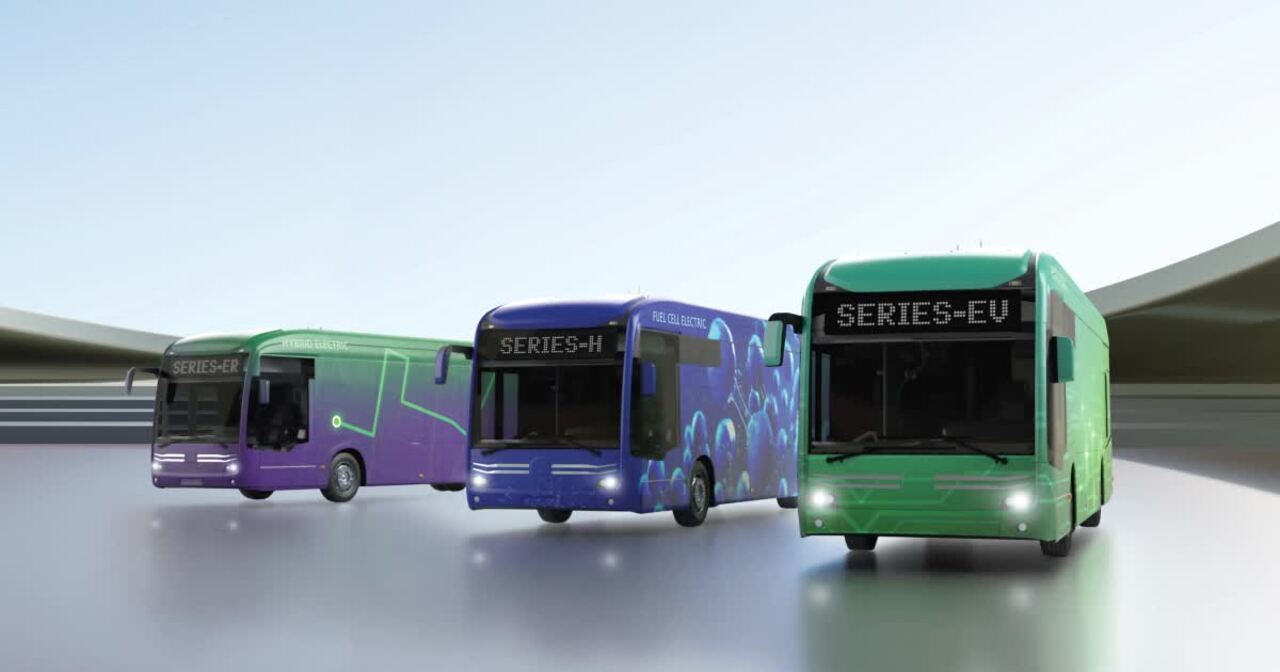
- Hybrid electric solutions are provided with a low emission option without the need for charging infrastructure and it can assist in the long-term transition from conventional to fully electric propulsion. These hybrid electric solutions both offer modular, scalable designs that can be tailored to your specific vehicle requirements and operating conditions. They include:
- Series-E electric hybrid transit solution offers:
- Electric hybrid: This combines electric drive with a diesel generator
- Reduced emissions: Significantly lower fuel consumption and emissions compared to conventional diesel options
- Electric accessories: Electrification of auxiliary systems for improved efficiency
- Stop/start function availability: This fuel-saving feature automatically shuts off the engine when the vehicle is idle (such as bus stops or in heavy traffic) and restarts it when the driver is ready to move again. The key benefits include fuel efficiency, lowering emissions, and quieter operations
- Ultracapacitors: Using a lower energy density energy storage system our ESS-1K ultracapacitor is available to provide longer-life (up to 12 years) using its lower energy density
- Series-ER extended range electric hybrid transit solution offers
- High-density battery technology is used to extend zero-emission driving: With the option of our ESS-32K battery longer engine-off time is available before needing to regenerate power. This provides significant ‘engine-off’ operation, with optional plug-in capability
- Increased electric range: Larger battery capacity for extended ‘engine-off’ operations
- Geofencing capability: Automatic switching to ‘engine-off’ mode in designated areas
- Confident operation: Engine-off driving is supported by an onboard generator, eliminating concerns about range
- Series-E electric hybrid transit solution offers:
Choosing electrified vehicles for your fleet means choosing to operate a fleet that is significantly more fuel efficient, runs much more quietly, emits lower or zero fumes and pollutants, and has far fewer moving parts to service or replace. By choosing BAE Systems for the electrification of a fleet, you are investing in the most advanced transportation technologies and partnering with a world leader in sustainable solutions. Our modular, scalable, and fully integrated systems are designed to power vehicles of today and tomorrow, ensuring a cleaner, more efficient future for you and everyone using your vehicles.
BAE Systems has the expertise, technology, and support to help you achieve your goals. Contact us today to learn how our advanced electrification solutions can drive your business forward.
A modularity revolution: BAE Systems makes more possible
At BAE Systems, our modular design approach to electrification of commercial, industrial, and military vehicles provides significant advantages – lowering costs, increasing design freedom, simplifying integration, and improving sustainability – across all platforms, both initially and over the useful life of each vehicle. In fact, this modularity reduces development and support costs to give heavy electric vehicle manufacturers more design and financial flexibility to create exactly what they want and need. This helps them get to market faster and allows them to support those fleets more affordably for years to come.
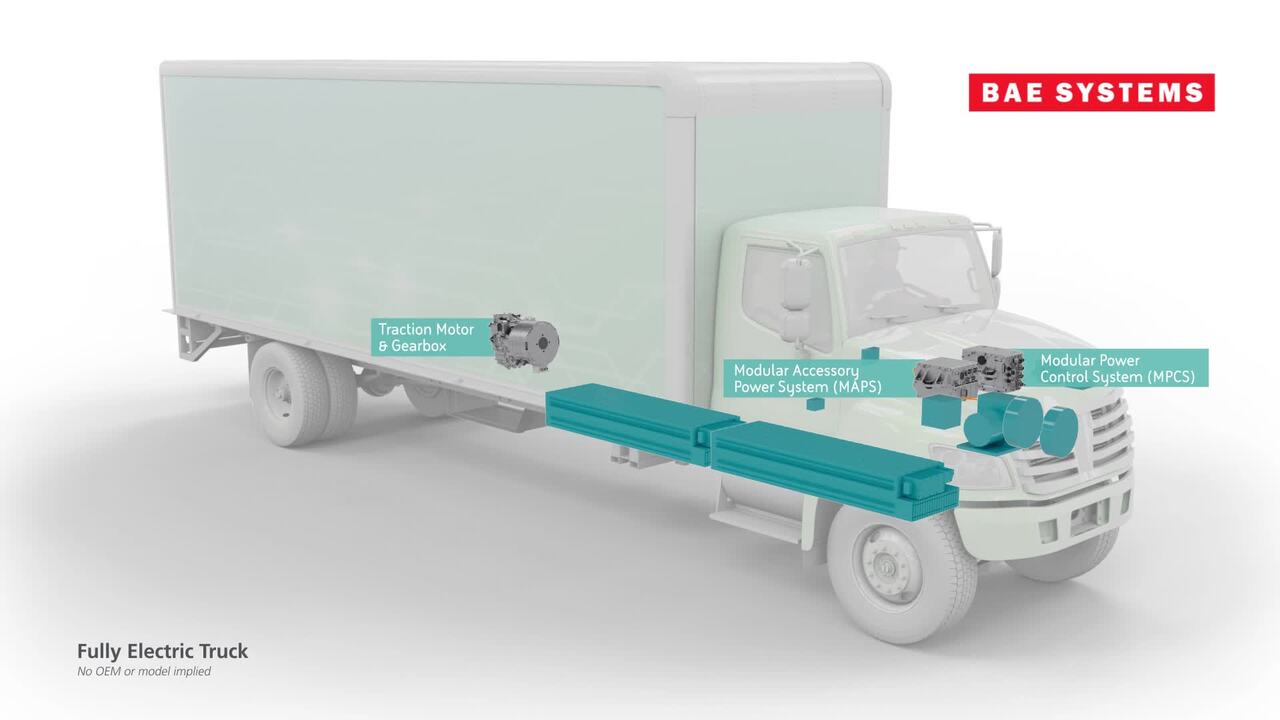
By engineering the electrical components of our industrial and military vehicle electrification architecture into standardized modules, BAE Systems allows manufacturers to avoid many costly, time-consuming development efforts involved when reworking an electric propulsion system for use across multiple heavy vehicle types. Our Modular Accessory Power System (MAPS) and Modular Power Control System (MPCS) give commercial, industrial, and military vehicle manufacturers greater flexibility – and more possibilities – through:
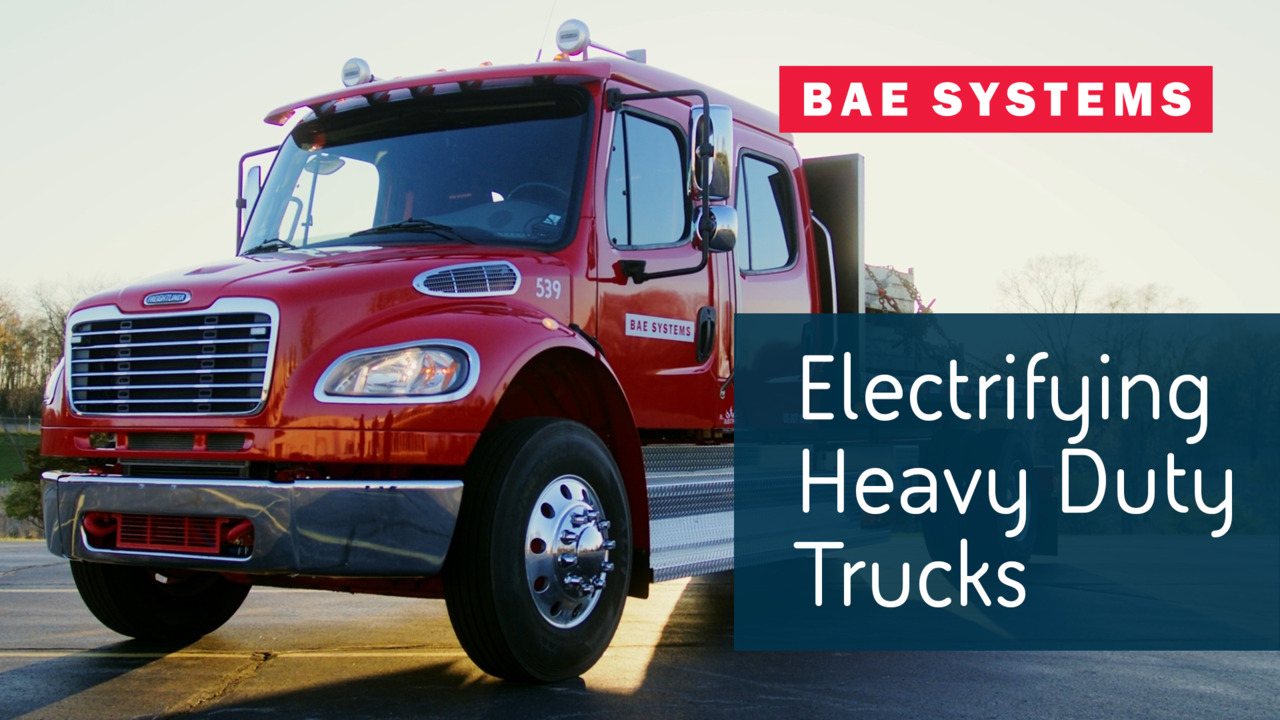
- Scalable, customizable solutions that provide the core power for multiple platforms, from school buses, equipment transports, and mining vehicles to construction, sanitation, and yard trucks, while allowing manufacturers to only pay for the power and functionality they need
- Fewer components on each vehicle, requiring lower material and assembly costs, yet providing more design flexibility, increased reliability, easier installation, lower cabling costs, and reduced maintenance.
- Simplified integration by designing and delivering to manufacturers a fully integrated solution including all system components set up and ready to synchronize efficiently from day one
- Flexible power options that allow manufacturers to choose the most cost-effective power solution – battery electric, fuel cell, or electric-hybrid – for their specific vehicles without needing entirely different power systems
- Easier maintenance of both individual components and subsystems today, tomorrow, and well into the future without the need to overhaul each vehicle’s propulsion system
- Compliance with the U.S. Department of War’s (DoW) Modular Open Systems Approach (MOSA) framework. This may not apply for all commercial electric vehicles (EVs) but can be a key advantage for new military vehicles
- Military vehicles that leverage our defense expertise. These adaptable solutions offer enhanced performance, reduced fuel consumption, and lower maintenance requirements compared to traditional powertrains.
By building on the advantages of modular design, BAE Systems enables commercial, industrial, and military vehicle manufacturers to implement electric propulsion systems more economically, efficiently, and quickly, which also carries the potential for accelerating EV adoption in multiple platforms in this sector.
What is vehicle electrification?
In short, vehicle electrification refers to the process of replacing the internal combustion engines (ICE) that traditionally propel vehicles with battery electric, hybrid-electric, or fuel cell electric powertrains. This shift is intended to reduce greenhouse gas emissions while improving energy efficiency across entire fleets of passenger cars, heavy trucks, delivery vans, buses, boats, construction equipment, and military vehicles. Most of these electrification programs focus on municipal transit systems, waste management services, travel and tourism operators, and delivery companies to reduce their overall long-term costs via fuel and maintenance efficiencies while helping reduce air and noise pollution.
While this term can refer to literally removing the existing ICE and its related systems from a vehicle and replacing them with an electric powertrain – a process typically called a “power conversion” – more often the term vehicle electrification refers to a broadly encompassing program of replacing transit, corporate, civil service, and military fleets with all-new electric and hybrid-electric vehicles as well as updating or replacing their fleet refueling, storage, and operational infrastructure to create an overall cleaner, more efficient, and more effective transportation system.
What are the technical benefits of electrified vehicles (EVs)?
Especially given the escalating threats and challenges related to climate change, as well as the world’s diminishing supply of fossil fuels, the advantages of vehicle electrification outweigh any short-term disadvantages, but it’s wise to understand both. This is particularly true for fleet operators – of both traditional and EV vehicles – who are, and will be dealing with, real world decisions and demands for whom the technical realities matter every day, including:
Advantages:
- Reduced emissions: The use of EVs and hybrids help reduce CO₂ emissions and air pollution, which is good for human and animal health overall, and good for reducing the odors of internal combustion engines (ICE) from bus and heavy truck exhaust in urban areas, around tourism sites, and near major highways
- Energy efficiency: Electric motors function more efficiently than ICEs, so fuel costs can be cut significantly for operators of transit systems, shipping and delivery trucks, municipal waste trucks, corporate and military vehicle fleets, and other commercial users of buses and heavy vehicles
- Lower operating costs: In addition to lower fuel costs, electric vehicles tend to have lower maintenance costs because electric motors have fewer moving parts to service or replace
- Reduced noise: Electric powertrains produce far less noise than ICEs, which enhances riding comfort while greatly reducing city noise everywhere that buses, delivery trucks, construction and municipal service trucks, and passenger boats are in use
Disadvantages
- Limited charging stations: Battery electric fleet operators have their own charging infrastructures, but several don’t yet have enough “stations” to function smoothly around the clock. Hybrid electric technology helps a lot, especially for long-range buses and trucks, but many more chargers are needed, which also means more electrical grids worldwide need to be modernized
- Battery tech: Improvements in battery capacity and charging speeds continue, but more are needed to assure ample range. Also, new battery materials will be needed to avoid future scarcities
- Upfront cost: The long-term costs of EVs are – hands down – much lower than those of ICE vehicles, especially for municipalities and commercial operators. Still, the initial “price tag” can appear daunting to those who don’t yet have their funding models worked out
- Range anxiety: Some EVs have shorter driving ranges than ICE vehicles, but the disparities have shrunk a lot in recent years and those with the most range anxiety may turn to electric-hybrids
Do BAE Systems electrification solutions work with military vehicles?
Yes, electrified military vehicles offer enhanced performance, reduced fuel consumption, and lower maintenance requirements compared to traditional powertrains. BAE Systems provides electrification solutions for:
- Tactical wheeled vehicles: Parallel Hybrid drive systems for improved mobility and silent watch operation and export power generation
- Tracked vehicles: Advanced power management for increased onboard electrical capacity, Silent Watch and Silent Mobility capability along with export power generation
Why does the DoW want electrified vehicles? Are they useful in combat?
The U.S. Department of War (DoW) has many reasons to transform its fleet of 170,000+ non-combat ground vehicles and tracked combat vehicles with electrification technologies including providing more power while saving fuel, decreasing fuel transport risks, enabling silent watch and silent mobility, export power and allowing military vehicles to handle more advanced technology.
While the DoW’s primary vehicle electrification implementation emphasis is currently on non-combat ground wheeled vehicles, exploration of employing electrification technology on combat vehicles is also underway on a more opportunistic development timeline. That is, more combat vehicles today are outfitted with advanced electronic warfare systems that are powered by electric power, so as next generation advancements make electrified vehicles a more viable option for those in and around the field of battle, they will be a natural fit and an effective extension of the EW systems they carry. Until those are ready, switching to electrified non-combat vehicles will continue to evolve the performance of all configurations of electrified vehicles.
Are vehicle electrification companies good places to work?
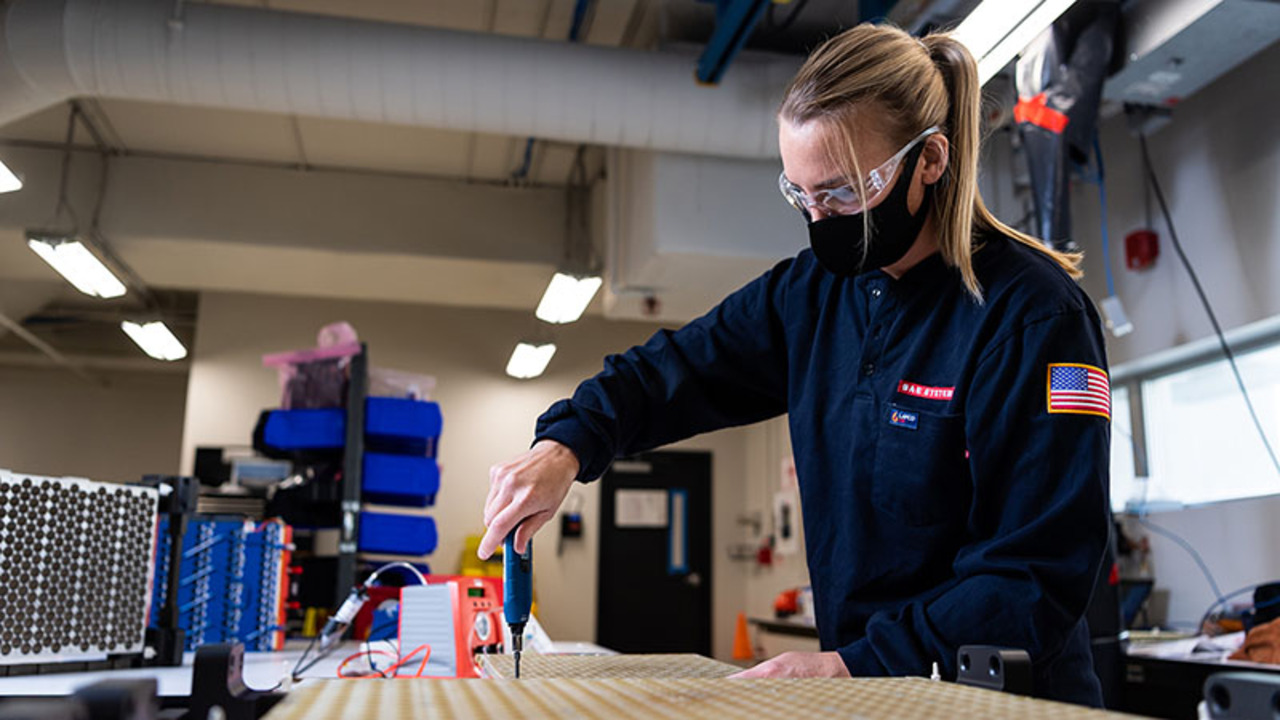
For a person with an engineering, mathematics, or industrial design background who is passionate about technologies that address pollution and the effects of climate change, vehicle electrification companies today can be both interesting and rewarding places to work. Not only is this sector a hotbed of innovation for electric vehicle (EV), hybrid-electric vehicle (PHEV), and fuel cell electric vehicle (FCEV) systems, but many of the next generation power, propulsion, and control solutions being developed for those vehicles will also be applicable to other sectors, from advanced aircraft, marine, and rail systems to smart homes, industrial robotics, power grids, defense systems, space systems, sensor technologies, and more. A few key points to consider about EV careers include:
- It’s a thriving industry that continues to expand. As EV technologies have repeatedly proven their viability and often superiority in delivering cleaner, more efficient transportation options, demand from municipalities, businesses, state and federal agencies, and consumers has grown tremendously. In addition, the industry’s focus on environmental sustainability and the reduction of carbon emissions is so vital to climate change goals that growth is expected to remain strong
- There’s a range of great industry jobs, with immediate and long-term career growth options. The industry has expanded quickly, and so has the variety of jobs in demand, from electrical, systems, and software engineering to vehicle design, infrastructure development, product manufacturing, and more. And the need for continued clean, renewable power innovation suggests long, rewarding careers
- Strong support for skills development. Vehicle electrification jobs, including those at BAE Systems, require relevant academic degrees of their applicants. The constantly escalating knowledge demands of this sector, though, usually result in companies paying for employee skills development classes to keep them and the company ahead of the curve. So, employees not only work on technologies at the forefront of innovation now – with battery systems, control designs, charging systems, and more – they also get training that will continue to make them valuable assets in the future
- Competitive compensation packages as the need for EV talent grows. Demand for smart, capable workers will only be growing in this next generation field over the next few years as understanding and implementation of EVs evolves, so many vehicle electrification companies offer competitive salaries and benefits to attract talent
- Potential market fluctuations as the industry solidifies. As in any “hot” industry, exactly which electric vehicles will enjoy long-term success cannot be assumed. Technologies evolve, resources rise and fall, government policies change, and so on – all of which can affect job stability. However, vehicle electrification innovators with proven, stable underpinnings and global resources may offer the best bet for long, productive career opportunities
- High employer and industry expectations. Dealing with the persistent pressures and demands of the fast-growing vehicle electrification field can be daunting – and exhilarating. So, employers with an effective, supportive workplace culture can be a wise choice for chances at a rewarding career.
Aircraft Electrification
Enabling the future of air travel with solutions for hybrid and all-electric aircraft.
Alternative Propulsion Systems • Battery Electric Vehicles • Combined Charging Systems (CCS) • Conductive Charging • Electric Drive Systems • Electric Vehicle Association of America • Electric Bus Manufacturers USA • Electric Vehicle (EV) Charging • Fuel Cell Electric Vehicles (FCEVs) • Fuel Cell Electric Marine Vessels (FCEMVs) • Global Electric Bus Integration • Inductive Charging Systems • Hydrogen Fuel Cell Electric Power • Hydrogen Fueling Stations • Low Emission Vehicle Drive Systems • Modular Accessory Power System (MAPS) • Modular Open Systems Approach (MOSA) Framework • Modular Power Control System (MPCS) • Plug-In Electric Vehicles • Smart Charging • Solar Electric Automotive Charging • World Electric Vehicle Association • Zero Emission Bus Manufacturers • Zero Emissions Day • Zero Emissions Trucks • Zero Emissions Vehicles
Join our team to work on the most exciting projects that make the world a safer and cleaner place. Find out what’s possible by working on power management systems. We can't wait, and neither should you.

Media Relations
BAE Systems Inc.