
If you are a commercial aviation avionics customer and want to access BAE Systems’ online support center, click the button below to learn more. See contacts by location using the BAE Systems Contact button or search for AOG contacts by part number using the AOG Contacts button.
By your side from fleet sunrise to sunset
BAE Systems’ Horizon Solutions Aftermarket Services and Support combines decades of expertise, original equipment manufacturer (OEM) grade access to resources and unmatched technical repair and overhaul capabilities.
We offer a variety of services to airline operators and maintenance, repair and overhaul (MRO) service providers, including spare parts, repairs, manuals, technical support, training, tailorable support and overhaul packages.
It’s what you need, when you need it most. Flexible and customized solutions to help you manage your time, money and resources, all backed by an award-winning service team. Our comprehensive solutions improve reliability and maximize customer investment.
Support that reaches further
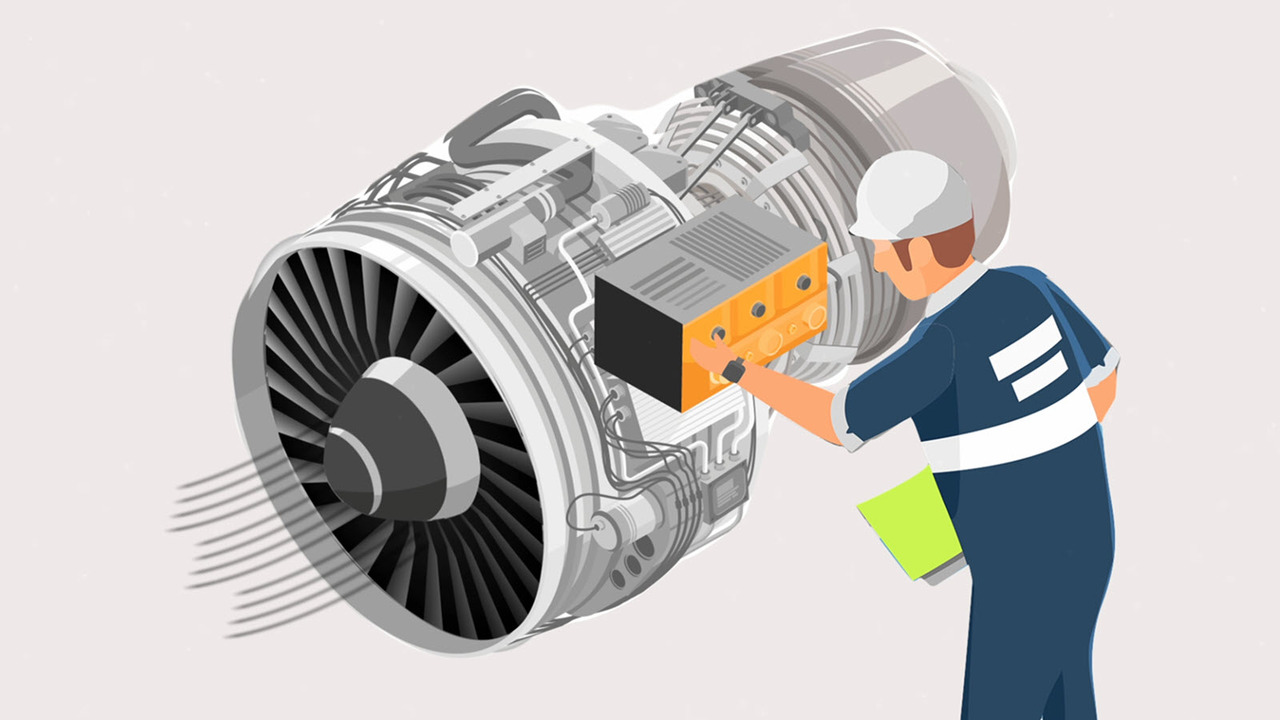
When you choose Horizon Solutions Aftermarket Services and Support, you know you are getting OEM-grade aftermarket services fit for your needs. We repair and maintain the most advanced avionics components, as well as legacy systems, for commercial aircraft, such as:
- Full-authority digital engine controls (FADEC)
- Thrust management computers (TMC)
- Fly-by-wire (FBW) flight control systems
- Sidestick pilot controls, or inceptor systems
- Head-up displays
- Flight deck systems
- Data and electronic distribution equipment
- Detection and alert systems
- Control and monitoring systems
- Cabin management systems
- Communications panels
Where you need us most, we’re there
We have strategically located global service centers to meet your requirements comprehensively, supporting over 600 operators and 20,000 aircraft worldwide. Our service and support centers are in convenient places around the world to make sure you have support when and where you need it:
- Service centers
- Fort Wayne, Indiana
- Rochester, England
- Singapore
- Technical and engineering support
- Austin, Texas
- Endicott, New York
- Guaymas, Mexico
- Redmond, Washington
- Shanghai, China
• Design and development
• Manufacturing and support Austin, TX
• Development Singapore
• Service center Rochester, Kent
• Design and development
• Manufacturing and support Endicott, NY
• CAS Headquarters
• Design and development
• Manufacturing and support Guaymas
• Manufacturing Shanghai
• Service center Redmond, WA
• Boeing flight line support
• Collaborative center
Choosing BAE Systems
Our customers and partners turn to Horizon Solutions Aftermarket Services and Support for many reasons including reliability, trust and our commitment to innovation and future growth in addition to:
- Lower total cost of ownership, including savings from our spares and trade-in programs that lower life cycle costs.
- Quick turnaround times due to our advanced expertise, more timely access to needed parts, strategically positioned service locations, and global resources.
- Award-winning aftermarket and OEM repairs, including best-in-class FADEC overhauls, quick turnaround times, and superior customer support.
- Trusted, long-term customer relationships built on decades of proven service, technical practices that prolong flight critical systems, and accessible personnel.
- Factory quality parts and service delivering OEM-caliber fleet readiness, flexible overhaul options, access to parts that others can’t find, and lower prices.
- Proven service and support via director-level contacts located worldwide, 24/7 service team availability, portable test solutions, and our own technical help desk.
What are aftermarket services?
In the U.S., this refers to an assortment of services that, when carried out within a framework of standards provided by the Federal Aviation Administration (FAA), make the provision of commercial air travel by various operators possible. These support activities are typically divided into two categories – operational services and aftermarket services.
- Operational services affect the immediate operation of an aircraft and include a mix of aircraft ground handling, cargo handling, fueling, passenger care, catering, flight plans, air crew services, and more. These services are generally performed by the airport at which a flight is arriving or departing in cooperation with individual airlines that are using that airport – all in compliance with FAA directives and regulations.
- Aftermarket services are focused on maintaining the aircraft, usually when it is not in the air, to keep its mechanical, electrical, communications, and control functions in top condition to ensure safety, efficiency, and performance for upcoming flights and to extend each aircraft’s useful lifespan. These services can be handled in-house by individual airlines, by aircraft owners who may or may not be the airline, or by third-party service providers like BAE Systems contracted by an airline, an owner, an airport, or even a government.
What questions should a commercial aircraft operator ask of CAS aftermarket service providers?
Choosing the right partner for is a major decision for commercial aircraft operators, wherever they operate and whether they carry airline passengers or cargo shipments. While these aftermarket queries all fall under the heading of MRO services, there are some key topics that an operator should ask about while performing their due diligence in the selection of an aftermarket MRO services provider, including:
- What is the average age of commercial aircraft that the MRO services provider has sustained? What is the oldest? The newest? Are the mechanics who maintain these aircraft full-time employees of your company? Part time? Contractors? How often is an aircraft under contract with you inspected by a mechanic?
- What maintenance processes and standards do you apply to a commercial aircraft in your care? Are they the same for all electrical, hydraulic, and control systems? Do you warranty the reliability of your work or your products? How is your maintenance work certified to meet FAA or EASA standards?
- What does a full list of your MRO services and capabilities include? Do your MRO services cover the entire aircraft, including all mechanical and electronic elements and systems? Does your company manufacture commercial aerospace parts? Do you have a spares program? A trade-in program? How do you handle obsolescence? How do you structure maintenance and engineering staff to handle manpower fluctuations?
- Do your MRO services ensure FAA/EASE safety regulation compliance? If so, how? What measures do you take to ensure the reliability of maintenance tasks?
- Where are your MRO facilities located? How many maintenance, repair, and overhaul facilities do you have? How many do you have in the U.S.? Europe? South America? Asia?
- How do your MRO services reflect technical advancements and trends? Do you use predictive maintenance programs, smart technologies, and other advanced tools to manage maintenance, accelerate repairs, and optimize your supply chain?
Questions like these are part of the aftermarket services decision process and reflect critical MRO insights that any commercial operator needs to ask in order to partner with the right provider – like BAE Systems – for the performance, efficiency, safety, and reliability of their fleets.
Who regulates commercial aircraft MRO service providers?
The international nature of commercial air travel and of transportation company ownership means that exactly what government, what agency, and what industry organization will regulate or certify an aircraft MRO provider depends on a number of factors. That said, most of the key government and industry entities that certify and regulate commercial aircraft MRO providers include:
- The Federal Aviation Administration which, in the U.S. is the top regulatory body for aviation, including MRO providers. They issue Part 145 Repair Station certifications.
- The European Union Aviation Safety Agency (EASA) is considered the FAA’s European counterpart. EASA regulates aviation safety in Europe and certifies MRO providers that operate in or serve European markets.
- National aviation authorities of individual countries regulate and certify any MRO service providers that are operating within their borders or jurisdictions.
- International Air Transportation Association (IATA) is a trade association that sets technical and safety standards for airlines that cross borders. While the IATA only applies to in-house MRO providers, airlines that use independent MRO providers depend on them to meet IATA standards.
- The International Civil Aviation Organization (ICAO) doesn’t directly certify MROs but does set global standards that influence national regulations.
- AS9110 Certification is an aerospace quality management system standard developed specifically for MRO organizations. It is based on ISO 9001 measures but includes additional aerospace-specific requirements.
- OEMs of aircraft and engine manufacturers often provide their own certifications for MRO providers that work on their products. A few MRO providers, like BAE Systems, also are the OEM for key products.
- The Aeronautical Repair Station Association (ARSA) and other aerospace industry organizations in the U.S. advocate for and support the MRO industry, although they don't directly certify MRO providers.
Does the size of an MRO services provider really matter?
When providing commercial aircraft operators with effective MRO services, qualities like experience, expertise, and availability are more important than sheer size. But the size of an MRO services organization built over decades (experience) by servicing and improving on a broad contingent of the world’s most consequential aircraft (expertise) while regularly expanding locations to serve customers where they need to be (availability) does provide some important advantages for its customers, such as:
- Cost-effective options. Having the right quantity and selection of parts, tools, and staffing in place in key locations for its customers allows a larger MRO provider to perform preventive maintenance and address issues proactively, which can extend the effective lifespan of components and avoid AOG disruptions.
- Supply chain efficiencies. Availability of parts and technicians can be a game-changer in the timely, effective maintenance, repair, and/or overhaul of major aircraft. It impacts costs, it impacts downtime, and it impacts how a customer’s customers feel about their services. Size can have significant supply advantages.
- OEM parts knowledge and availability. Size won’t always help, but an aircraft technologies OEM with global MRO resources, and locations can offer its customers parts, insights, and options that others simply do not possess.
- Breadth of aircraft experience. Being a large MRO services provider does not guarantee more experience with more of the world’s commercial aircraft. But when that size is, in part, due to also serving military, civil, and experimental aircraft worldwide, that access to other birds can help an MRO provide commercial aircraft customers with more solutions in more circumstances.
- Fleet-wide maintenance management. Even small MRO providers can use service software to stay on top of aircraft maintenance records. The advantage of size arises when a carrier has planes being serviced around the globe and wants to – needs to – track and analyze the fleet data worldwide to plan its upcoming schedules and locations cost-effectively.
In the end, while the benefits of being a large organization of any kind can be many, so can the deficits. The real benefit of being an MRO services provider large enough to have resources and locations around the globe isn’t the size alone, it’s what that size provides for the customer.
Ready to takeoff with BAE Systems?
Learn more about what makes BAE Systems a trusted partner to commercial aviation operators worldwide. Contact our Electronic Systems representative to arrange a meeting.
If you are a commercial aviation avionics customer and want to access BAE Systems’ online support center, click the Commercial Aviation Support tool link here to learn more. See contacts by location using the BAE Systems Contact button or search for AOG contacts by part number using the AOG Contacts button.



Life at BAE Systems
Join our team to work on the most exciting projects that make the world a safer place. Find out what’s possible by working on flight controls, avionics and power management systems. We can't wait, and neither should you. If you are interested in working at BAE Systems click here.
Related Topics to Explore
Aeronautical Repair Station Association (ARSA) • Aerospace Engineering • Aircraft Ground Handling • Aircraft Maintenance • Aircraft Maintenance Engineer (AME) • Aircraft Type Certificate • Distributed Control Systems (DCS) • Dual FADEC • Electronic Engine Control (EEC) • Engine Control Units (ECU) • Federal Aviation Administration (FAA) • FADEC Overhaul • FADEC Predictive Maintenance • Model-Based Systems Engineering (MBSE) • Obsolescence Management • Professional Aviation Maintenance Association (PAMA) • Power Management Control (PMC) • Shop-Replaceable Unit • Spares Criticality • Unmanned Aerial Vehicles (UAVs)