
BAE Systems has more than doubled its early careers intake in the past five years, making a significant contribution to the UK economy and offering more young people than ever the prospect of exciting long-term careers supporting the nation’s armed forces and security services.
Our award winning early careers schemes are vital to developing the talent pipeline needed to deliver critical national security capability. They also help to build the next generation of talented industrial leaders, with many former apprentices and graduates reaching the top ranks of the Company.
With BAE Systems set to hit another record-breaking recruitment drive in 2024 with over 2,700 new apprentice and graduate opportunities available across the UK, we sit down with some of Digital Intelligence’s early careers superstars to learn about their journeys into the schemes. Find out what inspires them in their roles, their highlights so far and the myths that were quickly debunked once they started.
Our inspiring team below all utilised different routes into the tech industry, some were fresh from sixth form or University, others were inspired to change careers and move into the tech industry. One thing they all have in common is a desire to learn and be a part of delivering the mission at BAE Systems.
Tell us a bit about yourself
I came to BAE Systems two years ago through the National Security Apprenticeship scheme as a software engineer apprentice straight after completing Sixth Form where I studied A-level Maths, Physics and Further Maths. While I had no previous technical experience or qualifications, I spent time after school learning on code academy and competing in cyber competitions, which ignited my interest in tech.
During Sixth Form there was a lot of emphasis on going to University. I knew early on that this wasn’t something I wanted to do. I wanted to learn on the job and get hands on experience I could apply my education to.
I originally wanted to go into cyber security, and admittedly software engineering wasn’t something I had considered until I saw an advert for BAE Systems National Security Academy which was local to me in Gloucester. I was attracted to the scheme by the work the business does in national security which helps to make the UK safer and more prosperous.
Even though I had originally thought that the course was only two years and I could always move on to something else if it wasn’t for me, I ended up falling in love with software engineering and BAE Systems Digital Intelligence, I knew quite quickly it was the place for me.
What’s been your highlight since you started? What do you enjoy about your job?
One of the highlights since joining the business has been getting the chance to give back to my local community and get involved in volunteering through outreach projects. I’ve had the opportunity to visit the schools I once attended and talk to students about STEM careers, alternative routes into tech, share insights into my journey and how great apprenticeships are to dispel any myths.
Knowing that I can make a difference in someone’s future and opening them up to the many roles and routes, including apprenticeships at BAE Systems, which is extremely rewarding. From being sat in their position, to completing a Level 4 Software Developer Apprenticeship and achieving a promotion in two years just shows how great apprenticeships are and how anyone can progress in a career at BAE Systems Digital Intelligence.
I’ve also had the chance to take on some scrum master responsibilities to lead the team in working in a more agile way. I took the opportunity unexpectedly and I’ve enjoyed supporting the team, while gaining some additional training and experience. With thanks to a supportive team, I’ve also learnt a lot on the job with the support from colleagues with prior experience.
What are your career aspirations?
I’m keen to progress in my development as a software engineer and gain experience with different projects, languages and eventually move into a senior engineer role, with the opportunity to lead a team while still being hands on when it comes to software development - I love the problem solving aspect of the role!
Did you have any misconceptions about apprenticeships in general?
When I first considered doing an apprenticeship, I was worried that I would be left without support, but my team and career manager have been really supportive throughout the apprenticeship work and provided lots of encouragement. Everyone is always willing to help.
I was regularly told in Sixth Form that it would be hard to progress without a degree, while there is the option to take on a level 6 apprenticeship (which is an equivalent to a degree), there is a clear path for progression within the business without one.
Do you have any advice for grads or school-leavers applying for their first role out of education and considering a role in tech/cyber?
I would recommend that anyone about to take that first step out of education nurtures their LinkedIn profile. Having one helped me to find different roles and for recruiters to see my skills and interests, while starting to build a network.
Do things in your free time that relate to your aspirations. I spent some of my free time learning with Immersive Labs, code academy and I competed in cyber competitions at school, which gave me the first-hand experience that inspired me to pursue a career in technology which was well received in interviews.
Lastly, never stop networking and building your connections, meet as many people as you can. Not only to make friends, but to give you exposure to the wider business.
Tell us a bit about yourself
I have always been a driven individual and aimed to be the best at anything I put my mind to. My first experience and glimpse into the world of work was my participation in F1 in Schools, a global STEM programme that focuses on engineering and general principles of running a business. My team and I competed in 2010 and 11, becoming UK national Champions both years and provided us the incredible opportunity to travel to Singapore and Malaysia, respectfully, to compete at the world finals. Meeting hundreds of professional engineers, branding experts and business leaders inspired me to want to be at the pinnacle of any industry I was part of. I suppose it was only natural I end up at one the world’s leading engineering technology companies in one of the most interesting parts of the business, space.
After school I attended the University of Bristol to study Electrical and Electronic Engineering; it quickly dawned on me that although I had the capacity to understand and do well in a very technical course, I enjoyed the vision, the drivers and strategy behind developing this leading technologies. As a result, I pivoted and changed courses to Accounting and Management.
How did you end up on the BAE Systems apprenticeship/graduate scheme (career/education background)?
I joined BAE Systems at the end of 2021 as part of the company’s graduate trainee scheme but before that I was a project manager at Formula One in Schools which is a not-for-profit company set up to strengthen STEM (science, technology, engineering, mathematics) skills for children around the world – it runs a global competition in which groups of students have to design and manufacture a miniature car.
Unfortunately, I was made redundant during the Covid pandemic and so I decided to tackle a new career path which required more use of my technical skills and subsequently ended up at BAE Systems.
What stood out to you about the scheme?
Why did you embark on a grad/app course? – The variety of work that BAE Systems delivers to its customers was one of my main drivers for joining the organisation. With varying industries; digital, data, maritime, air… the list goes on, but also within these sectors you have different career paths available, whether that be as a project manager, a change consultant, threat intelligence consultant or a software developer. I have yet to ask to try something and be told no. It’s an organisation that if you work hard and do well, doors open up for you.
What does your role involve now?
With thanks to the support from my team and the strong foundation the graduate scheme gave me, I’ve been fortunate to progress pretty quickly achieving three promotions in just over two years. I now work on the Azalea programme leading a team of 13 people which support the development of our first Low Earth Orbit Satellite Cluster.
What’s been your highlight since you started?
What do you enjoy about your job? Being part of the space business and watching it grow from a small team of 20 to over 100 people has been a real highlight for me. As part of the creation of the Digital Intelligence business in early 2022, I had the chance to be involved in the acquisition and integration of In-space Missions into the new business in support of the Azalea programme.
I was also a finalist for Innovator of the Year for the inaugural LGBTQ+ Defence Awards.
I also lead our Bristol University engagement, so if they have an event going on I go along to that. I’m extremely passionate about STEM and outreach; stemming from my early career and personal participation in STEM outreach. There is definitely a gap in the space industry that I want to try and help close via things like apprenticeships and other training schemes.
What are your career aspirations?
My aim would to be in senior management. I want to be in a position that means I can influence industry standards and expectations, all the while improving the working life of people in the business.
Do you have any advice for grads or school-leavers applying for their first role out of education and considering a role in tech/cyber?
My advice for those considering applying for graduate schemes is to find a job that will give you a breadth of experiences, avoid being pigeon holed and limiting your opportunities to learn.
For those about to leave school, I would recommend looking into apprenticeships as well as universities. Looking back, I would have gone for an apprenticeship instead of university as they offer opportunities to learn on the job and still having a community to socialise with - it is the best of both worlds and I wish I had looked into it more.
Tell us a bit about yourself
I was born and raised in Essex, and live there to this day. I grew up on a small holding with animals, such as sheep and goats, and was fortunate to live surrounded by my extended family each day.
With my Mum in the oil and gas industry, and my Dad as a nuclear chemist, you could say engineering and curiosity runs in my blood.
I joined in October 2021 and I’m currently working my way through my second year as an Electronic Engineering apprentice. I originally applied for a number of software engineering roles, both inside and outside of BAE Systems, and I ended up going for the only Electronic Engineering focused course. This was mostly led by my experience with the BAE Systems team in Great Baddow where I spent time during school as a work experience and jumped at the opportunity to work directly in the team.
What stood out to you about the scheme? Why did you embark on the course?
From a young age I knew that full-time studying in a University environment wasn’t for me as I enjoy being hands on. While my course is currently class room based in term time, I get to put my knowledge to use over the holidays and learn on the job.
What does your role involve now?
Over summer I worked in the high power lab at Great Baddow with a friendly team where I got the chance to work on electro magnetics and antennas that I haven’t even been exposed to in my studies as of yet.
As the Great Baddow site is focused on research and development, we often build and test prototypes. For example, I have been involved with modelling various complex antennas in software on CST studio, which gives me a chance to utilise my coding and software skills.
Do you have any advice for grads or school-leavers applying for their first role out of education and considering a role in tech/cyber?
I would recommend anyone leaving school or considering a change of career to consider pursuing an apprenticeship, it’s such a great scheme, particularly at BAE Systems. There are plenty of opportunities to learn on the job, in addition to dedicated study time, everyone is so supportive and the salary is more competitive than most - there are no downsides.
Tell us a bit about yourself
I live in rural North Yorkshire with my husband, who is a GP and our three young children, the youngest only a year old.
Having studied biomedicine for 8 years, during which time I completed a PhD in Childhood leukaemia in 2016 and then went on to work as a postdoctoral researcher for 2 years before having my first child. I was then fully planning on being a stay at home parent, but found that I wanted to have a career.
I wasn’t totally sure what to do, but had some experience some with coding as part of my PhD around bioinformatics and Bioconductor and the R statistical programming language in order to do RNA and DNA sequencing, which I had enjoyed.
I signed up for a Department of Education funded online course run by QA. These were originally held in Manchester but due to the pandemic were now being done virtually, meaning that I could do it from anywhere. This meant I could study around childcare commitments, which otherwise wouldn’t have been possible if I had to travel to Manchester each day. We had talks from employers during this time and I applied to the BAE Systems National Security Academy scheme as a result of this.
What stood out to you about the scheme? Why did you embark on a grad/app course?
I was originally nervous about joining the course in anticipation that I would be the only one not in their early twenties. However, the fact it was all virtual meant that more people could do it with childcare responsibilities.
We completed 14 weeks of virtual learning and were then put onto client projects to put our new skills into practice while continuing with studying built into my weekly schedule.
What’s been your highlight since you started? What do you enjoy about your job?
The highlight of my new career was when my first pull request got accepted, and my code getting incorporated into the software our team is working on. That moment confirmed to me that I could do it and that I enjoyed it, making the decision to switch careers all worth it.
The quick gratification of my efforts is a far cry from the pace I was used to in science where it takes a long time to test sequences in a lab which more often than not don’t work, so you start again.
The team is also very easy going and flexible, for example I was able to take year out of my studying for maternity leave. Everyone also bounces ideas and challenges off of each another utilising the diversity of thought within the team, which is especially important considering the work we do with our clients in national security.
What are your career aspirations?
I’m keen to become a subject matter technical expert, as opposed to a tech lead, to further support our client missions with innovative solutions.
Did you have any misconceptions about apprenticeship schemes in general?
Like many, I assumed apprenticeships were only for 16-18 years olds, as we’re told back in school that you either go to university or you do an apprenticeship, so didn’t think they would be applicable to me as I considered switching careers.
I also assumed I would be the only person not in their twenties. There were in fact a good number of people on my course a similar age to me and with children.
Do you have any advice for grads or school-leavers applying for their first role out of education and considering a role in tech/cyber?
Whatever you do first in your career doesn’t define you, you can switch at any point and there’s lots of support out there. Careers in tech and cyber are really flexible to those with other responsibilities. BAE Systems is supportive of hybrid working.
You can study around family needs – I went on maternity leave mid-studies for a year and picked back up right where I left off. It’s an 18 month course, but there’s a lot of flexibility and hybrid working options if you ask.
You don’t need a degree. Many assume that is the only way to get into computer science, there is a myriad of alternative routes into tech, apprenticeships being one of them.
Tell us a bit about yourself
I used to live near Qinetiq and always wanted to work in Science/Tech and government/military industry, but after dropping out of University I went into the world of work in an unfulfilling and stressful job in hospitality and retail. About two years ago now I looked into changing careers into tech and have never looked back.
As a first step I started upskilling myself with a coding boot camp, but I was also interested in an apprenticeship that could support my learning and development considering I had little to no actual coding knowledge and very little experience, but provided me with the training I need to get my foot in the door. Along with it being a big company it brings the security and experience I need to get me into the career I want.
What stood out to you about the scheme?
The accessibility of the course in my local area and the wide ranging skill levels in my cohort which I found reassuring. For example, some people have little to no coding experience but have relevant core skills, while others are straight out of A-levels.
What does your role involve now?
I work 5 days a week 9-5, first of all as someone who worked hospitality I cannot stress how much healthier that is for a person I’ve found. I have two self-development days, this involves personal study time or working on project work. On Wednesdays I support an internal team with their project, at the moment it’s mostly bug finding and user testing, but that will progress with time. Thursday and Friday are with The Software Institute with more structured learning, currently working on typescript and react.
What’s been your highlight since you started? What do you enjoy about your job?
I wake up in the morning excited by the challenges I may face and problems I will help solve, which is incredibly fulfilling. I also made the decision to move from my hometown in Great Malvern, Worcestershire to join the apprenticeship, which may be daunting for some but I’ve felt incredibly welcomed by Gloucester office.
Did you have any misconceptions about this scheme, or graduate schemes in general?
I previously thought apprenticeships are predominantly based in a class room with a lecturer, however a good proportion of the course is self-regulated. I have nearly half a week where I am self-led, whether it’s doing my own project work or researching syntax and methods, just trying to make sure I now as much as possible about relevant subjects.
Do you have any advice for grads or school-leavers applying for their first role out of education and considering a role in tech/cyber?
Get some work experience beforehand, or at least a good work ethic if you go into this without that you’re going to struggle with motivation on the harder days. Often you’ll be left alone to work on your own things and you need to have the integrity and self-motivation to get stuck in without needing to be watched.
Tell us a bit about yourself
After finishing my GCSEs I went to study my A-levels at sixth form. My year 12 experience was impacted by COVID and I repeated the year however due to the effects of the pandemic, a lot of my learning was blended. This mixed with some personal circumstances meant that I left year 13 with lower than expected A-level results. After sixth form I started a level 3 technical mechanical engineering apprenticeship with Collins Aerospace, however after completing my first year I knew that it wasn’t the right path for me.
Growing up I was a part of the air cadets and during that time I participated in a lot of STEM residential activities. This brought a passion towards aeronautical engineering and I wanted to join the RAF. Due to health conditions that prevented entry I wanted to work for a company that supported the MOD. I completed the Qualified Aerospace Instructors Course (QAIC) 14 back in 2022, during this time I met a number of instructors who worked for BAE systems. After hearing their stories I knew I wanted to apply for the Company’s apprenticeship scheme. Towards the end of last year I looked at different opportunities within BAE systems to apply for and found a level 4 Electronic Engineering apprenticeship that I liked the look of.
I was apprehensive at first as the position was in Guildford, as I am originally from Dudley. However now looking back I am very thankful that I took this opportunity as I now work with a phenomenal team who are extremely supportive and I have grown my knowledge exponentially since joining and I look forward to continuing this over the rest of my apprenticeship.
What stood out to you about the scheme?
The mix of hardware technologies, with software and cyber capabilities across the company really intrigued me and was why ultimately I decided to study electrical engineering instead of perusing in aeronautical engineering.
During my application process my final interview with my now career and line managers will always stand out to me as it was set very differently from any of the other apprenticeships I had applied for with other companies. The interview had different aspects which allowed an array of different skills and understandings to be demonstrated and the practical aspects of it allowed me to prepare for the interview thoroughly. As cheesy as it sounds the interview just felt right and I honestly don’t think I stopped smiling throughout. My managers created an environment where I felt calm and confident in my abilities.
Tell us a bit about your current role
I am a part of the manufacturing engineering team here at Guildford. At the moment I am on a six month rotation in one of the labs and I am currently on testing. An average day consists of testing the different components of the board against our set criteria and raising any issues or uncertainties I may have about the test or the board.
In addition to this, I am also chair of the future talents council. This is a role that I co-chair alongside Daisy who is a graduate and we help manage the community which supports and runs experiences for all under future talent.
What’s been your highlight since you started?
I have honestly had so many memorable moments since joining BAE Systems. My favourite would probably would be during future talents week, where they held team building exercises, such as an escape rooms and team socials. This was my first time really interacting with the team I now work with and it honestly was a nice way to get to know people and allowed me to feel more comfortable within the team a lot quicker.
Did you have any misconceptions about apprenticeships in general?
I thought that I needed to be good at everything, get everything right and know everything before I joined. One thing my manager said to me was that I was an apprentice for a reason, I was there to learn and that it was okay to get something wrong, that is a big part of how we learn. Not only are people there to help you with your day-to-day work, but there is a structured learning time and course work built into my working week. This really helped me grow within my role and also help fill in gaps in my knowledge.
Do you have any advice for grads or school-leavers applying for their first role out of education and considering a role in tech/cyber?
Try not to stress yourself out over grades. University is not the be all and end all, don’t completely shut yourself off to the idea of going down different avenues and stop comparing yourself and your journey to others, we will all get to where we need to in good time.
Tell us a bit about yourself
My background is in academics with my BSc in Computer Science and Masters in Data science, I decided to apply to join BAE Systems Digital Intelligence halfway through my Masters’ degree. After four years of studying at University I was ready for a change and a break from academia, so I applied to the Graduate Scheme to get hands on experience and apply what I had learnt in my studies so far. My main inspiration for going into data over a traditional software engineering route is that the roles have more varied responsibility and context switching than just pure programming.
What stood out about the scheme?
The guaranteed training and dedicated time for development stood out as it meant the role wasn’t just about project work in the class room, but was tailored to the individual. I was also drawn to the opportunity to rotate every six months so I could gain broader experience and avoid being pigeon holed to one project for the whole scheme.
What does your role involve now?
In my role now as a Data Scientist I help support clients in search capabilities across their developer data sources. This involves the development and deployment of Machine Learning models and data analysis to provide insights to the client enabling more informed and efficient decision-making processes to improve outcomes.
What has been the highlight since you started?
I can’t pin a specific moment, but the biggest highlight for me has been the people and the culture. I know a lot of businesses talk about culture a lot and it didn’t mean much to me until I came to BAE Systems and saw how a good company culture can make a difference! My team in particular has a fantastic culture around communication, peer programming, taking appropriate risks when necessary and helping others.
Did you have any misconceptions about this scheme, or graduate schemes in general?
I had assumed that the graduate scheme would’ve meant that I wouldn’t be client facing or have exposure to clients, but I have had the opportunity to be client facing almost from day one, which I really enjoy.
Do you have any advice for grads or school-leavers applying for their first role out of education or considering switching careers into tech?
My number one advice is to be honest to yourself and others. I have learnt a lot by admitting my mistakes or gaps in my knowledge and by being honest about these early on I have avoided a lot of awkward situations. It’s never too late to learn!
Tell us a bit about yourself
I always knew that I wanted a job where my work has a real impact. Throughout my Maths and Statistics degree, I found myself really enjoying the statistics modules, especially those that included project work centred on statistical modelling and data analysis. I spent my second year working closely with a career mentor/alumni from my university who introduced me more thoroughly to the world of data through training tools, catch-up calls and a hackathon. This encouraged me to apply for an internship to gain valuable experience working within a data analysis/science department. At this point, I was returning to university for my third year with a clear vision of progressing my career in data and was keen to explore more data focused roles to pick the correct pathway for myself.
As a result, I applied to BAE Systems Digital Intelligence, not only because of the work that they do and the reach that they have, but also because of the wealth of support and flexibility available to shape my career the way I want to through exposure to a vast array of projects, colleagues and tools.
What stood out to you about the scheme?
The graduate programme provides lots of flexibility and the scope to shape your career the way you want. As a team, we feel listened to when we’re not enjoying a task or project and team leaders are extremely accommodating to our needs and career goals.
There is also masses of support available. Everyone gets a career manager to go to for guidance or to discuss career prospects and current role enjoyment. They are also there to discuss opportunities for personal effectiveness training to develop alongside the role, including role specific technical training to get up to speed with what tools are being used across the business/industry.
Tell us a bit about your current role
I am currently working as a Data Science Researcher on a Data Science & AI Project and I have had the opportunity to work closely with one of our customers to leverage the use of upcoming technologies.
What’s been your highlight since you started?
My graduate highlight so far has been future talent week. During this week, there were lots of fun activities and socials for people throughout Digital Intelligence, who are also in the early years of their career. It was a great opportunity to build up a network of people from different job roles, backgrounds and routes into the business – I met lots of new people in my office, not just graduates, through games and a little healthy competition! It definitely made me feel more settled and confident as being new such a huge company is daunting to say the least.
Do you have any advice for grads or school-leavers applying for their first role out of education and considering a role in tech/cyber?
This role is my first job after university so I was worried about not being up to speed, not having the right skills when I started and that I would fall behind – that is certainly not the case and it’s been emphasised to me that that the graduate role is all about learning on the job.
There is so much support in terms of upskilling, networking and personal development to help you find your feet at the beginning, but also throughout your career. You are not expected to know everything when you get there, being a graduate/apprentice just highlights your willingness to learn and so you’ll get the opportunities to develop throughout the programme. It is so easy to be clouded by imposter syndrome when you start, but BAE Systems provides such a vast network of support around you that you settle in in no time.
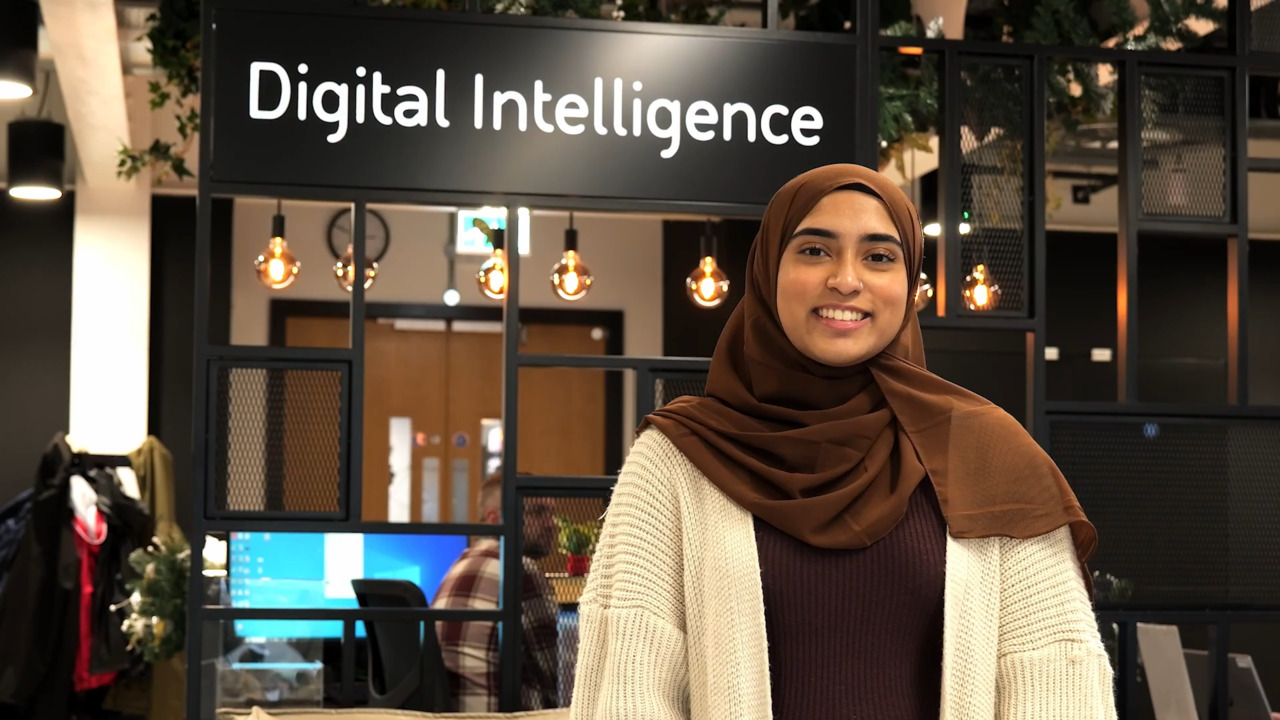
If you were inspired by their stories, find out more about the roles available and apply now.
The closing date for apprentice applications is 28 February 2024. There are multiple graduate intakes throughout the year, including January, June and September.
Additionally there are thousands of roles available across the UK for experienced professionals.