
As Head of Training Lucy Walton explained to the How It Works team, by collaborating with experts in simulation, supercomputing, data analytics and augmented and virtual reality, we are changing what’s possible and developing the future of military training.
Virtual versus reality: the training in action
Project OdySSEy’s Head of Training Lucy Walton describes her experience with launching VR missions.
What are the main benefits of the armed forces using this VR training tool?
Sustainability is definitely one. Not doing training live saves a huge amount of emissions, and it’s repeatable. When you’re doing something live with an aircraft, you’re going to get one shot because you’re going to run out of fuel and need to go back. With VR you can restart a scenario at the push of a button. I speak to a lot of the aircrew who say this would be beneficial for them – knowing they can rehearse and do wrong now so that they learn all those key points before doing it live in the air.
Does it improve tactics?
There’s almost no part of the Earth that isn’t monitored anymore, with people watching 24 hours a day, seven days a week. In the simulated environment, we can deploy more realistic tactics than you would live. We have to redact them when we do it live because we don’t want people to be able to see what we’re up to.
How true to life are the simulated training locations?
Essentially, you can take any part of the world from a terrain perspective, and there’s lots of companies we’re working with at the moment that are starting to develop streaming services, so you can almost stream that terrain and the updates live. We take images from satellites and very quickly put that through an AI engine. It will recreate what that looks like from a simulation terrain. As you’re starting to move towards more realistic live exercise rehearsals, you need that terrain to be updated much more frequently, because one day a building might be there and the next day it might not.
How predictable are the AI environment and civilian reactions in the simulations?
AI changes how civilians behave each time. For example, we had some simulated people that we wanted to leave a scenario, so we brought in some really low-level aircraft, which is called a show of force, and those people ran away very scared. Then we did it again, and a third time. By the third time they stopped running, as they had learned nothing bad happened afterwards, so they started to walk away, rather than running away terrified. It’s quite interesting to see how their behaviour set learned that. Historically, when we’ve done training in this way, everything is controlled by humans. The exercise director knows everything that’s going to happen in an exercise before it starts. When you start to inject AI, it changes. In one exercise, we had a convoy of cars that were going to do a resupply mission, and a civilian crashed on the road. We’re working to balance keeping the AI realistic and training people when you don’t necessarily know the scenario.
How it Works
Visit the How it Works website to read the full article.
Please note, a subscription is required.
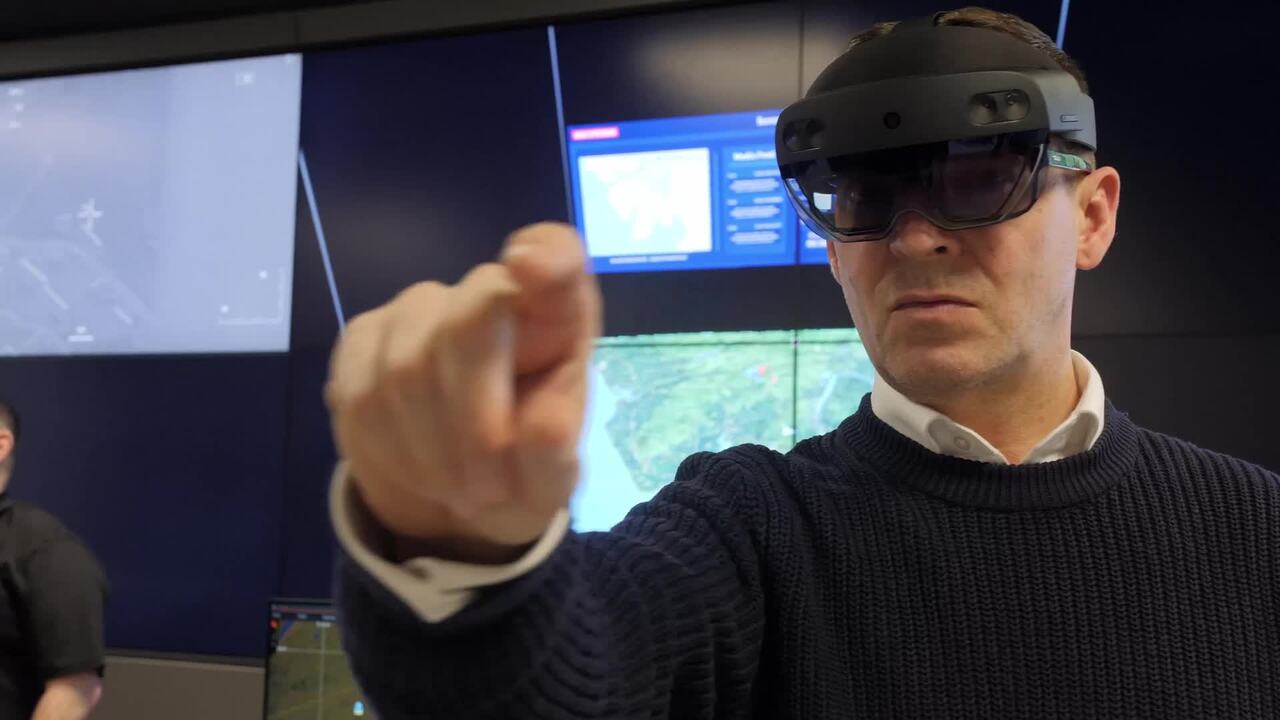
RS85198_RS82546_Project OdySSEy Social Video Draft 4.0 YT4K
Project OdySSEy
We are applying our expertise in military training with technology from a range of leading companies to develop next generation training for the forces of tomorrow.