
Overview
Improving Pilot Safety
The combination of high G-forces, rapid maneuvers, altitude and mission tasking can be hazardous for pilots in both training and combat situations, leading to what the Department of Defense (DoD) has deemed Unexplained Physiological Episodes (UPE). Gaining a better understanding of what causes these episodes and how to prevent them is a top priority for the DoD.
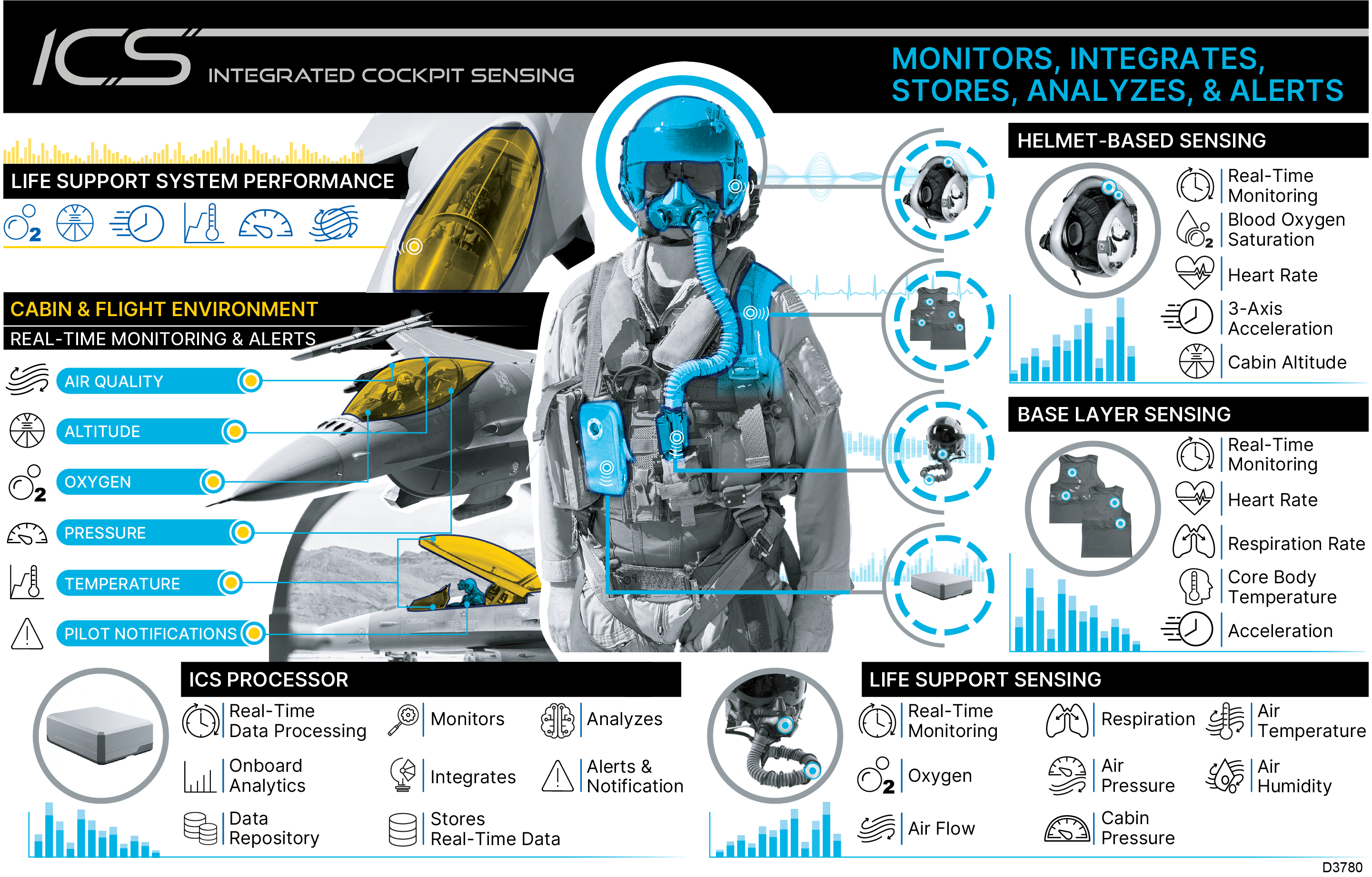
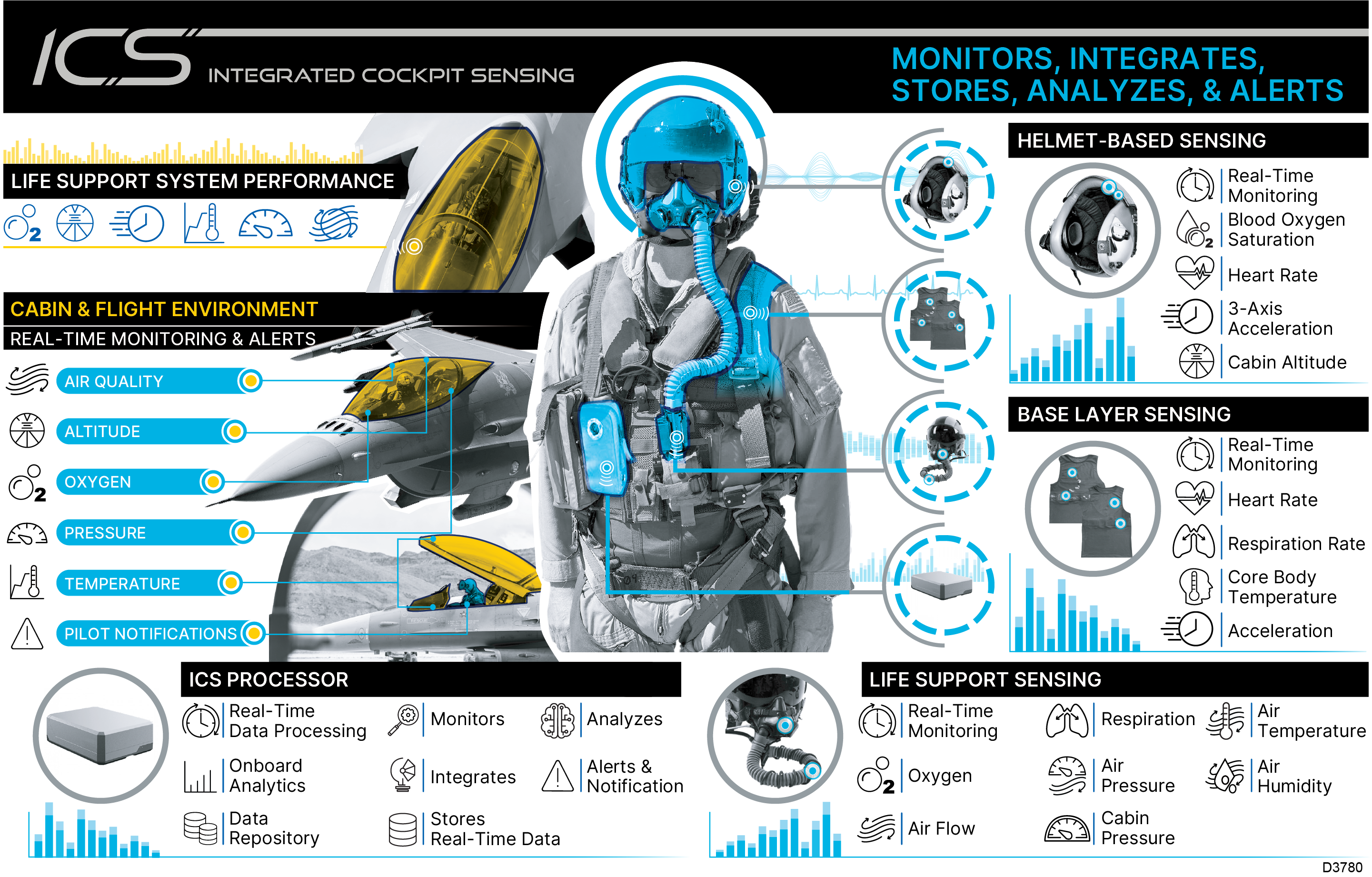
BAE Systems is partnered with the Air Force Research Laboratory to develop the Integrated Cockpit Sensing (ICS) system. The ICS system provides real-time monitoring and analysis of pilot health, the cabin environment and life support systems to improve pilot safety and performance. The system is designed to help detect, mitigate and provide insight into in-flight Physiological Episodes (PE) that adversely impact the physical and cognitive abilities of pilots, risking their ability to return home safely.
Increasing Mission Effectiveness
ICS will not only help uncover the root causes behind UPE, but also improve training and help pilots make better decisions and provide needed insight to develop improved life support systems. While in flight, the ICS system collects and analyzes data from multiple sensors in real time. The pilot is alerted if a PE is detected or conditions that commonly lead to physiological episodes are present. ICS also provides a post-flight analysis capability to improve after-action reviews and pilot training, gain root-case understanding, track life support system performance and ultimately reduce aircraft groundings.
The ICS System
The ICS system does not require aircraft power or data integration and can readily transition between different aircraft platforms. The system was developed with a comprehensive core set of sensors, but is designed to readily integrate new sensor, computing, algorithm and alerting capabilities as they become available.
Learn more about the ICS system on the AFRL website.
News
Showing 28 results