
Overview
Viewed as the role model for through-life support contracting, the Hawk Lead-In Fighter project was established by BAE Systems Australia to provide and support an outstanding, state-of-the-art fast jet training capability for the Royal Australian Air Force (RAAF).
The Hawk is the world’s most successful advanced military jet trainer aircraft built on more than 35 years of fast jet training experience. More than 1,000 aircraft have operated across 18 countries, preparing more than 20,000 pilots for life in a fast-jet cockpit.
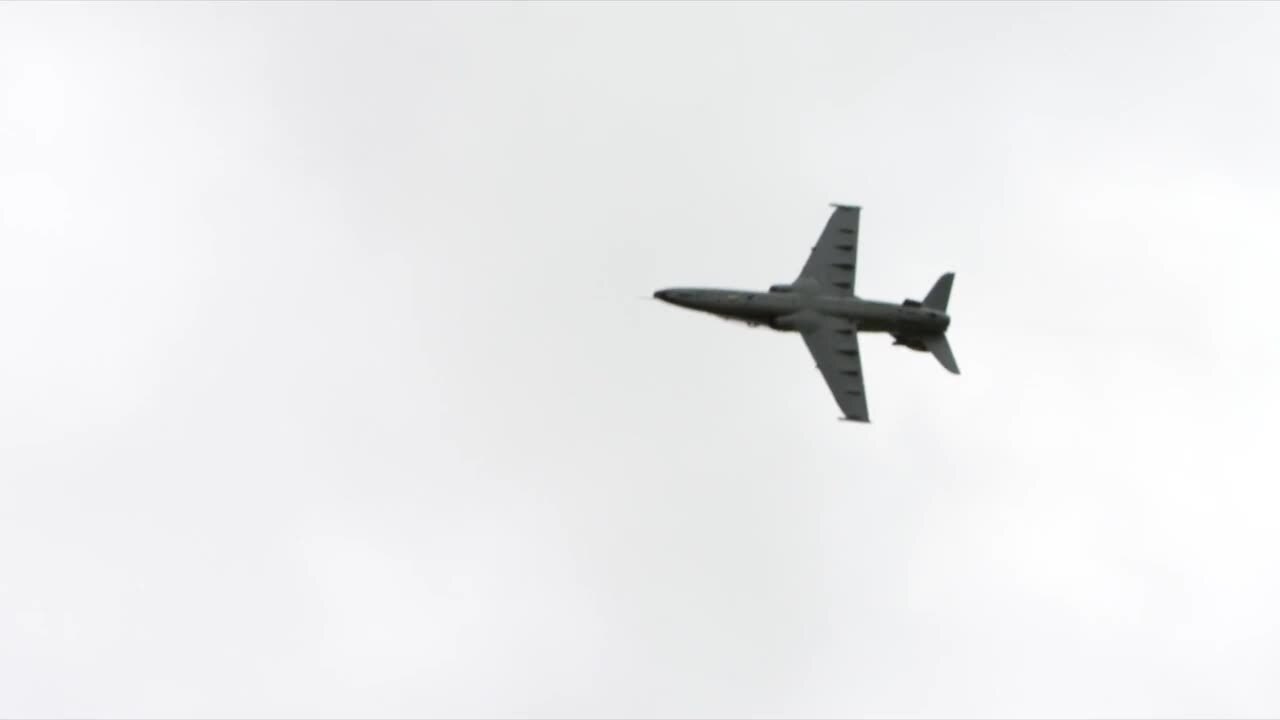
The Hawk Mark 127 Lead-In Fighter is a tandem, two-seater jet aircraft. Australia currently has 33 aircraft that have all been enhanced to ensure they remain cutting edge and future ready.
Through-life support
As the current platform steward, we are committed to delivering value for money on a fully flexible, scalable and upgradable platform. This includes a spiral capability development upgrade process to ensure the platform and training systems continue to meet Australia’s current and future fast-jet training requirements.
This will ensure that the Hawk remains an outstanding and cost-effective training solution throughout its whole-of-life.
Results from recently completed full scale fatigue testing showed life remaining in the Hawk airframe could allow the aircraft to continue operations well into the late 2040s. The intent of this significant testing program, as part of defence standards, was to demonstrate the structural integrity of the airframe to five times its intended life.
The Hawk’s through-life support program has been designed with future technologies to reflect the evolving training requirements of frontline combat aircraft. This will ensure that the aircraft remains a cost-effective training solution throughout its entire life.
Air Force pilot training
Using advanced airborne simulation technology, the Hawk is a ‘flying classroom.’ It prepares student pilots to master the controls of combat aircraft and trains the RAAF’s fast jet aircrew for operational conversion to the F/A-18 Super Hornet, EA-18G Growler and the F-35 Joint Strike Fighter.
Hawk training system graduates regularly achieve 100% pass rates in their fighter operational conversion courses.
The Australian fleet has achieved around 122,000 hours of pilot training to date from RAAF Base Pearce in Western Australia and RAAF Base Williamtown in New South Wales, where the aircraft are based. Under a performance-based contract, we ensure the aircraft are delivered in line with customer requirements and expectations.
In 2022, we welcomed a $1.5 billion Hawk Lead-In Fighter contract extension that will continue to train Australia’s frontline fighter pilots through to 2031. The new contract includes the continuation of the existing in-service support, providing maintenance, engineering and supply chain services to the RAAF and will be the foundation for progressive upgrades of mission systems.
Our economic contribution
The Hawk program is supported by a supply chain of more than 180 Australian businesses. This drives a combined direct and indirect workforce of more than 1,000 people.
This study by BIS Oxford Economics examines the economic contribution of BAE Systems’ support programs for two of Australia’s key aviation assets: the Hawk Lead-In Fighter and the F-35 fighter jet.
Aircraft maintenance careers
We have F-35 avionics and aviation technicians who work alongside air force and Lockheed Martin colleagues at RAAF Base Williamtown and the South Pacific Regional Sustainment depot.
Working on one of the most advanced aircraft in the world, our technicians have completed intensive training to acquire a range of complex technical skills. The team’s expertise will be utilised to train future employees as capability and capacity increase.
We're creating a capability pipeline to engage, inspire, develop and recruit the next generation workforce to ensure the people and facilities in the Hunter Valley region are continually developed.
We support organisations and activities that encourage young people to study STEM and provide early career opportunities such as work experience, internships, apprenticeships and graduate roles.