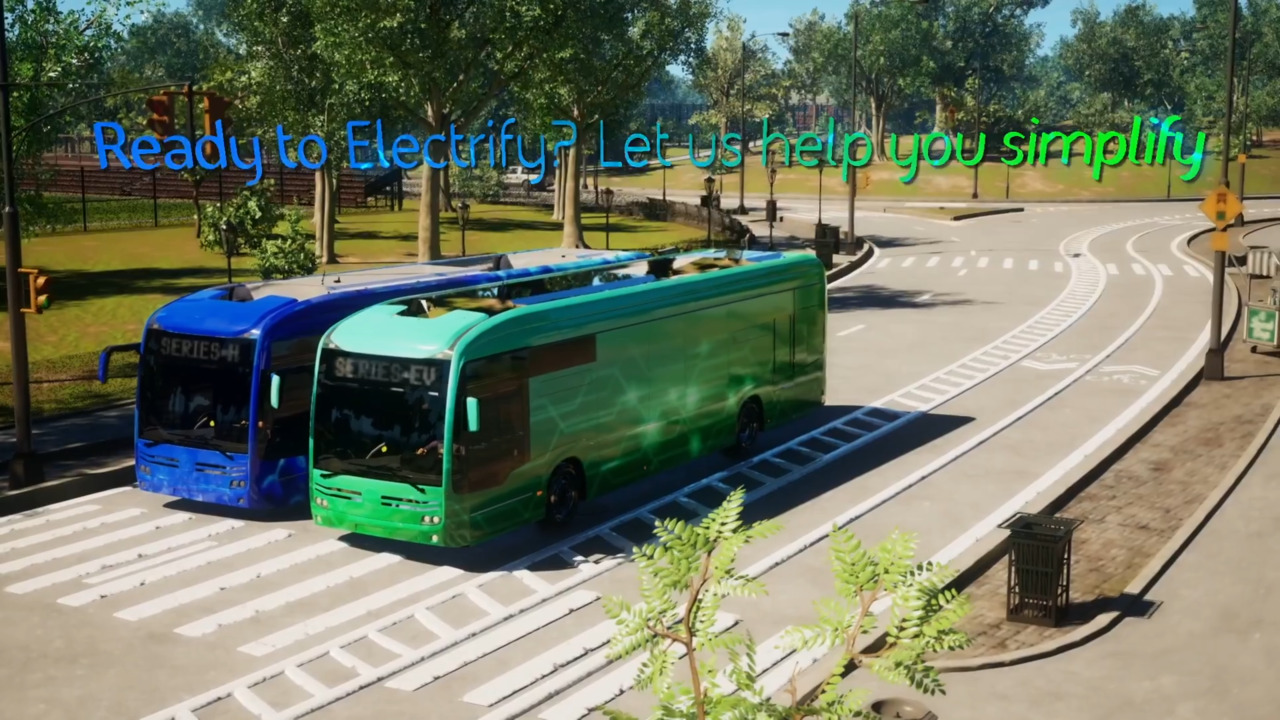
BAE Systems is at the forefront of hydrogen fuel cell electrification with more than 25 years of innovation and proven propulsion technology. We have over 19,000 propulsion systems operating in transit buses, military and industrial vehicles globally.
Why BAE Systems’ hydrogen fuel cell electric solution?
- Modular architecture: Simple, federated design philosophy that minimizes vehicle integration time, risk and cost
- Zero emissions: Hydrogen is the sole fuel source; thus, water is the sole exhaust.
- Quiet and smooth: All electric drivetrains provide quiet operation.
- All electric accessories: Electric-powered air conditioning, power steering, air compressor and cooling systems mean higher reliability and efficiency.
- Integrated energy storage system (ESS): Allows for regenerative energy capture and enables the fuel cell engine to respond like a traditional diesel engine.
- Production qualified systems and components:Reliable, proven commercialized technology.
- Designed with the maintainer in mind: Easy access to maintenance and inspection points.
- Support: Established aftermarket support paired with our team of experts, means we can get fleets back on the road quickly and with minimal downtime.
What is hydrogen fuel cell technology?
Hydrogen fuel cell technology is an electrochemical process that combines hydrogen and oxygen as the electrical energy source to power systems. Within the fuel cell a set of proton exchange membrane electrodes mix hydrogen and oxygen together to produce electricity. As a result, water is the only byproduct of a hydrogen fuel cell system.
How does a hydrogen fuel cell system work?
Power for the system comes from a blend of high voltage batteries and the hydrogen fuel cell engine. The system uses its power electronics to provide propulsion at the wheels and to energize the electrified accessories on board. Some of the electricity produced by the hydrogen fuel cell technology is used immediately and some is stored in the batteries. Regenerative braking captures kinetic energy during braking and stores it in the high voltage batteries.
The vehicle is capable of driving solely on the battery when the high voltage batteries have sufficient charge. This feature allows it to be moved without having to start the fuel cell engine.
Vehicles with this technology maximize energy usage, reducing operational costs and environmental impact while providing an operational range comparable to or better than fossil fuel engines.
Where are hydrogen fuel cells used?
Hydrogen fuel cell systems are used globally as a clean, efficient engine option. These electric power systems can be used in many areas on municipal buses, work trucks, cars, taxis, locomotives, subways, unmanned vehicles, aircraft, space vehicles and much more.
Fuel cell electric buses can use this advanced system to deliver efficient and sustainable transit solutions. The power is created in near silence, so when paired with an efficient all-electric drive system, vehicles can run quietly. This is especially important for city buses, garbage trucks, delivery vans, and other work vehicles that omit a high level of noise pollution in operation.
What are the advantages of hydrogen fuel cell vehicles?
Hydrogen fuel cell vehicles operate quietly and produce zero emissions, which positions them as a vital part of the future of transportation, contributing to cleaner cities and improved air quality. This solution is particularly suited for high-energy and long-range applications where battery-only systems may be limited by range. Its modular design also allows for easy scaling to meet different power requirements if new operator needs arise.